Acne and Mental Health: Resources and Hotlines for Teens Who Are Struggling
Medically reviewed by Dr. Sarah Mitchell, MD, Board-Certified Dermatologist
Written by Teen Acne Solutions Team — Updated May 22, 2026
Key takeaways
- Acne-related mental health struggles are common and valid. Studies show teens with acne have higher rates of anxiety, depression, and social withdrawal. You're not overreacting.
- Crisis Text Line (text HOME to 741741) and the 988 Suicide & Crisis Lifeline are free, confidential, and available 24/7. You don't need to be in a life-threatening crisis to use them.
- Asking a parent for therapy doesn't have to be a big speech. A simple 'I've been feeling really down about my skin and I think talking to someone would help' is enough.
- School counselors can connect you with resources even if they can't provide ongoing therapy themselves.
This page is different from our other posts. It's shorter, more direct, and focused on one thing: getting you connected with help if your skin is affecting your mental health.
Acne-related distress is not shallow. It's not vain. A 2020 meta-analysis in the Journal of the American Academy of Dermatology found that people with acne have a significantly higher risk of both depression and anxiety compared to those without. A Norwegian study of nearly 4,000 adolescents found that acne was associated with suicidal ideation, even after controlling for other factors.
If your skin is making you feel hopeless, isolated, or like you don't want to leave the house, those feelings deserve attention. Not just with better skincare, but with real support.

If you're in crisis right now
If you're having thoughts of hurting yourself or ending your life, please reach out immediately:
- 988 Suicide & Crisis Lifeline: Call or text 988. Available 24/7. Free and confidential.
- Crisis Text Line: Text HOME to 741741. Available 24/7. You'll be connected with a trained crisis counselor via text.
You don't need to have a "good enough" reason. You don't need to justify how you feel. These services exist for moments exactly like this.
Hotlines and text lines
These are free, confidential services. You don't need insurance. You don't need a parent's permission. You don't need to give your real name.
988 Suicide & Crisis Lifeline
- Call or text: 988
- Chat online: 988lifeline.org
- Available 24/7
- For anyone in emotional distress, not just suicidal crisis
Crisis Text Line
- Text HOME to 741741
- Available 24/7
- Connects you with a trained volunteer counselor
- Good option if you're not comfortable talking on the phone
NAMI Helpline (National Alliance on Mental Illness)
- Call: 1-800-950-NAMI (6264)
- Text: "HelpLine" to 62640
- Monday-Friday, 10am-10pm ET
- Can help you find local mental health resources, support groups, and treatment options
Anxiety and Depression Association of America (ADAA)
- Website: adaa.org
- Online therapist directory
- Free educational resources on anxiety and depression
- Peer support community
Teen Line
- Call: 1-800-852-8336 (6pm-10pm PT)
- Text TEEN to 839863 (6pm-9pm PT)
- Run by trained teen volunteers. Sometimes it helps to talk to someone your own age.

Online support communities
Sometimes you need to talk to people who get it. These communities won't replace professional help, but they can reduce the feeling that you're alone in this.
r/acne and r/SkincareAddiction on Reddit. Large communities where people share their experiences openly. The comment sections can be genuinely supportive. Read the rules before posting.
Acne.org forums. One of the oldest acne support communities online. People share treatment journeys, before/after progress, and emotional support. Less chaotic than Reddit.
NAMI online support groups. Free, peer-led groups for teens and young adults dealing with mental health challenges. Not acne-specific, but the mental health support applies.
A word of caution: online communities can also expose you to misinformation, comparison spirals, or negativity. If a community is making you feel worse instead of better, step away. Your feed should help, not hurt.
How to ask a parent for therapy
This is the part that stops a lot of teens. You know you could use professional help, but bringing it up to a parent feels overwhelming. Maybe you worry they'll minimize it. Maybe you think they'll say it's just acne. Maybe you're embarrassed.
Here's the thing: you don't need a perfect speech. You need a sentence.
"I've been feeling really down about my skin and I think talking to someone would help."
That's it. You don't have to explain everything. You don't have to have all the answers. You're asking for help, and most parents will respond to that.
If you're worried about how they'll react:
- Pick a calm moment. Not during a fight or when they're stressed about something else. Maybe during a car ride or after dinner.
- Be specific about what you want. "I want to talk to a therapist" is clearer than "I'm not doing well." Parents respond better to actionable requests.
- It's okay to put it in writing. If saying it out loud is too hard, write a note or send a text. The format doesn't matter. Getting the message across does.
If your parent dismisses it, try again later or talk to another trusted adult. A school counselor, a coach, a relative, your doctor. Sometimes parents need time to process, and sometimes another adult can help bridge the conversation.
School counselors
Your school counselor exists for exactly this kind of situation. You don't need to have a clinical diagnosis or a crisis to talk to them. "My acne is really affecting how I feel about myself and I'm struggling" is a perfectly valid reason to make an appointment.
School counselors can:
- Listen and provide short-term emotional support
- Help you talk to your parents about therapy
- Connect you with local therapists or community mental health services
- Check in with you periodically
- Advocate for you if acne-related distress is affecting your academics
They're not a substitute for a therapist, but they're a starting point. And talking to them doesn't go on any permanent record. It's a conversation between you and someone trained to help.
When it's an emergency
Acne-related distress can escalate. If any of the following are true, please tell someone today:
- You've thought about hurting yourself
- You've been making plans to end your life
- You've stopped eating, sleeping, or attending school because of how your skin makes you feel
- You've completely isolated yourself from friends and family
- You're using substances to cope with how you feel about your appearance
These aren't signs of weakness. They're signs that what you're dealing with has crossed from difficult into something that needs professional intervention. Call 988, text 741741, go to an emergency room, or tell any adult you trust.

Bottom line
Your feelings about your skin are valid. Acne takes a real psychological toll, and that toll is documented in research, not just anecdotes. If your skin is affecting your mental health, you have options: crisis lines if you need immediate support, hotlines for ongoing help, online communities for connection, and pathways to therapy through parents or school counselors. You don't have to reach a breaking point before asking for help. Reaching out when things are hard is not a sign that something is wrong with you. It's a sign that you're taking care of yourself.
How we reviewed this article:
Our experts continually monitor the health and wellness space, and we update our articles when new information becomes available.
- Dalgard FJ, et al. The psychological burden of skin diseases: a cross-sectional multicenter study among dermatological out-patients. J Invest Dermatol. 2015;135(4):984-991https://pubmed.ncbi.nlm.nih.gov/25521458/
- Halvorsen JA, et al. Suicidal ideation, mental health problems, and social impairment are increased in adolescents with acne. J Invest Dermatol. 2011;131(2):363-370https://pubmed.ncbi.nlm.nih.gov/20844551/
- Uhlenhake E, et al. Acne vulgaris and depression: a retrospective examination. J Cosmet Dermatol. 2010;9(1):59-63https://pubmed.ncbi.nlm.nih.gov/20367675/
- American Academy of Dermatology. Acne can affect more than your skin. 2024https://www.aad.org/public/diseases/acne/acne-emotional-effects
- Samuels DV, et al. Acne vulgaris and risk of depression and anxiety: A meta-analytic review. J Am Acad Dermatol. 2020;83(2):532-541https://pubmed.ncbi.nlm.nih.gov/32088269/
Read This Next
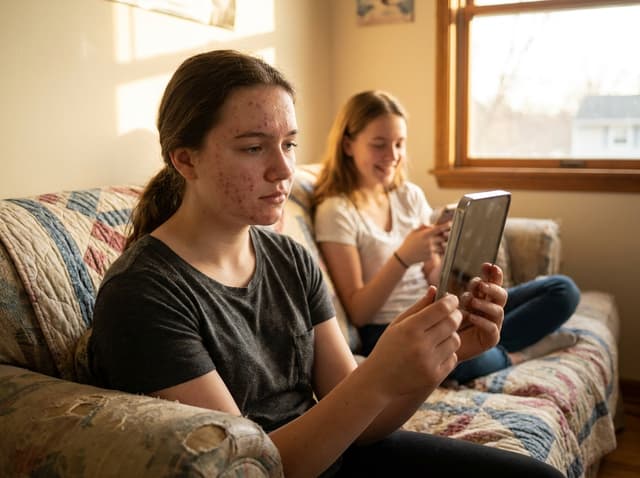
When Your Sibling Has Clear Skin and You Don't: Dealing with Acne Jealousy
Watching your sibling eat the same food, skip skincare, and have perfect skin while you break out constantly is one of the most frustrating parts of having acne.
Read More →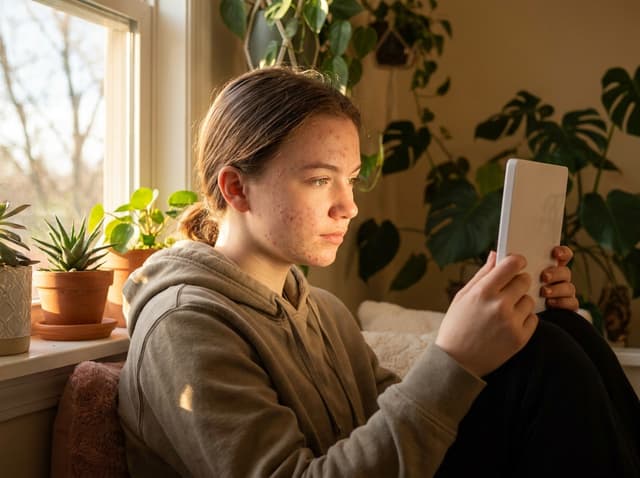
Does Sunlight Help or Hurt Acne? The Complicated Truth
Sun might temporarily mask acne, but it makes things worse long-term. Here's why the vacation skin effect isn't what you think and why UV isn't an acne treatment.
Read More →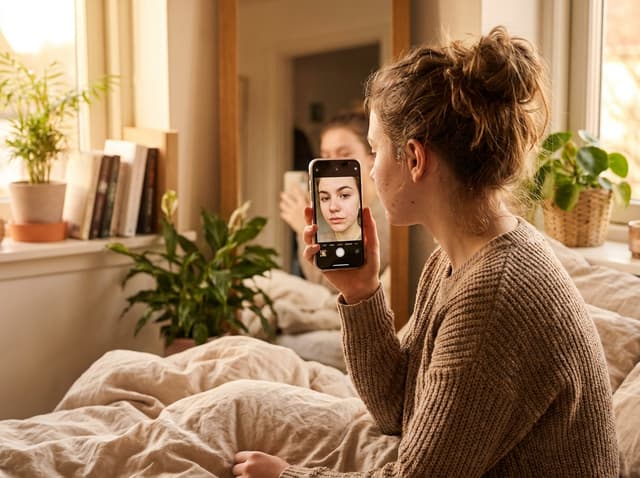
Instagram Filters and Acne: How Social Media Distorts Skin Reality
Filters blur texture, erase pores, and create a version of skin that doesn't exist in real life. Here's how that messes with your head when you have acne.
Read More →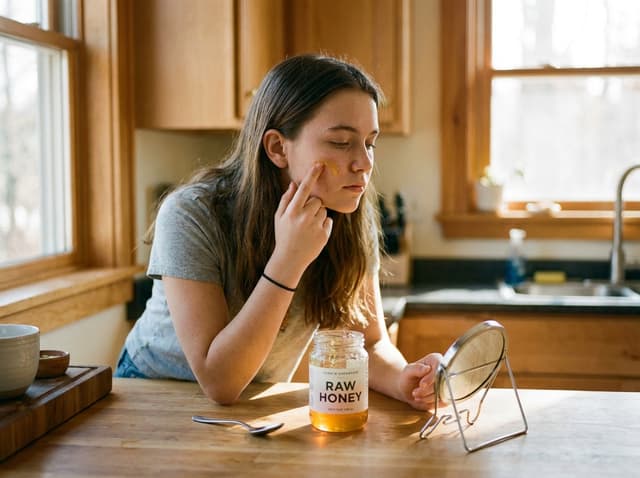
Honey for Acne: Does This Kitchen Ingredient Actually Work?
Manuka honey has real antibacterial research behind it. Regular honey, not so much. Here's what works, what doesn't, and whether it's worth the sticky mess.
Read More →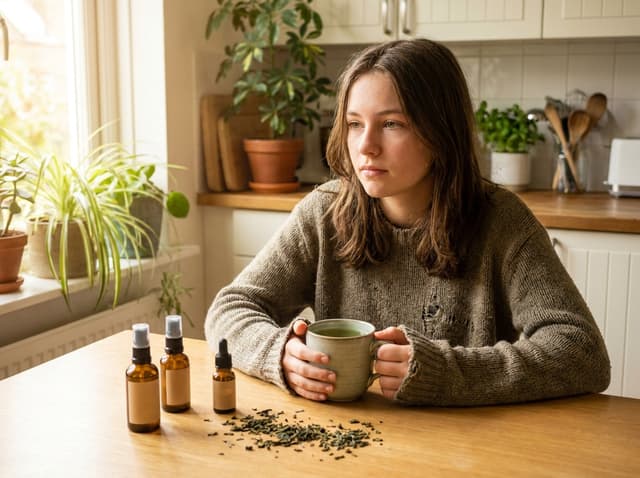
Green Tea and Acne: The Drink (and Ingredient) That Might Help
EGCG in green tea has anti-inflammatory and anti-androgenic properties that could help acne-prone skin. Here's what the research says about drinking it and putting it on your face.
Read More →