Skincare Routine for Teens with Oily Skin: Morning and Night
Medically reviewed by Dr. Rachel Torres, Board-Certified Dermatologist
Written by Teen Acne Solutions Editorial Team — Updated April 17, 2026
Skincare Routine for Teens with Oily Skin: Morning and Night
Your face feels like a slip-and-slide by third period. You blot it with a napkin from the cafeteria, but an hour later it's back. Sound familiar?
Oily skin in your teens is almost absurdly common. Hormonal shifts during puberty crank up sebaceous gland activity, and your skin starts pumping out sebum like it's getting paid for it [1]. The good news: oily skin tends to age better in the long run. The bad news: right now, it's annoying and probably contributing to breakouts.
I've seen a lot of teens make the same mistake with oily skin. They strip it. They scrub it raw. They skip moisturizer because "why would I add more moisture to skin that's already greasy?" And then they wonder why their skin gets more oily, not less.
This post breaks down exactly what to do morning and night if you have oily, acne-prone skin. No 12-step routines. No $200 serums. Just what actually works based on dermatological research.
Key Takeaways
- Oily skin still needs moisturizer. Skipping it signals your skin to produce even more oil.
- Your morning and night routines should be different. AM is about protection, PM is about treatment.
- Gentle cleansers beat harsh scrubs every time. Over-stripping your skin backfires within days.
- Blotting papers are your best midday friend. They remove shine without disturbing your sunscreen.
- Consistency matters more than complexity. A simple routine done daily beats an elaborate one done occasionally.
Why Is My Skin So Oily?
Blame androgens. During puberty, your body produces more androgenic hormones (like testosterone), which directly increase sebum production in the skin [2]. This isn't a flaw in your body. It's just biology doing its thing on a schedule you didn't agree to.
Sebum itself isn't bad. It's a mixture of lipids that protects your skin barrier and keeps moisture in. The problem is excess sebum, which mixes with dead skin cells and can clog pores, leading to blackheads, whiteheads, and inflammatory acne [3].
A few things can make oily skin worse:
- Over-washing or using harsh cleansers. This strips the skin's natural oils, triggering a rebound effect where your glands produce even more sebum to compensate [4].
- Skipping moisturizer. Same rebound problem. Dehydrated skin overproduces oil.
- Heavy, comedogenic products. Thick creams and oils designed for dry skin will clog your pores.
- Stress and sleep deprivation. Both increase cortisol, which can bump up oil production [5].
The Morning Routine (3 Steps, Under 5 Minutes)
Your morning routine has one job: clean, hydrate, protect. You're not treating acne in the AM. You're setting your skin up for the day.
Step 1: Gentle Cleanser
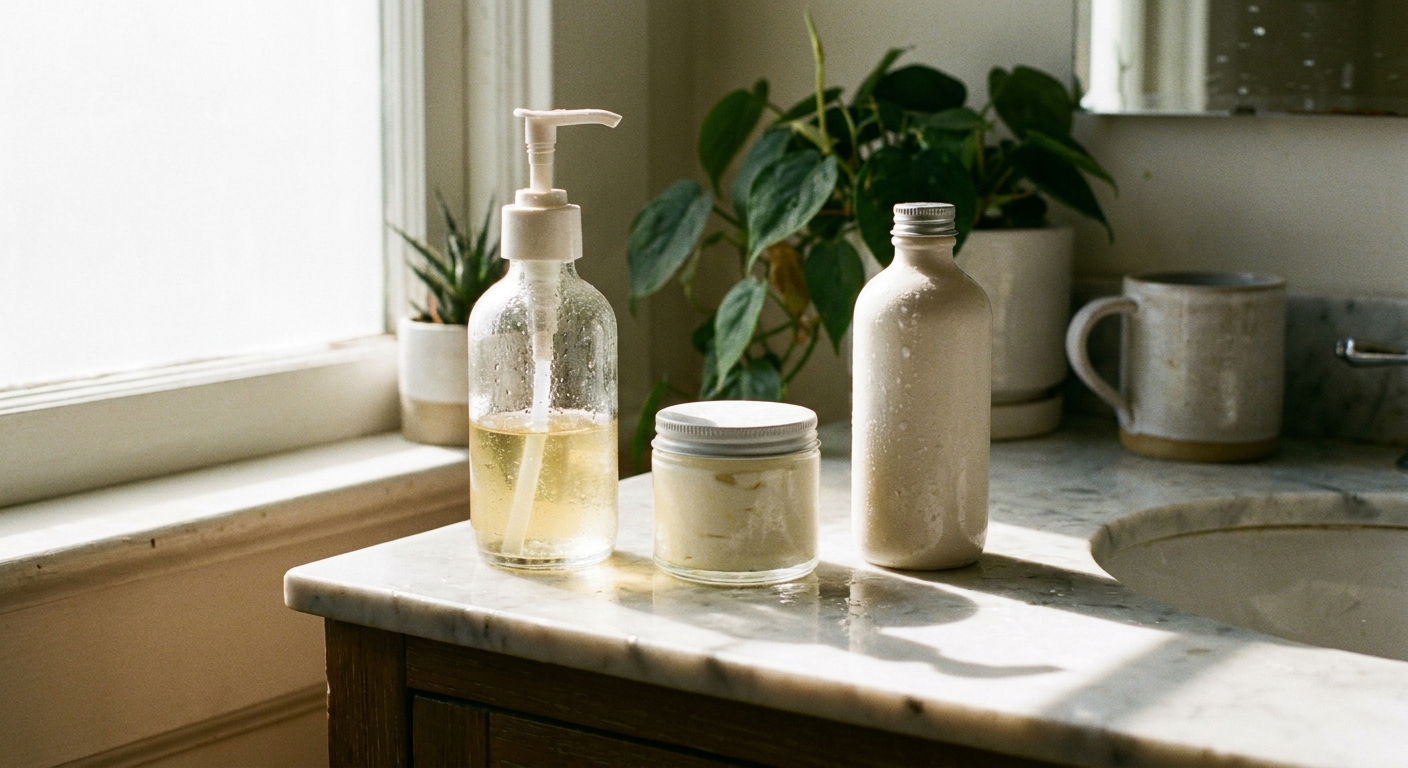
Wash your face with a gentle, non-foaming or low-foaming cleanser. I know it feels like you need something aggressive, something that makes your skin squeak. You don't. That squeaky-clean feeling means you've stripped your acid mantle, and your skin will spend the rest of the day trying to rebuild it by producing more oil.
Good options:
- CeraVe Foaming Facial Cleanser (contains niacinamide and ceramides)
- La Roche-Posay Toleriane Purifying Foaming Cleanser
- Vanicream Gentle Facial Cleanser (fragrance-free, minimal ingredients)
Use lukewarm water. Hot water feels satisfying but increases transepidermal water loss [6]. Pat dry with a clean towel. Emphasis on clean. That towel you've been reusing for a week is a bacteria farm.
Step 2: Lightweight Moisturizer
This is where most oily-skin teens check out. "I don't need moisturizer, my skin is already oily." I hear it constantly, and it's wrong every time.
Here's the science: oily skin can absolutely be dehydrated. Oil production (sebum) and hydration (water content) are two separate things. When your skin lacks water, it compensates by ramping up oil production. A 2014 study found that proper moisturization actually reduced sebum output in oily-skin subjects over an 8-week period [7].
The trick is choosing the right moisturizer. You want something:
- Lightweight and gel-based or gel-cream (not thick or occlusive)
- Non-comedogenic (won't clog pores)
- With beneficial actives like niacinamide (reduces sebum production) or salicylic acid (keeps pores clear)
I recommend the Norse Organics Pimple Stopper Day Balm for this step. It's a 6-in-1 formula that handles hydration while also targeting acne with natural active ingredients. For oily-skinned teens, the fact that it combines moisturizer and treatment in one product is genuinely useful because fewer layers means less chance of feeling greasy.
Step 3: Sunscreen
Non-negotiable. Many acne treatments (benzoyl peroxide, retinoids, AHAs) make your skin more sun-sensitive, and UV exposure causes post-inflammatory hyperpigmentation, those dark marks left behind after a pimple heals [8]. On darker skin tones, these marks can last months or years without sun protection.
Choose a sunscreen labeled:
- SPF 30 or higher
- Broad-spectrum
- Non-comedogenic
- Matte finish or oil-free (if shine bothers you)
Good picks: EltaMD UV Clear (contains niacinamide), La Roche-Posay Anthelios Ultra-Light Fluid, or Supergoop Unseen Sunscreen (invisible finish). Apply about a nickel-sized amount to your face.
Dealing with Midday Oil
Your routine is set. You leave for school. By noon, you look glazed. What now?
Blotting Papers vs. Setting Powder
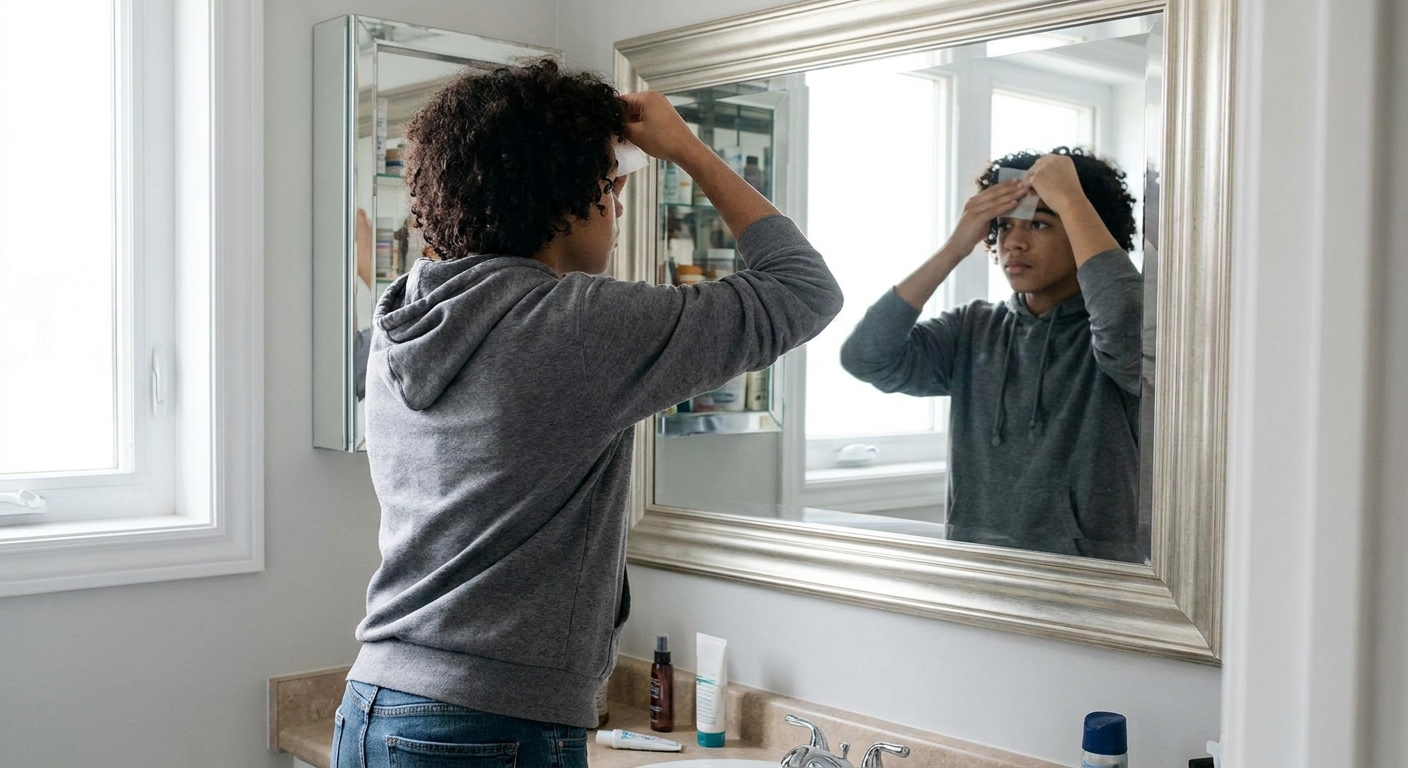
Blotting papers are thin, absorbent sheets that soak up excess oil without removing your sunscreen or clogging your pores. Press them gently against your T-zone (forehead, nose, chin). Don't rub. One to two sheets is usually enough.
Mattifying powder is another option, but I'd be more cautious with it. Some powders contain talc or other ingredients that can settle into pores and worsen acne over time, especially with repeated application. If you go the powder route, look for one labeled non-comedogenic and use a light hand.
Between the two, blotting papers are simpler and safer. You can get 100 sheets for a few dollars. Keep a pack in your backpack.
What not to do midday: Don't wash your face again at lunch. Don't reapply a bunch of products. Don't touch your face constantly (your hands transfer bacteria and additional oil to your skin).
The Night Routine (3-4 Steps, Under 10 Minutes)
Nighttime is when you treat. Your skin repairs itself during sleep, cell turnover peaks overnight, and you don't have to worry about sun exposure or products pilling under sunscreen [9].

Step 1: Medicated Cleanser
In the evening, you can swap in a cleanser with an active ingredient. This is where you bring out the acne fighters.
Options:
- Benzoyl peroxide wash (2.5%-5%). Kills Cutibacterium acnes bacteria. PanOxyl and CeraVe both make good ones. The 2.5% concentration works nearly as well as 10% but causes far less irritation [10].
- Salicylic acid cleanser (0.5%-2%). A beta-hydroxy acid that dissolves the gunk inside pores. Good for blackheads and whiteheads.
Leave the wash on for about 60 seconds before rinsing. This gives the active ingredient contact time to actually do something. Most people rinse immediately, which limits effectiveness.
Step 2: Treatment (Optional but Helpful)
If your acne is more than occasional, add a targeted treatment after cleansing:
- Adapalene 0.1% (Differin). A retinoid you can buy over the counter. It speeds up cell turnover and prevents clogged pores. Start using it every other night because it will cause dryness and peeling for the first 4-6 weeks. That adjustment period is normal.
- Benzoyl peroxide leave-on (2.5%). If you used a salicylic acid cleanser, you can layer a thin BP treatment on top. The combination of salicylic acid plus benzoyl peroxide is well-supported for mild-to-moderate acne [3].
- Niacinamide serum (5-10%). Reduces oil production, calms redness, and improves skin texture. It plays well with almost every other ingredient.
Don't use all of these at once. Pick one or two. More products means more potential for irritation, and irritated skin breaks out more.
Step 3: Moisturizer
Yes, again. Even at night. Same rules apply: lightweight, non-comedogenic. You can use the same moisturizer from your morning routine, or try something slightly richer if your treatment (especially retinoids) is drying you out.
If you're using adapalene, applying moisturizer before the retinoid (the "buffering" technique) can reduce irritation without significantly reducing efficacy. Dermatologists recommend this approach during the adjustment period.
Step 4: Spot Treatment (As Needed)
Got a big angry pimple? Apply a benzoyl peroxide spot treatment (5-10%) directly on it. Or try a hydrocolloid pimple patch, which absorbs fluid and protects the area from picking (a habit roughly 100% of teens have).
Common Mistakes to Avoid
Using physical scrubs. Those walnut shell scrubs and spinning brush gadgets create micro-tears in the skin and spread bacteria around. Chemical exfoliation (salicylic acid, AHAs) is safer and more effective for acne-prone skin.
Changing products every week. Most acne treatments take 6-8 weeks to show results. If you switch products every few days, you'll never know what's working.
Layering too many actives. Benzoyl peroxide plus salicylic acid plus retinoid plus AHA in the same night is a recipe for a damaged moisture barrier. Irritated, red, flaking skin that breaks out even more. Pick one or two actives and stick with them.
Popping pimples. You know this already. You're probably going to do it anyway. But know that you're pushing bacteria deeper into the skin and increasing your chances of scarring and post-inflammatory marks.
When to See a Dermatologist
If you've been consistent with a routine for 8-12 weeks and your acne hasn't improved, see a dermatologist. Some acne needs prescription-strength treatment, like topical retinoids stronger than Differin, combination antibiotic gels, or in severe cases, isotretinoin (Accutane). There's no shame in needing medical help. Acne is a medical condition, not a hygiene problem.
Bottom Line
Oily skin in your teens is manageable. You don't need a 10-step routine or expensive products. You need the right cleanser, a lightweight moisturizer (yes, really), sunscreen in the morning, and a medicated treatment at night. Do it every day. Be patient. Give each product 6-8 weeks before judging it. And stop scrubbing your face like you're trying to sand a deck.
Your skin is oily because of hormones, not because you're doing something wrong. Work with it, not against it.
Sources
- Zouboulis CC, et al. "Sebaceous gland biology and its role in dermatology." Am J Clin Dermatol. 2014;15(4):273-285. PubMed
- Makrantonaki E, Zouboulis CC. "Androgens and ageing of the skin." Curr Opin Endocrinol Diabetes Obes. 2009;16(3):240-245. PubMed
- Zaenglein AL, et al. "Guidelines of care for the management of acne vulgaris." J Am Acad Dermatol. 2016;74(5):945-973. PubMed
- Draelos ZD. "The science behind skin care: Cleansers." J Cosmet Dermatol. 2018;17(1):8-14. PubMed
- Chiu A, et al. "The response of skin disease to stress." Arch Dermatol. 2003;139(7):897-900. PubMed
- Guenther L, et al. "Skin surface temperature and transepidermal water loss." J Eur Acad Dermatol Venereol. 2012;26(5):608-615.
- Sethi A, et al. "Moisturizers: The slippery road." Indian J Dermatol. 2016;61(3):279-287. PubMed
- American Academy of Dermatology. "Sunscreen FAQs." AAD.org. Link
- Matsui MS, et al. "Biological rhythms in the skin." Int J Mol Sci. 2016;17(6):801. PubMed
- Mills OH Jr, et al. "Comparing 2.5%, 5%, and 10% benzoyl peroxide on inflammatory acne vulgaris." Int J Dermatol. 1986;25(10):664-667. PubMed
How we reviewed this article:
Our experts continually monitor the health and wellness space, and we update our articles when new information becomes available.
Read This Next

The Acne Glossary: Every Term You'll Encounter, Explained Simply
From adapalene to zinc, every acne and skincare term you'll run into, defined in plain language without the medical jargon.
Read More →
Micellar Water for Acne-Prone Skin: Gentle Cleanser or Lazy Shortcut?
Micellar water is fine for light cleansing days but won't remove sunscreen properly. Here's when to use it, when to skip it, and whether you need to rinse.
Read More →
How Seasonal Changes Affect Your Acne (And When to Switch Products)

Going to College with Acne: Preparing Your Skincare for Dorm Life