Jawline Acne: What Causes It and How to Treat It
Medically reviewed by Dr. Rachel Torres, MD, Pediatric Dermatologist
Written by Teen Acne Solutions Editorial Team — Updated May 3, 2026
I get more questions about jawline acne than almost any other type. And I understand why. It's stubborn, it's painful, and it doesn't respond to the same treatments that clear up a forehead full of whiteheads.
The frustrating part? Most acne advice online treats all breakouts like they're the same thing. They're not. Where acne shows up on your face tells you a lot about what's causing it, and jawline acne has its own set of triggers that make it a different animal entirely.
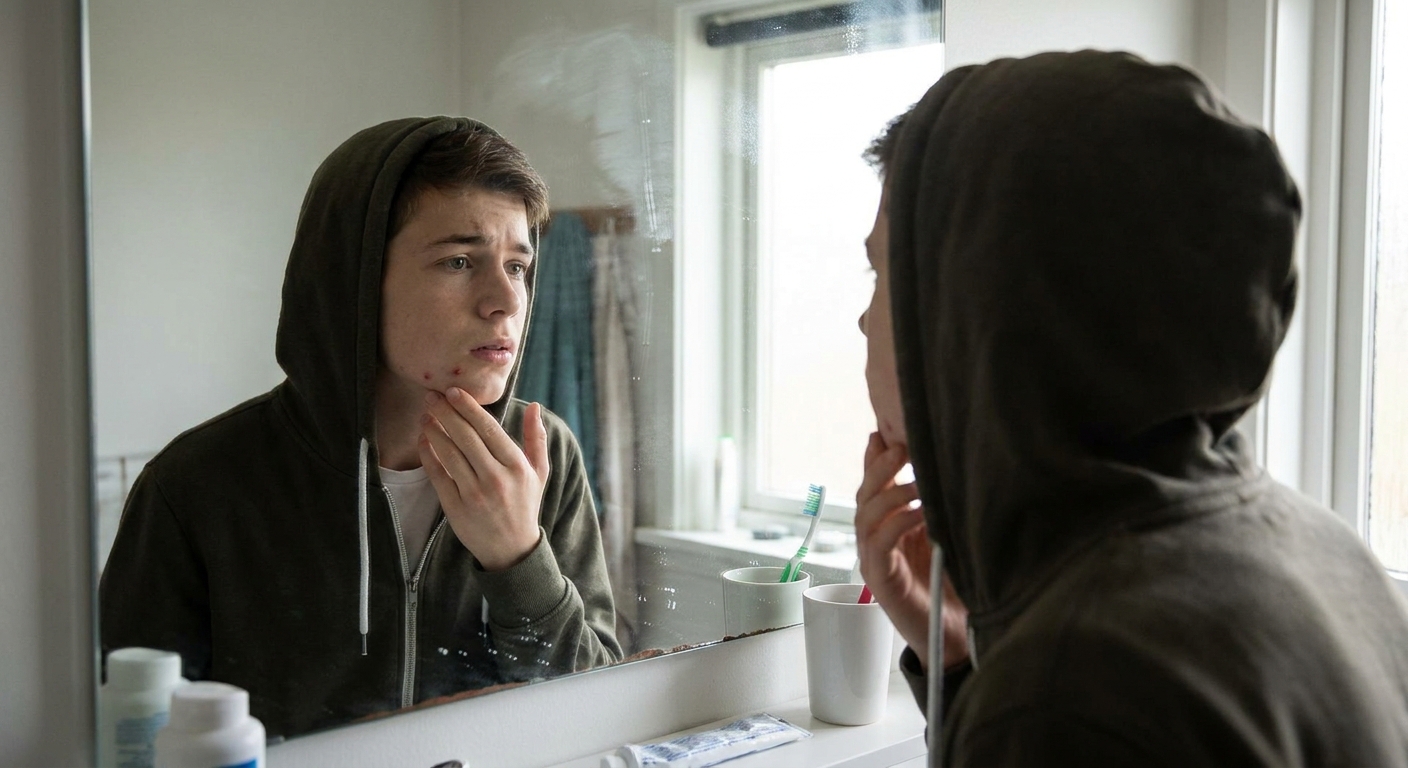
Why the Jawline Is Different
The skin along your jaw and lower cheeks sits in what dermatologists call the "hormonal zone." It's denser with androgen receptors than your forehead or nose, which means it reacts more to hormonal fluctuations (Lam & Zaenglein, 2019). The oil glands here tend to produce thicker sebum, and the pores are larger. That combination makes this area particularly prone to deep, cystic-type breakouts rather than surface-level blackheads.
But hormones aren't the only story. For a lot of teens, especially boys, the jawline gets more physical contact than any other part of the face. And that matters more than most people realize.
The Two Main Drivers: Hormones and Friction
Hormonal Jawline Acne (More Common in Girls)
If you're a teenage girl and your jawline breakouts follow a pattern, pay attention to timing. Hormonal acne tends to flare in the week before your period, calm down for a couple weeks, then come back again. That cyclical pattern is a dead giveaway.
What's happening: androgens (which everyone has, not just boys) spike before menstruation and stimulate the sebaceous glands along the jaw and chin. The sebum overproduction clogs pores, and because these pores are deeper, the resulting breakouts tend to be those hard, under-the-skin bumps that hurt when you touch them (Elsaie, 2016).
This type of acne is typically inflammatory. You'll see fewer blackheads and more red, swollen papules and nodules. They take longer to surface and longer to heal, often leaving behind dark marks that linger for weeks.
Friction-Related Jawline Acne (More Common in Boys)
Boys get jawline acne too, obviously. But in my experience, friction is the trigger more often than people think. Dermatologists call this "acne mechanica," and it's caused by repeated pressure, heat, and rubbing against the skin (Dreno et al., 2015).
The usual suspects:
Phone pressing. I'd bet this is the single most underrated acne trigger for teenagers. Think about it: you press a warm, bacteria-covered screen against your cheek and jaw, sometimes for hours a day. The pressure occludes pores, and the bacteria transfer does the rest.

Chin straps and helmets. Football, hockey, lacrosse. Any sport with a chin strap creates a perfect environment for acne mechanica along the jawline. The strap traps sweat, applies constant pressure, and rubs back and forth.
Resting your chin on your hands. This one's subtle but real. If you sit through six hours of classes propping your chin on your palm or fist, you're applying sustained pressure to the same spots day after day.
Instrument straps. Violin and viola players, particularly. The chin rest creates friction in exactly the wrong spot.
The breakouts from friction tend to look different from hormonal ones. They're more uniform in size, appear in a clear line or band where contact happens, and can include both comedones and inflamed bumps.
How to Tell Which Type You Have
This isn't always black and white, and some people deal with both. But a few questions help narrow it down:
Does it come and go on a monthly cycle? Probably hormonal.
Is it worse on one side of your face? Think about which hand you hold your phone with, or which side you rest your chin on. One-sided jawline acne is a strong signal for friction.
Are the bumps deep and painful, or more surface-level? Deep cysts along the lower jaw and chin lean hormonal. A mix of bumps and comedones in a band pattern lean mechanical.
Did it start or worsen with a new activity? Starting a new sport, getting a new phone habit, or even a new pillowcase fabric can trigger mechanical acne.
Treatment: What Actually Works
Here's where jawline acne gets tricky. The standard "wash your face more" advice doesn't cut it, and some popular treatments can actually make jawline acne worse.
For Hormonal Jawline Acne
Adapalene (Differin) is your first move. It's available over the counter at 0.1% strength, and it's the single best topical for hormonal-pattern acne. Adapalene is a retinoid that normalizes skin cell turnover inside the pore, preventing the clogs that lead to those deep breakouts (Thiboutot et al., 2018). Apply a thin layer to the entire jawline and chin area every night, not just on active spots.
Fair warning: it takes 8 to 12 weeks to see real results. The first month might actually look worse. That's called the purging phase, and it happens because adapalene is pushing existing clogs to the surface faster. Push through it.
Pair it with niacinamide. This is a combination I think is underused for jawline acne. Niacinamide (vitamin B3) at 4-5% concentration reduces sebum production and has anti-inflammatory properties (Draelos et al., 2006). Apply it in the morning while using adapalene at night. The two complement each other without causing the irritation that other active combos can produce.
Benzoyl peroxide as a spot treatment. A 2.5% benzoyl peroxide applied to active inflamed spots can speed healing. Don't use a high percentage. Research shows 2.5% is as effective as 10% with far less irritation (Yentzer et al., 2010). And keep it away from your pillowcases.
For persistent cases, talk to a dermatologist about spironolactone. This is a prescription anti-androgen medication that's been a game-changer for hormonal acne in women and girls. It won't be appropriate for everyone, but if OTC treatments aren't making a dent after 3 months, it's worth discussing (Kim & Del Rosso, 2012).
For Friction-Related Jawline Acne
Remove the friction source first. No topical will outperform ongoing mechanical irritation. Clean your phone screen daily (or better, use speakerphone or earbuds). If chin straps are the problem, line them with a soft, breathable fabric and wash it after every practice.
Salicylic acid works well here. Unlike hormonal acne where retinoids are king, mechanical acne responds nicely to salicylic acid at 2% because it keeps the surface-level clogs from forming. A salicylic acid cleanser used after sports or at the end of the day helps prevent buildup.
Don't over-cleanse. It's tempting to scrub the jawline aggressively when you know friction and dirt are involved. But over-washing strips the skin barrier, triggers more oil production, and makes everything worse. One gentle cleanse is usually enough. Two if you had a heavy sweat day.
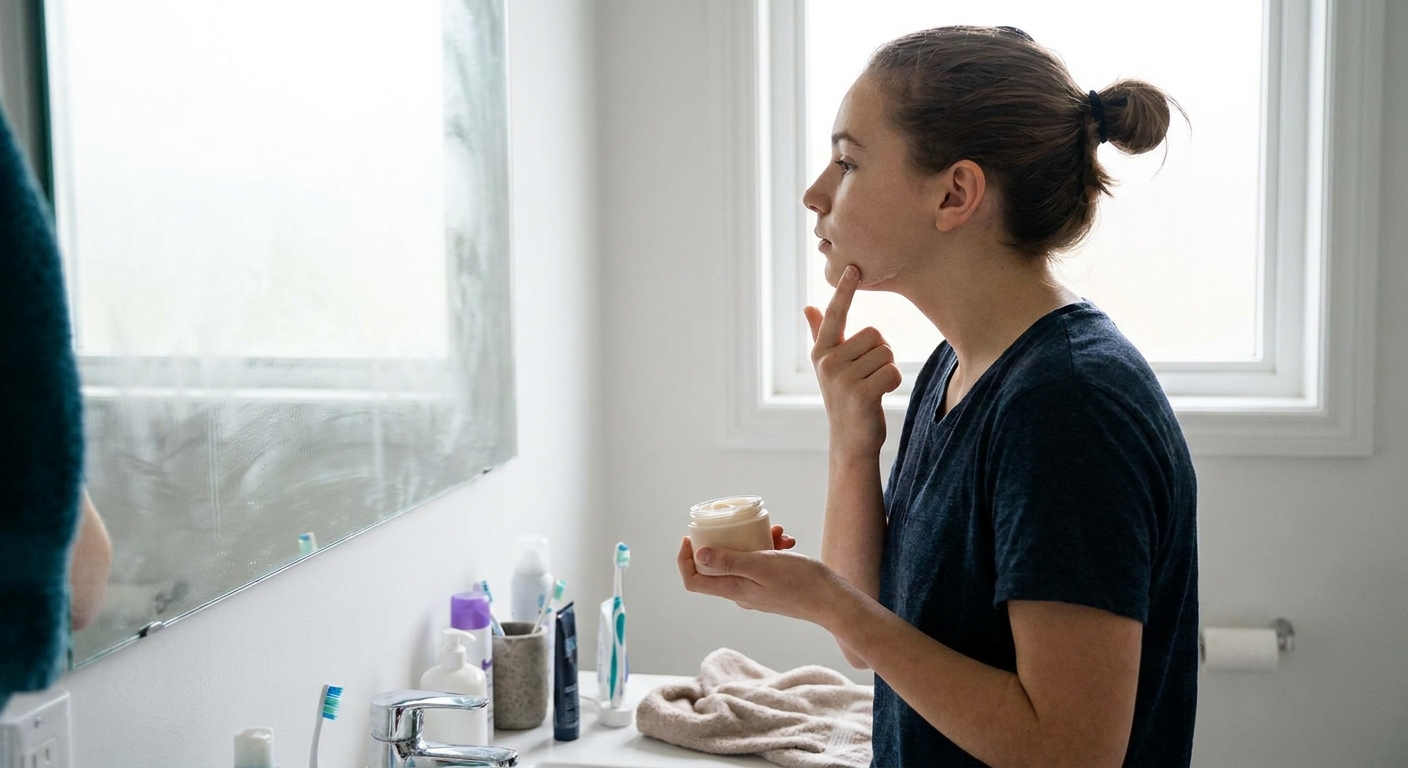
When Jawline Acne Might Signal Something Else
I want to mention this because I think it's important, even though it applies to a smaller group.
In teenage girls, persistent jawline and chin acne that doesn't respond to standard treatment, combined with irregular periods, can sometimes be an early sign of polycystic ovary syndrome (PCOS). PCOS affects roughly 6-12% of women of reproductive age and involves elevated androgen levels that directly fuel acne in the hormonal zones (Bozdag et al., 2016).
This doesn't mean that jawline acne automatically equals PCOS. Most teens with jawline breakouts don't have it. But if you're dealing with stubborn jawline acne plus irregular or absent periods, unexplained weight changes, or excess hair growth on the face or body, bring it up with your doctor. A simple blood test can check hormone levels.
The Norse Organics Approach
At Norse Organics, we formulated our acne treatment system with jawline acne specifically in mind. Our Clearing Serum uses a combination of niacinamide and salicylic acid at concentrations backed by clinical research, without the harsh drying agents that so many acne products rely on. The line was built for teen skin that's fighting breakouts but doesn't want to feel stripped raw in the process.
Common Mistakes with Jawline Acne
Picking at deep cysts. I know you know this, but deep jawline bumps cannot be "popped." They have no head. Squeezing them just drives the inflammation deeper, damages surrounding tissue, and virtually guarantees a dark mark or scar.
Switching products every two weeks. Jawline acne takes longer to resolve than forehead acne. If you're rotating through new products every few weeks, you're never giving anything enough time to work.
Ignoring the neck. Treat slightly below the jawline too. The same hormonal and mechanical forces affect the upper neck, and acne that starts on the jaw often migrates downward.
Using harsh scrubs. Physical exfoliants (sugar scrubs, walnut shell scrubs, rough washcloths) are bad for all acne but particularly damaging on the jaw where the skin is already dealing with deeper inflammation.
Key Takeaways
- Jawline acne in girls is most often hormonal and follows a monthly cycle tied to menstruation. In boys, friction from phones, helmets, and chin-resting habits is a more common driver.
- Adapalene (a retinoid) paired with niacinamide is the strongest OTC combination for hormonal jawline acne. Give it a full 12 weeks.
- For friction-related breakouts, removing the mechanical trigger matters more than any product you apply.
- One-sided jawline acne is a strong clue that phone use or a habitual posture is involved.
- Persistent jawline acne combined with irregular periods in girls warrants a conversation with a doctor to rule out PCOS.
The Bottom Line
Jawline acne is annoying precisely because it doesn't play by the same rules as T-zone breakouts. It's deeper, more painful, and slower to heal. But once you identify whether you're dealing with a hormonal pattern, a friction problem, or both, you can target it properly instead of throwing random products at it and hoping something sticks. Most people see meaningful improvement within 2-3 months of the right approach. That feels slow, I know. But the jawline rewards patience more than any other part of the face.
Sources
-
Lam, C., & Zaenglein, A. L. (2019). Contraceptive use in acne. Clinics in Dermatology, 37(3), 235-242. https://doi.org/10.1016/j.clindermatam.2019.01.005
-
Elsaie, M. L. (2016). Hormonal treatment of acne vulgaris: an update. Clinical, Cosmetic and Investigational Dermatology, 9, 241-248. https://doi.org/10.2147/CCID.S114830
-
Dreno, B., et al. (2015). Understanding innate immunity and inflammation in acne: implications for management. Journal of the European Academy of Dermatology and Venereology, 29(S4), 3-11. https://doi.org/10.1111/jdv.13190
-
Thiboutot, D. M., et al. (2018). Adapalene-benzoyl peroxide, a fixed-dose combination for the treatment of acne vulgaris: Results of a multicenter, randomized double-blind, controlled study. Journal of the American Academy of Dermatology, 57(5), 791-799. https://doi.org/10.1016/j.jaad.2007.06.006
-
Draelos, Z. D., et al. (2006). The effect of 2% niacinamide on facial sebum production. Journal of Cosmetic and Laser Therapy, 8(2), 96-101. https://doi.org/10.1080/14764170600717704
-
Yentzer, B. A., et al. (2010). Acne vulgaris in the United States: a descriptive epidemiology. Cutis, 86(2), 94-99.
-
Kim, G. K., & Del Rosso, J. Q. (2012). Oral spironolactone in post-teenage female patients with acne vulgaris: practical considerations for the clinician based on current data and clinical experience. The Journal of Clinical and Aesthetic Dermatology, 5(3), 37-50.
-
Bozdag, G., et al. (2016). The prevalence and phenotypic features of polycystic ovary syndrome: a systematic review and meta-analysis. Human Reproduction, 31(12), 2841-2855. https://doi.org/10.1093/humrep/dew218
-
American Academy of Dermatology. (2024). Acne: Tips for Managing. https://www.aad.org/public/diseases/acne/skin-care/tips
How we reviewed this article:
Our experts continually monitor the health and wellness space, and we update our articles when new information becomes available.
Read This Next

The Acne Glossary: Every Term You'll Encounter, Explained Simply
From adapalene to zinc, every acne and skincare term you'll run into, defined in plain language without the medical jargon.
Read More →
Micellar Water for Acne-Prone Skin: Gentle Cleanser or Lazy Shortcut?
Micellar water is fine for light cleansing days but won't remove sunscreen properly. Here's when to use it, when to skip it, and whether you need to rinse.
Read More →
How Seasonal Changes Affect Your Acne (And When to Switch Products)

Going to College with Acne: Preparing Your Skincare for Dorm Life