Oil Cleansing for Acne-Prone Skin: Does It Actually Work?
Medically reviewed by Dr. Rachel Torres, MD, Pediatric Dermatologist
Written by Teen Acne Solutions Editorial Team — Updated May 3, 2026
The first time someone told me to put oil on my acne-prone face, I thought they were messing with me. Oil causes acne. Everyone knows that. Why would you deliberately rub more of it into skin that already produces too much?
Turns out the logic is more nuanced than "oil = bad," and the chemistry actually holds up. But I want to be upfront about something: oil cleansing is one of those methods where the internet hype has outpaced the evidence. It genuinely helps some people. It does nothing for others. And for a small group, it makes things actively worse.
I'm going to walk through how it works, who should try it, who should absolutely skip it, and the honest limitations that most skincare influencers leave out.
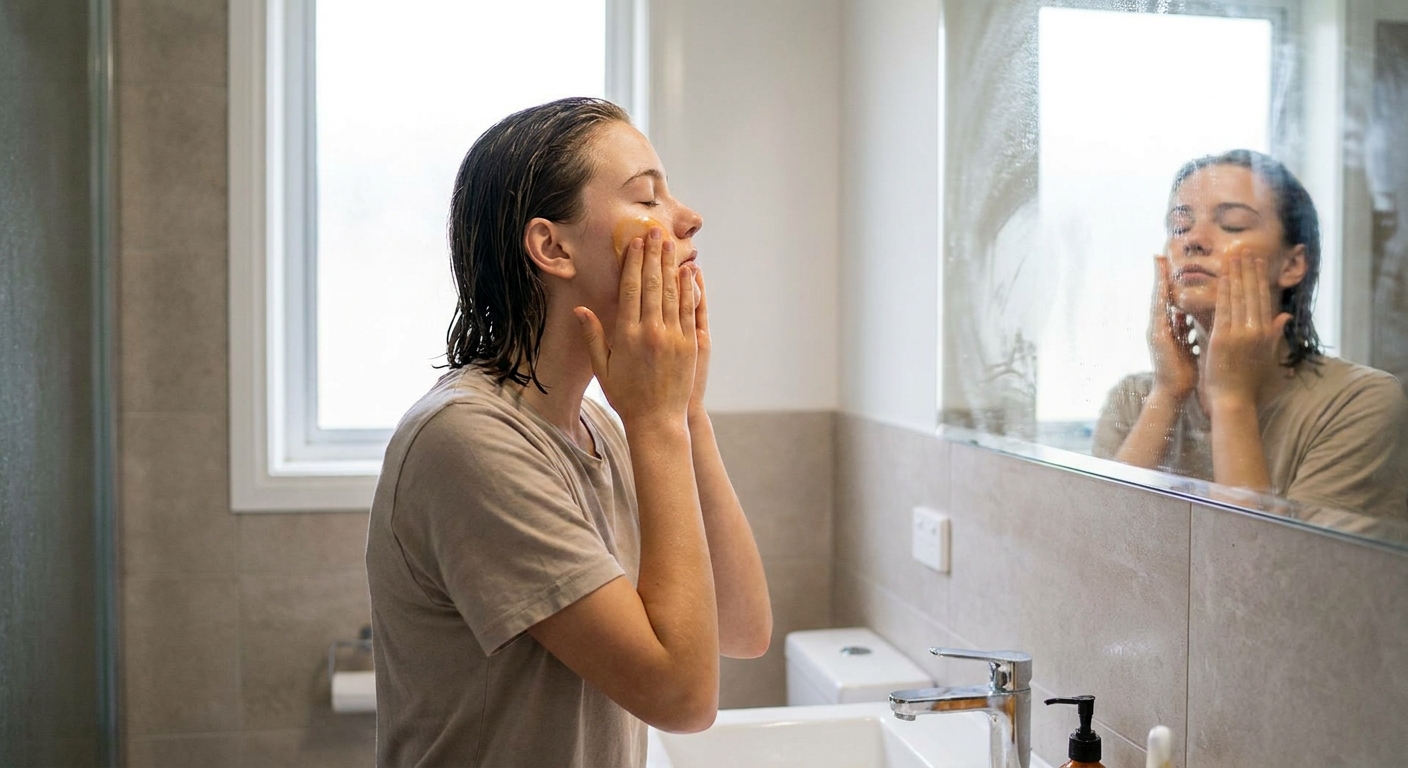
The Chemistry: Why Oil Dissolves Oil
This isn't some alternative wellness theory. It's basic solubility. "Like dissolves like" is a principle from introductory chemistry, and it applies directly to your skin.
The sebum your skin produces is an oily substance made up of triglycerides, wax esters, squalene, and free fatty acids (Picardo et al., 2009). When sebum mixes with dead skin cells, makeup, sunscreen, and environmental grime, it forms a sticky film that water-based cleansers struggle to fully break down. Water and oil don't mix. That's why you can wash your face with a gel cleanser and still feel a greasy film afterward.
An oil-based cleanser, on the other hand, bonds with this oily residue on a molecular level. The cleansing oil mixes with your skin's oils, loosens them from the pore, and the whole thing rinses away when you add water (assuming the cleansing oil is properly formulated with an emulsifier).
The distinction matters: we're not talking about slathering cooking oil on your face. Proper cleansing oils are formulated to emulsify with water so they actually rinse clean. Raw oils don't do that, which is where a lot of people go wrong.
How Oil Cleansing Actually Works in Practice
The method itself is straightforward:
- Apply a cleansing oil to dry skin. Dry is important. Water creates a barrier that prevents the oil from bonding with sebum.
- Massage gently for 60-90 seconds. This gives the oil time to dissolve sunscreen, makeup, and accumulated sebum. You'll sometimes feel small gritty bits under your fingers, which are sebaceous filaments and softened plugs loosening from pores.
- Add a small amount of warm water and massage again. This activates the emulsifier in the cleansing oil, turning it milky.
- Rinse thoroughly with warm (not hot) water.
Most people who use oil cleansing as part of their acne routine follow it with a water-based cleanser. That's the "double cleansing" method. The oil handles the oily debris, and the second cleanser handles the water-soluble stuff (sweat, some bacteria, remaining residue). I'll keep the focus here on the oil step.
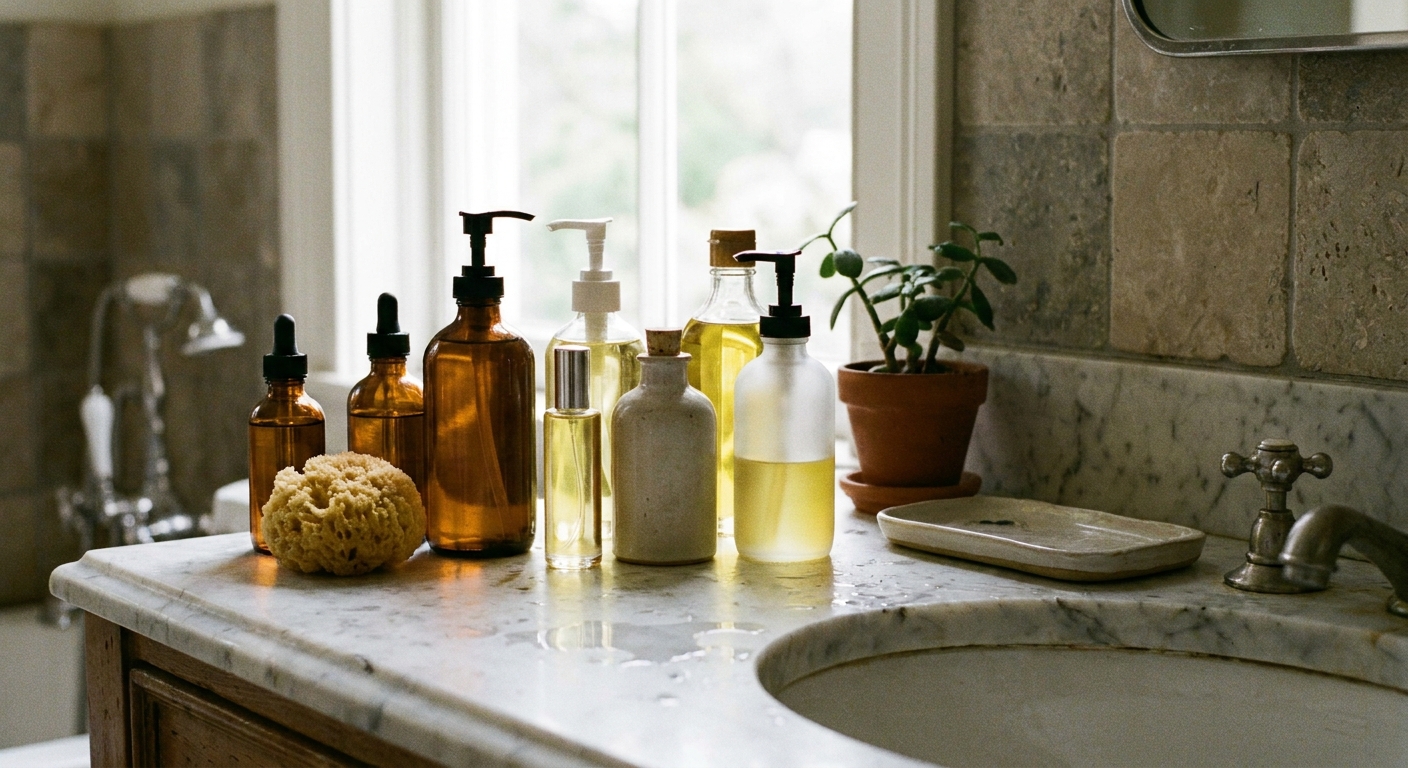
Which Oils Are Safe for Acne-Prone Skin
Not all oils are created equal when it comes to pore-clogging potential. The comedogenicity scale rates ingredients from 0 (won't clog pores) to 5 (almost certainly will), and the range among common oils is enormous.
Generally Safe Options
Mineral oil sits at a comedogenicity rating of 0-1, which surprises a lot of people. Despite its bad reputation in the natural beauty world, cosmetic-grade mineral oil is one of the least likely oils to cause breakouts. It's been studied extensively and consistently shows low irritation and comedogenicity (DiNardo & Downs, 2018). Many dermatologist-recommended cleansing oils use it as a base.
Jojoba oil is technically a liquid wax ester, not an oil, and it closely resembles human sebum in composition. It rates 2 on the comedogenicity scale. Because it mimics your skin's own oils, it tends to dissolve sebum effectively without leaving a heavy residue. Some small studies suggest it may even help regulate sebum production over time (Pazyar et al., 2013).
Squalane (the hydrogenated, shelf-stable form of squalene) rates 0-1 and is lightweight enough for oily skin. It's one of the components your skin naturally produces as part of its lipid barrier, which is why it tends to be well-tolerated.
Grapeseed oil rates 1-2 and has a light texture that works well for oily skin types. It's high in linoleic acid, and there's some evidence that acne-prone skin tends to be deficient in linoleic acid relative to oleic acid in its sebum (Ottaviani et al., 2010).
Oils to Avoid
Coconut oil is the big one. It rates 4 on the comedogenicity scale, and I've seen it wreck people's skin when used as a cleanser. The lauric acid in coconut oil does have antibacterial properties, which is probably why it gets recommended so often, but the pore-clogging potential outweighs that benefit for most acne-prone skin.
Wheat germ oil rates 5. Stay away.
Cocoa butter rates 4. It has no business near acne-prone skin as a cleanser.
Flaxseed oil rates 4. Another one that sounds healthy but clogs pores.
A general rule: oils high in oleic acid (olive, avocado, sweet almond) tend to be heavier and more problematic for acne-prone skin than those high in linoleic acid (grapeseed, safflower, hemp seed). This isn't absolute, but it's a useful guideline.
Who Should Try Oil Cleansing
Oil cleansing isn't for everyone with acne. It works best for specific skin situations:
Dry or combination skin with blackheads and congestion. If your main acne issue is clogged pores, blackheads, and closed comedones rather than angry red inflamed bumps, oil cleansing can help dissolve those plugs more effectively than a standard foaming cleanser. The oil softens hardened sebum in the pore, which is something water-based products struggle with.
People who wear sunscreen daily. Chemical and mineral sunscreens leave a film that many gel or foam cleansers don't fully remove. Leftover sunscreen residue can clog pores over time. An oil cleanse before your regular cleanser handles this effectively.
Makeup wearers. Same principle. Foundation, concealer, and setting powders mix with sebum throughout the day and create a layer that benefits from an oil-based first cleanse.
People whose skin feels tight and stripped after cleansing. If your current cleanser leaves your skin feeling squeaky clean, that tightness is your skin barrier being compromised. A damaged barrier produces more oil to compensate, which fuels more breakouts. Oil cleansing can break this cycle by removing grime without stripping protective lipids (Kuehl et al., 2003).
Who Should Skip It
I want to be honest here because the oil cleansing community online tends to recommend it to everyone, and that's not responsible.
Severe inflammatory acne. If you have widespread cystic acne, painful nodules, or pustules covering large areas of your face, oil cleansing is not your first-line treatment. You need active acne-fighting ingredients (benzoyl peroxide, retinoids, possibly prescription medication). Massaging oil over severely inflamed skin can spread bacteria, irritate open lesions, and potentially worsen the situation.
Fungal acne (malassezia folliculitis). This looks like acne but is caused by yeast, not bacteria. Most oils feed the malassezia yeast, making the condition worse. The exceptions are mineral oil and squalane, which malassezia can't metabolize. But if you suspect fungal acne (small, uniform bumps that itch, often on the forehead and cheeks), get a proper diagnosis before experimenting with oils.
People with a known sensitivity to specific oils. This sounds obvious, but allergic reactions to plant-derived oils are more common than you'd think. If you've reacted to botanical products before, patch test any cleansing oil on your inner forearm for 48 hours before putting it on your face.
Very oily skin that's already well-managed. If your current cleanser works and your acne is under control, adding an oil cleansing step adds complexity without clear benefit. Don't fix what isn't broken.

The "Purging" Myth with Oil Cleansing
You'll hear people say that when you start oil cleansing, your skin "purges" as the oil draws impurities out of your pores. I think this claim is mostly misapplied.
True purging happens with active ingredients like retinoids and chemical exfoliants. These increase cell turnover, which pushes existing clogs to the surface faster. There's a real mechanism behind it (Leyden et al., 2017).
Oil cleansing doesn't increase cell turnover. It doesn't have a pharmacological mechanism that would cause purging. What it can do is dislodge surface-level plugs during the massage process, which might cause a few blackheads or small bumps to come to a head faster. That's different from purging, and it should resolve within a few days, not weeks.
If you start oil cleansing and break out badly within the first week or two, that's probably not purging. That's your skin reacting badly to the product. Maybe the oil is too comedogenic for you, maybe you're not rinsing thoroughly enough and leaving residue, or maybe the product contains a fragrance or botanical extract your skin doesn't agree with.
The test: if new breakouts appear in places you don't usually break out, or if the breakouts are more inflamed than your typical acne, stop the oil cleanser. Real purging, to the extent it happens with oil cleansing, would only occur in areas where you already have congestion.
How to Start Without Wrecking Your Skin
If you've read this far and think oil cleansing might work for your situation, here's how to introduce it without chaos:
Start with 2-3 nights per week, not every day. Your skin needs time to adjust to a new cleansing method. Jumping straight to daily oil cleansing is the number one reason people break out from it.
Use a formulated cleansing oil, not a raw oil. Formulated products contain emulsifiers that let the oil rinse clean. Raw jojoba or mineral oil alone will leave a residue that can clog pores. If you want to DIY, you'd need to add an emulsifying agent like polysorbate 80, and honestly, the margin for error isn't worth it when good cleansing oils cost $8-15.
Don't massage for more than 90 seconds. Longer isn't better. Over-massaging can irritate the skin and spread bacteria.
Follow with your regular water-based cleanser. The double cleanse ensures no oily residue is left behind. A gentle, fragrance-free gel or cream cleanser is ideal for the second step.
Keep everything else in your routine the same for the first 3 weeks. If you add oil cleansing and a new serum and a new moisturizer simultaneously and break out, you won't know what caused it.
What the Research Actually Says
I should be transparent: there aren't many rigorous clinical trials specifically on the oil cleansing method for acne. Most of the evidence is indirect, pieced together from studies on individual oil properties, comedogenicity ratings, and the chemistry of sebum dissolution.
A 2019 study in the Journal of Cosmetic Dermatology found that an oil-based cleanser was as effective as a conventional cleanser at removing sebum and impurities, with less disruption to the skin barrier (Mukhopadhyay, 2011). But "as effective" isn't the same as "better," and the study wasn't specifically looking at acne outcomes.
What we do know from solid research: aggressive cleansing that strips the skin barrier worsens acne over time by triggering compensatory sebum production and impaired barrier function (Draelos, 2018). Oil cleansing is generally gentler on the barrier than foaming cleansers with sulfates. Whether that translates to better acne outcomes for you specifically depends on your skin type, the products you use, and about a dozen other variables.
My Honest Take
Oil cleansing occupies a weird space. The chemistry is real. The mechanism makes sense. And for people with dry-to-combination skin dealing with congestion and blackheads, it can be a noticeable improvement over stripping foam cleansers.
But it's not a magic bullet. It won't clear inflammatory acne. It won't replace proven acne treatments. And the amount of trial and error involved in finding the right oil for your skin means some people will have a bad experience before they have a good one, if they ever do.
I've seen it work well for maybe half the people who try it properly. The other half either sees no difference or breaks out. Those aren't bad odds for a gentle, low-risk addition to a skincare routine, but they're a long way from the "changed my life" testimonials that dominate social media.
If your current cleanser is working fine and your acne is primarily inflammatory, I'd leave oil cleansing alone and focus on proven actives. If your skin is dehydrated, your cleanser makes it feel tight, and you're dealing with stubborn blackheads, it's worth a careful trial.
Key Takeaways
- Oil cleansing works on the principle that oil dissolves oil, helping remove sebum, sunscreen, and makeup that water-based cleansers can miss.
- Safe oils for acne-prone skin include mineral oil, jojoba, squalane, and grapeseed. Coconut oil is the most common culprit behind oil-cleansing breakouts.
- It works best for dry or combination skin with blackheads and congestion. People with severe inflammatory or cystic acne should skip it.
- "Purging" from oil cleansing is largely a myth. If you break out badly in the first two weeks, the product probably isn't right for you.
- Start slowly (2-3 nights per week), use a formulated cleansing oil with emulsifiers, and always follow with a water-based second cleanser.
The Bottom Line
Oil cleansing is a legitimate skincare technique, not a gimmick. But it's also not the universal solution some corners of the internet make it out to be. It works well for a specific set of skin concerns, does nothing for others, and requires patience and the right product to see results. Try it if your skin fits the profile. Skip it without guilt if it doesn't.
Sources
-
Picardo, M., et al. (2009). Sebaceous gland lipids. Dermatoendocrinology, 1(2), 68-71. https://doi.org/10.4161/derm.1.2.8472
-
DiNardo, J. C., & Downs, C. A. (2018). Dermatological and environmental toxicological impact of the sunscreen ingredient oxybenzone/benzophenone-3. Journal of Cosmetic Dermatology, 17(1), 15-19. https://doi.org/10.1111/jocd.12449
-
Pazyar, N., et al. (2013). Jojoba in dermatology: a succinct review. Giornale Italiano di Dermatologia e Venereologia, 148(6), 687-691.
-
Ottaviani, M., et al. (2010). Lipid mediators in acne. Mediators of Inflammation, 2010, 858176. https://doi.org/10.1155/2010/858176
-
Kuehl, B. L., et al. (2003). Cutaneous cleansers. Skin Therapy Letter, 8(3), 1-4.
-
Leyden, J., et al. (2017). Why topical retinoids are the mainstay of therapy for acne. Dermatology and Therapy, 7(3), 293-304. https://doi.org/10.1007/s13555-017-0185-2
-
Mukhopadhyay, P. (2011). Cleansers and their role in various dermatological disorders. Indian Journal of Dermatology, 56(1), 2-6. https://doi.org/10.4103/0019-5154.77542
-
Draelos, Z. D. (2018). The science behind skin care: Cleansers. Journal of Cosmetic Dermatology, 17(1), 8-14. https://doi.org/10.1111/jocd.12469
-
American Academy of Dermatology. (2024). Face Washing 101. https://www.aad.org/public/everyday-care/skin-care-basics/care/face-washing-101
How we reviewed this article:
Our experts continually monitor the health and wellness space, and we update our articles when new information becomes available.
Read This Next

The Acne Glossary: Every Term You'll Encounter, Explained Simply
From adapalene to zinc, every acne and skincare term you'll run into, defined in plain language without the medical jargon.
Read More →
Micellar Water for Acne-Prone Skin: Gentle Cleanser or Lazy Shortcut?
Micellar water is fine for light cleansing days but won't remove sunscreen properly. Here's when to use it, when to skip it, and whether you need to rinse.
Read More →
How Seasonal Changes Affect Your Acne (And When to Switch Products)

Going to College with Acne: Preparing Your Skincare for Dorm Life