Benzoyl Peroxide for Acne: Side Effects and What to Realistically Expect
Medically reviewed by Dr. Sarah Mitchell, MD, Board-Certified Dermatologist
Written by Teen Acne Solutions Team — Updated March 17, 2026
Key takeaways
- Clinical studies show 40-60% of patients see moderate improvement after 12 weeks of consistent use, meaning nearly half may see minimal results.
- Skin irritation affects 30-50% of users and includes dryness, peeling, redness, and burning sensations that can persist for weeks.
- Benzoyl peroxide bleaches fabric permanently including pillowcases, towels, and clothing, requiring lifestyle adjustments most dermatologists don't emphasize.
Benzoyl peroxide has been a first-line acne treatment for over 60 years, and dermatologists continue to recommend it frequently despite mixed clinical outcomes. As a physician reviewing the evidence, I want patients and parents to understand both the documented benefits and the significant limitations that often go under-discussed in dermatology offices.
How Benzoyl Peroxide Works
Benzoyl peroxide is an oxidizing agent that releases oxygen free radicals when applied to skin. These free radicals penetrate the follicle and kill Cutibacterium acnes (formerly Propionibacterium acnes), the bacteria implicated in inflammatory acne lesions.
The mechanism sounds straightforward, but the clinical reality is more complex. Benzoyl peroxide has three documented effects:
- Antimicrobial activity - Reduces bacterial load in follicles by approximately 94% within 2 weeks in controlled studies
- Mild comedolytic effect - Helps unclog pores, though far less effectively than retinoids
- Anti-inflammatory properties - Reduces inflammation markers, though the magnitude is modest
Important context: While bacterial reduction is significant, this doesn't always translate to visible acne improvement. The relationship between bacterial counts and acne severity is not linear, which explains why some patients see minimal results despite using the product correctly.
Evidence-Based Efficacy Data
The published literature on benzoyl peroxide shows more modest results than marketing materials suggest. A 2012 systematic review in the Journal of Clinical and Aesthetic Dermatology analyzed multiple randomized controlled trials:
At 12 weeks of daily use:
- 40-60% of patients showed "moderate improvement" (defined as 30-50% reduction in lesion count)
- 15-25% showed "marked improvement" (>50% reduction)
- 20-30% showed minimal to no improvement
- Complete clearance occurred in fewer than 10% of patients
What "moderate improvement" actually means: If you start with 50 active pimples, moderate improvement means having 25-35 pimples after three months. This is technically progress, but it's not the clear skin many patients expect when starting treatment.
Comparative effectiveness: Studies directly comparing benzoyl peroxide to other treatments show:
- Similar efficacy to topical antibiotics (clindamycin, erythromycin)
- Less effective than prescription retinoids (tretinoin, adapalene)
- Significantly less effective than oral isotretinoin for moderate-to-severe acne
Common Side Effects
This is where the gap between clinical trials and real-world use becomes apparent. While benzoyl peroxide is available over-the-counter and perceived as "mild," dermatological literature documents substantial side effect rates.
Skin Irritation (30-50% of users)
The most common complaint involves what dermatologists call "irritant contact dermatitis." In clinical trials, 30-50% of participants report:
- Dryness and flaking - Often severe enough to be visible and socially embarrassing
- Redness and inflammation - Paradoxically making skin appear worse than baseline
- Burning or stinging sensation - Particularly intense in the first 2-4 weeks
- Increased sun sensitivity - Though less pronounced than with retinoids
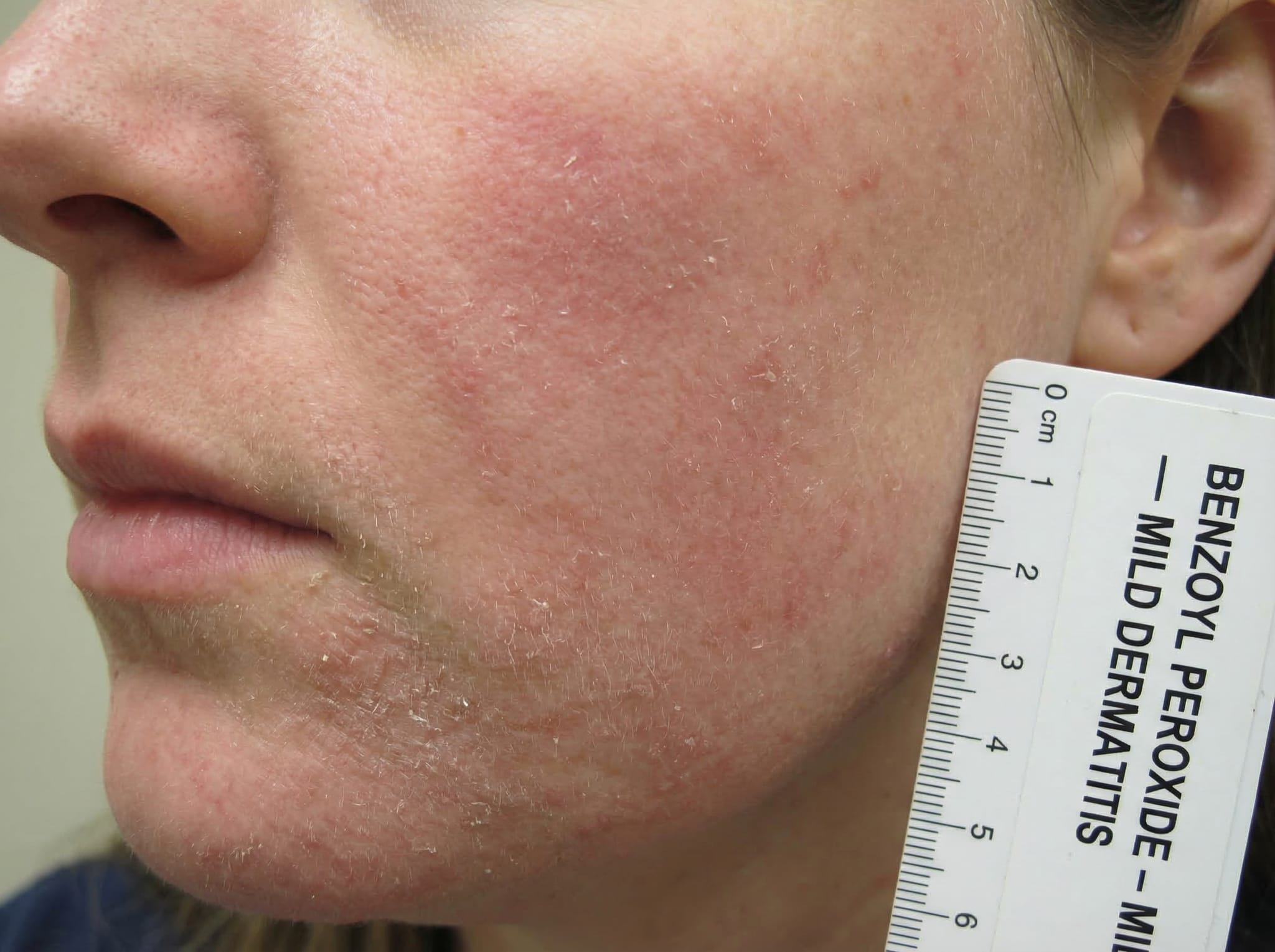
Clinical note: These effects don't always resolve with continued use. In a 2016 study published in the Journal of the American Academy of Dermatology, 22% of patients discontinued benzoyl peroxide specifically due to persistent irritation after 8 weeks.
Allergic Contact Dermatitis (1-5% of users)
True allergy to benzoyl peroxide is less common but more serious. Symptoms include:
- Severe redness beyond the application area
- Swelling of the face
- Intense itching
- Blistering or weeping skin
Medical recommendation: If you develop these symptoms, discontinue immediately and consult a dermatologist. Do not attempt to "push through" an allergic reaction.
Fabric Bleaching (Nearly 100% of users)
This is the side effect patients find most frustrating but is rarely emphasized in medical consultations. Benzoyl peroxide is a powerful bleaching agent:
- Permanently discolors colored pillowcases, sheets, and towels
- Bleaches clothing necklines and collars
- Affects hair (if product drips during application)
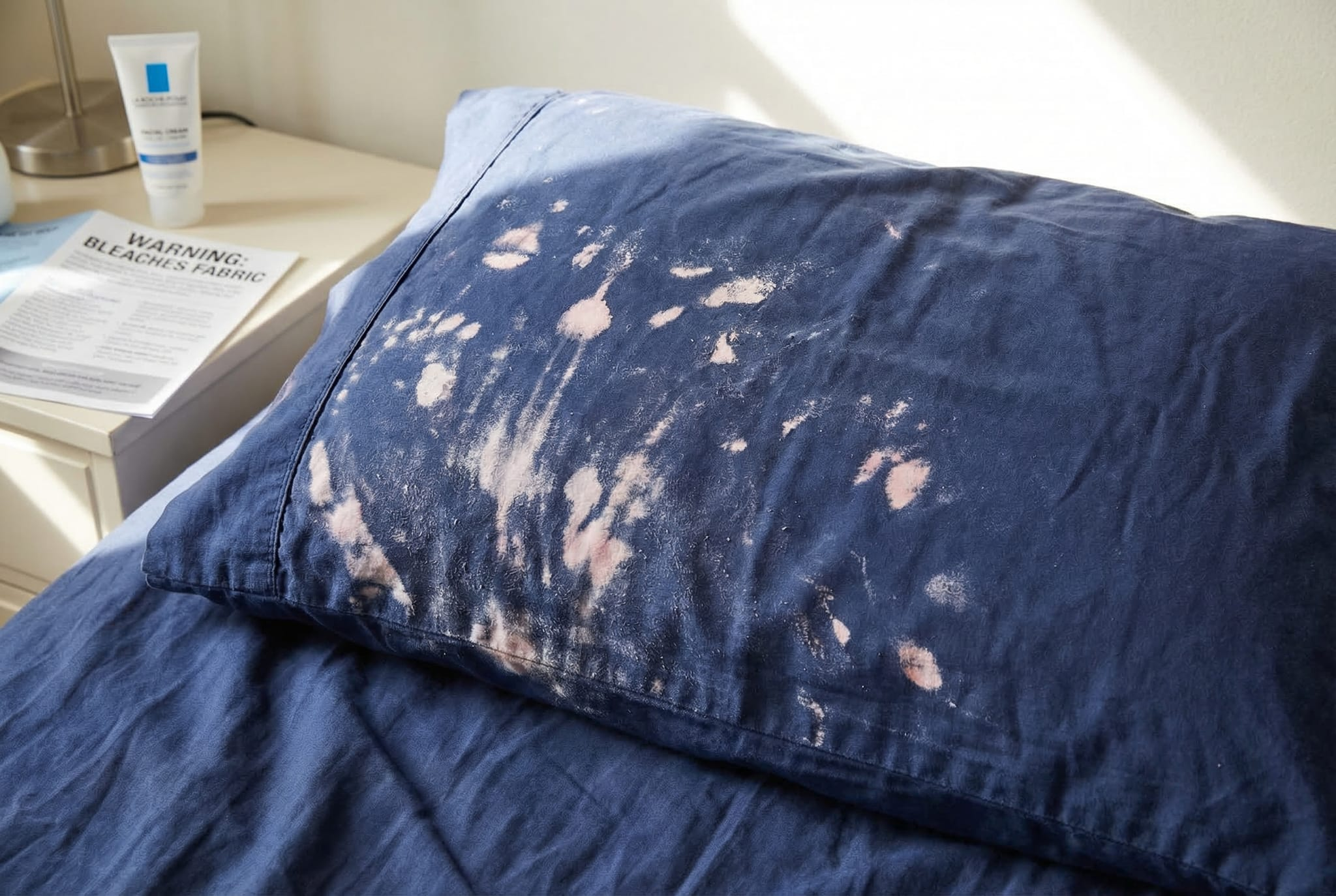
Practical impact: Patients need white bedding and designated white towels, or must accept ruining their current linens. This represents an ongoing hidden cost rarely mentioned during prescription.
Managing Skin Irritation
If you proceed with benzoyl peroxide despite these considerations, clinical experience suggests these strategies:
Start Low and Go Slow
- Begin with 2.5% concentration, not 5% or 10%
- Apply every other day for the first two weeks
- Use only a pea-sized amount for the entire face
Evidence: A comparative study found 2.5% benzoyl peroxide was nearly as effective as 10% but caused significantly less irritation. Higher concentrations don't necessarily mean better results.
Timing and Application
- Apply to completely dry skin (wait 20 minutes after washing)
- Use at night only initially
- Layer a bland moisturizer on top after 5-10 minutes
When to Stop
Dermatologists sometimes encourage patients to persist through initial irritation, but there's a point where continued use isn't medically justified:
- If redness and peeling worsen after 4 weeks
- If you develop contact dermatitis symptoms
- If irritation interferes with work, school, or quality of life
Medical perspective: Skin barrier damage from over-treatment can actually worsen acne by triggering inflammatory pathways. Sometimes the best decision is to discontinue.
Realistic Timeline Expectations
Marketing materials often suggest "see results in 2-4 weeks," but peer-reviewed dermatological literature paints a different picture:
Week 1-2: Expect irritation with no visible improvement. Skin may look worse due to dryness and redness.
Week 4-6: Early responders begin seeing modest reduction in new breakouts. Non-responders see no change or worsening.
Week 8-12: Maximum benefit typically achieved. If you're not seeing meaningful improvement by week 12, continued use is unlikely to help.
Beyond 12 weeks: Benefits plateau. Long-term use is primarily about maintenance, not additional improvement.
Drug Interactions and Precautions
Benzoyl peroxide can interfere with other acne treatments:
- Incompatible with tretinoin - Oxidizes and inactivates retinoids if applied simultaneously
- Additive irritation with salicylic acid - Using both increases side effects without increasing efficacy
- May reduce effectiveness of some cosmetics - Particularly vitamin C serums
Clinical recommendation: If using multiple acne products, apply benzoyl peroxide in the morning and other treatments at night, or consult a dermatologist about proper sequencing.
Who Should Consider Alternatives
Based on clinical data and patient outcomes, benzoyl peroxide may not be the optimal choice if you have:
- Very sensitive or eczema-prone skin - Irritation risk exceeds potential benefit
- Darker skin tones - Post-inflammatory hyperpigmentation from irritation can be worse than original acne
- Moderate to severe acne - Prescription-strength retinoids or isotretinoin have higher success rates
- Previous contact dermatitis to any skincare products - Increased risk of allergic reaction
Bottom Line
Benzoyl peroxide is an established acne treatment with documented antimicrobial effects, but clinical trials show that 40-50% of users see minimal improvement, and 30-50% experience significant skin irritation. The "moderate improvement" seen in successful cases typically means a 30-50% reduction in lesions, not complete clearance. Side effects including dryness, redness, and permanent fabric bleaching are common and persistent. If you choose to try benzoyl peroxide, start with the lowest concentration (2.5%), expect an initial worsening period of 2-4 weeks, and set a 12-week trial endpoint. If you're not seeing meaningful results by then, discuss alternative treatments with your dermatologist rather than persisting with an approach that isn't working for your particular case.
How we reviewed this article:
Our experts continually monitor the health and wellness space, and we update our articles when new information becomes available.
- Decker A, Graber EM. Over-the-counter Acne Treatments: A Review. J Clin Aesthet Dermatol. 2012https://www.ncbi.nlm.nih.gov/pmc/articles/PMC3366450/
- Zaenglein AL, et al. Guidelines of care for the management of acne vulgaris. J Am Acad Dermatol. 2016https://pubmed.ncbi.nlm.nih.gov/26897386/
Read This Next
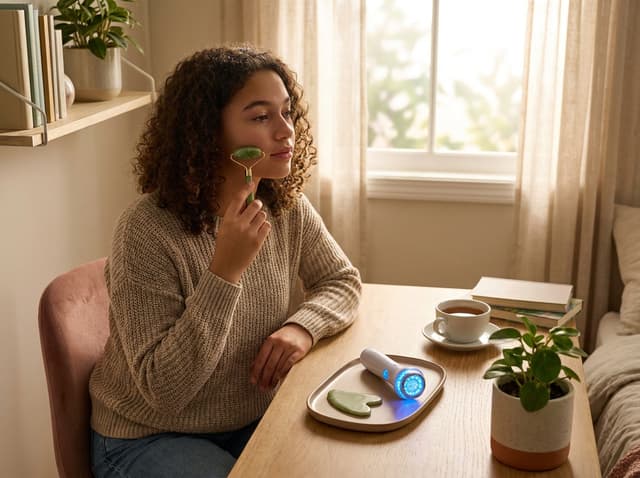
At-Home Dermatology Tools: Gua Sha, Jade Rollers, and Acne Devices
Most at-home skin tools are luxury items, not acne treatments. Here's an honest look at what works, what's harmless, and what can actually make things worse.
Read More →
Vitamin C Serum and Acne: Brightening Without Breaking Out
Ceramides and Acne: Why Your Skin Barrier Is the Foundation
Probiotics for Acne: What the Science Actually Says (So Far)
The gut-skin axis is real and the early research on probiotics for acne is interesting. But 'interesting' and 'worth spending $30/month on' aren't the same thing. Here's what we know and what we don't.
Read More →
Hormonal IUDs and Acne: Why Some Birth Control Makes Skin Worse
Levonorgestrel IUDs like Mirena and Kyleena can trigger or worsen acne because of their androgenic progestin. Here's why it happens, what to do about it, and how other birth control options compare.
Read More →