Acne and Anxiety: When It's More Than Just Worrying About Your Skin
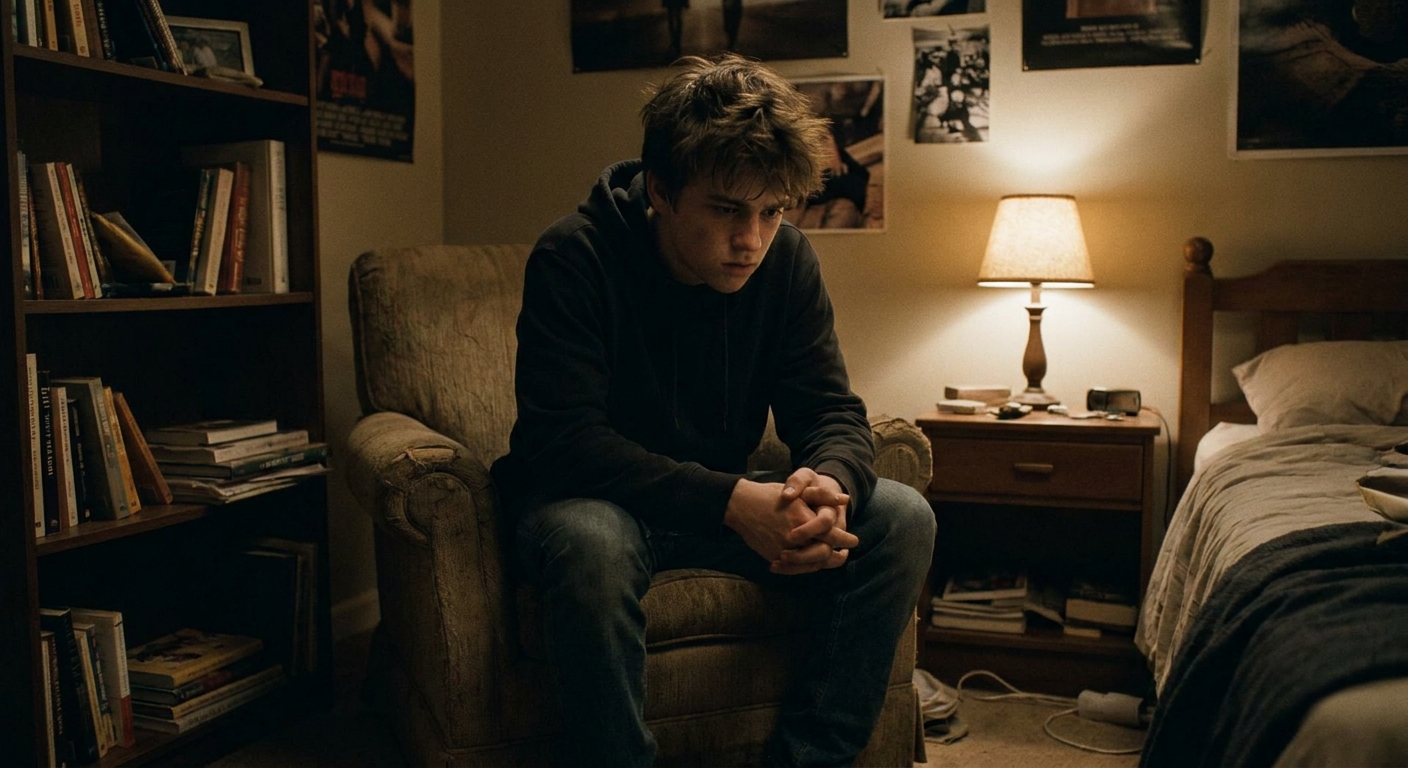
Everyone with acne feels self-conscious about it sometimes. That's normal. You glance in the mirror before school, notice a new breakout, and feel a wave of frustration or embarrassment. That's an ordinary human reaction to something you didn't ask for and can't fully control.
But for some people, it goes further than that. The frustration becomes constant. The self-consciousness turns into avoidance. You start canceling plans, dreading school, checking mirrors compulsively, or spending hours researching treatments when you should be sleeping. At some point, the anxiety about your skin starts doing more damage to your life than the acne itself.
I want to talk about where that line is, because I think a lot of teenagers are suffering quietly with acne-related anxiety that could be helped if they knew it was okay to ask for support.
The Research Is Pretty Clear on This
Acne and mental health are connected. This isn't a soft claim. The data is substantial. A 2018 study in the British Journal of Dermatology analyzed records from nearly 2 million individuals and found that acne was associated with a 63% increased risk of developing major depressive disorder [1]. Another study in Dermatology and Therapy found that up to 50% of acne patients experience psychological distress significant enough to affect daily functioning [2].
For teenagers, these numbers might actually be conservative. Adolescence is already a period of heightened self-awareness and social comparison. Your brain is literally wired to care intensely about how others perceive you during these years. Adding a visible skin condition to that mix creates a specific kind of stress that adults often underestimate.
A 2020 survey in the Journal of the American Academy of Dermatology found that adolescents with acne reported lower self-esteem, higher social anxiety, and more depressive symptoms than their peers without acne, and the severity of the acne only partially predicted the severity of the psychological impact [3]. Some people with mild acne feel devastated. Some people with severe acne cope well. The relationship between how bad your skin looks and how bad you feel about it is surprisingly loose.
That last point matters. If your acne is "not that bad" but you're struggling significantly, that doesn't mean you're overreacting. Your distress is valid regardless of how many pimples someone else can count on your face.
Normal Self-Consciousness vs. Something More
It's worth drawing a rough line between typical acne frustration and anxiety that might benefit from professional help. These aren't clinical diagnostic criteria. I'm not a psychologist. But these patterns show up consistently in the research on acne and mental health, and they're worth being honest with yourself about.
Typical self-consciousness looks like:
- Feeling annoyed or frustrated when you break out
- Wishing your skin were clearer
- Occasionally feeling embarrassed about a visible pimple
- Preferring to look presentable before seeing people
- Browsing skincare content to find better products
Anxiety that might need support looks like:
- Checking your skin in every reflective surface you pass, or avoiding mirrors entirely
- Canceling plans because of how your skin looks
- Feeling unable to make eye contact or talk to people during a breakout
- Picking at your skin for extended periods, unable to stop even though you know it makes things worse
- Declining grades because you can't concentrate on anything except your skin
- Spending hours daily researching treatments, reading about acne, or watching skincare videos
- Feeling like your life will only begin "once my skin is clear"
- Having intrusive thoughts about how others are judging your skin
- Skipping school or activities specifically because of acne
If you recognized yourself in that second list, you're not alone. And reading this might be the first time someone has told you: that level of distress isn't something you have to just push through.
Body Dysmorphic Disorder and Acne
Body dysmorphic disorder (BDD) is a condition where someone becomes fixated on perceived flaws in their appearance that others can barely notice or don't notice at all. Acne is one of the most common triggers for BDD in teenagers.
A 2015 study in the Journal of Psychiatric Research found that roughly 14-21% of patients seeking dermatological treatment for acne met diagnostic criteria for BDD [4]. That's a strikingly high number. It means that in a waiting room of ten acne patients at a dermatologist's office, one or two of them are dealing with something beyond skin deep.
BDD related to acne looks like this: you might have a few small blemishes that most people wouldn't notice, but to you, they're all you can see. You might spend 30 minutes examining your skin up close every morning. You might believe that everyone you interact with is staring at your breakout, even when they clearly aren't. The distress is disproportionate to the visible condition, and that disconnect is the hallmark of BDD.
This isn't vanity. BDD is classified as an obsessive-compulsive spectrum disorder in the DSM-5 [5]. The obsessive thoughts about your appearance aren't a choice. They intrude, they repeat, and they're hard to dismiss with logic alone. Telling someone with BDD to "just stop worrying about it" is about as effective as telling someone with OCD to "just stop checking the locks."

The Skin-Picking Spiral
Excoriation disorder, also called skin-picking disorder, deserves its own section because it's extremely common among teenagers with acne and almost nobody talks about it.
You start by trying to extract a blackhead. Then you notice another clogged pore. Then you see a bump that might become a pimple. Thirty minutes later, you've been picking at your face in the bathroom mirror, your skin is red and raw, and the acne looks ten times worse than when you started. You feel ashamed, you promise yourself you won't do it again, and then tomorrow night you do the same thing.
A 2020 study in Comprehensive Psychiatry found that skin-picking disorder affects approximately 1.4% of the general population but is significantly more common among those with acne, and that it's associated with higher rates of anxiety and depression [6]. The picking creates a cycle: anxiety about acne leads to picking, picking worsens acne, worse acne increases anxiety.
If this sounds familiar, the important thing to understand is that this is a recognized condition with effective treatments. It's not a character flaw. It's not laziness or lack of willpower. The urge to pick is driven by the same neural circuitry involved in OCD and other body-focused repetitive behaviors, and it responds to specific therapeutic approaches.
When and How to Get Help
Here's where I want to be practical rather than just saying "talk to someone." Because "talk to someone" is vague advice that leaves you wondering who, how, and what to even say.
Who to talk to first: Start with whoever feels most accessible. That might be a parent, a school counselor, your regular doctor, or a dermatologist. You don't need to go straight to a psychiatrist. A general practitioner can screen for anxiety and depression and make a referral if needed.
What to say: You don't need a speech. Something like "My acne is really affecting my mental health and I think I might need some help beyond just skincare" is enough. If that feels too hard to say out loud, write it down or text it to whoever you're reaching out to. There's no wrong way to ask for help.
What kind of help exists:
Cognitive Behavioral Therapy (CBT) is the best-studied psychological treatment for acne-related anxiety and BDD. CBT works by identifying the thought patterns that drive your distress and teaching you to respond to them differently. A 2016 meta-analysis in Psychotherapy and Psychosomatics found that CBT significantly reduced BDD symptoms, with effects that lasted well beyond the treatment period [7].
In practice, CBT for acne anxiety might involve examining beliefs like "everyone is staring at my skin" and testing them against evidence. It might involve gradually reducing mirror-checking behavior. It might involve exposure exercises where you go to social events without heavy makeup or specific concealing strategies. It's structured, time-limited (usually 12-20 sessions), and effective.
Habit Reversal Training (HRT) is specifically useful for skin picking. It teaches you to recognize the urge before you start picking and redirect the behavior. A 2012 study in Behavior Modification found that HRT significantly reduced skin-picking frequency and associated distress [8]. Some therapists combine HRT with CBT for people dealing with both anxiety and picking behaviors.
Medication is sometimes appropriate, especially when anxiety or depression is severe. SSRIs (selective serotonin reuptake inhibitors) like fluoxetine and sertraline are the most commonly prescribed for anxiety and BDD in adolescents. A 2019 review in the Journal of Clinical Psychiatry found that SSRIs were effective for BDD symptoms in about 53-73% of patients [9]. Medication decisions should involve both you and a prescribing doctor, and ideally a parent or guardian if you're under 18.
I want to be clear about something: getting help for acne-related anxiety doesn't mean giving up on treating the acne itself. You can work on both simultaneously. In fact, treating the mental health component often makes the skin treatment more effective, because you stop stress-picking, you sleep better, your cortisol levels drop, and you're more consistent with your skincare routine.
What Schools and Parents Often Get Wrong
I want to say this because it needs to be said: adults frequently minimize acne-related distress in teenagers. "It's just a phase." "Everyone gets pimples." "You'll grow out of it." "Stop being so vain."
These responses aren't malicious, but they're harmful. They teach teenagers that their suffering doesn't count, that they should just endure it silently, and that caring about their appearance is shallow. A 2019 study in Pediatric Dermatology found that parental dismissal of acne concerns was associated with delayed treatment-seeking and worse psychological outcomes [10].
If you're a parent reading this: your teenager's distress about their skin is real. It might seem disproportionate to you, but their social world is structured differently than yours. Appearance matters intensely in adolescent social hierarchies. That's not a flaw in your kid. It's a developmental reality.
If you're a teenager and the adults in your life are dismissive: their reaction says more about their discomfort with the topic than about the validity of your feelings. You're allowed to advocate for yourself. You're allowed to ask for a dermatologist appointment. You're allowed to ask for a therapist.

Living With Acne While Working on It
I don't want to end this by saying "just love yourself" or "acne doesn't define you." Both things are technically true but neither is helpful when you're staring at your reflection and hating what you see.
What I will say is this: getting to a place where acne doesn't control your mood, your social life, and your self-worth is possible. It doesn't happen overnight. It usually requires some combination of effective skincare, time, and sometimes professional mental health support. But the teenagers who get that support consistently report that they wish they'd done it sooner.
You're not weak for struggling with this. Acne is the most common skin condition in the world, and the psychological burden it carries is well-documented in medical literature. The gap between knowing that intellectually and feeling it emotionally is exactly what therapy helps close.
Key Takeaways
- Acne is associated with a 63% increased risk of major depression, and up to half of acne patients experience clinically significant psychological distress.
- The severity of your acne doesn't determine the severity of your distress. Mild acne can cause severe anxiety, and that's not an overreaction.
- BDD affects 14-21% of acne patients seeking dermatological care, making it far more common than most people realize.
- CBT is the most effective therapy for acne-related anxiety and BDD, with lasting results in 12-20 sessions.
- Skin picking is a recognized disorder with specific treatments like Habit Reversal Training. You're not just "doing it to yourself."
Bottom Line
If acne is affecting your ability to go to school, see friends, concentrate, or feel okay about yourself on a regular basis, that's not normal teenage angst. That's your mental health telling you something needs attention. The same way you'd see a dermatologist for severe acne, you can see a therapist for severe acne-related anxiety. Both are legitimate medical concerns, and both have effective treatments.
You don't have to wait until your skin is clear to start feeling better about your life. In fact, that's kind of the whole point.
Sources
- Vallerand, I. A., Lewinson, R. T., Mathew, M. S., Barnabe, C., Patten, S. B., & Bhatt, D. L. (2018). Risk of depression among patients with acne in the U.K.: a population-based cohort study. British Journal of Dermatology, 178(3), e194-e195.
- Hazarika, N., & Archana, M. (2016). The psychosocial impact of acne vulgaris. Indian Journal of Dermatology, 61(5), 515-520.
- Gallitano, S. M., & Berson, D. S. (2018). How acne bumps cause the blues: the influence of acne vulgaris on self-esteem. International Journal of Women's Dermatology, 4(1), 12-17.
- Krebs, G., Fernández de la Cruz, L., & Mataix-Cols, D. (2017). Recent advances in understanding and managing body dysmorphic disorder. Evidence-Based Mental Health, 20(3), 71-75.
- American Psychiatric Association. (2022). Diagnostic and Statistical Manual of Mental Disorders (5th ed., text revision). Washington, DC: American Psychiatric Publishing.
- Grant, J. E., Chamberlain, S. R., Redden, S. A., Leppink, E. W., Odlaug, B. L., & Kim, S. W. (2016). N-Acetyl cysteine in the treatment of excoriation disorder: a randomized clinical trial. JAMA Psychiatry, 73(5), 490-496.
- Harrison, A., Fernández de la Cruz, L., Enander, J., Radua, J., & Mataix-Cols, D. (2016). Cognitive-behavioral therapy for body dysmorphic disorder: a systematic review and meta-analysis of randomized controlled trials. Clinical Psychology Review, 48, 43-51.
- Teng, E. J., Woods, D. W., & Twohig, M. P. (2006). Habit reversal as a treatment for chronic skin picking: a pilot investigation. Behavior Modification, 30(4), 411-424.
- Phillips, K. A., & Hollander, E. (2008). Treating body dysmorphic disorder with medication: evidence, misconceptions, and a suggested approach. Body Image, 5(1), 13-27.
- Magin, P. (2013). Appearance-related bullying and skin disorders. Clinics in Dermatology, 31(1), 66-71.
How we reviewed this article:
Our experts continually monitor the health and wellness space, and we update our articles when new information becomes available.
Read This Next
When Your Sibling Has Clear Skin and You Don't: Dealing with Acne Jealousy
Watching your sibling eat the same food, skip skincare, and have perfect skin while you break out constantly is one of the most frustrating parts of having acne.
Read More →
Does Sunlight Help or Hurt Acne? The Complicated Truth
Sun might temporarily mask acne, but it makes things worse long-term. Here's why the vacation skin effect isn't what you think and why UV isn't an acne treatment.
Read More →
Instagram Filters and Acne: How Social Media Distorts Skin Reality
Filters blur texture, erase pores, and create a version of skin that doesn't exist in real life. Here's how that messes with your head when you have acne.
Read More →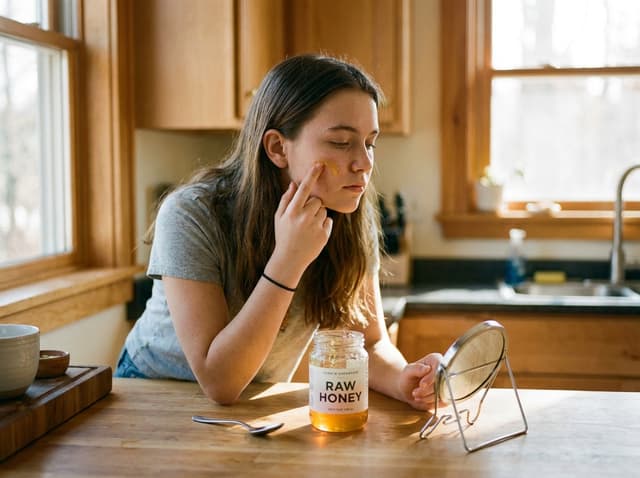
Honey for Acne: Does This Kitchen Ingredient Actually Work?
Manuka honey has real antibacterial research behind it. Regular honey, not so much. Here's what works, what doesn't, and whether it's worth the sticky mess.
Read More →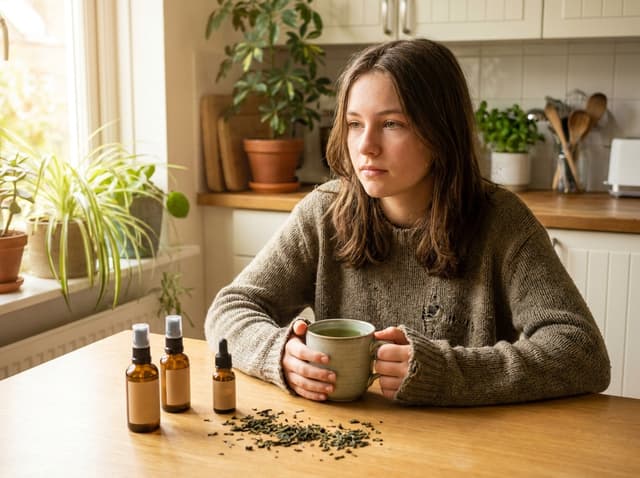
Green Tea and Acne: The Drink (and Ingredient) That Might Help
EGCG in green tea has anti-inflammatory and anti-androgenic properties that could help acne-prone skin. Here's what the research says about drinking it and putting it on your face.
Read More →