Do Protein Shakes and Supplements Cause Acne in Teens?

If you started hitting the gym and noticed your skin getting worse around the same time, you're not imagining things. Bodybuilding forums have been talking about the whey protein-acne connection for over a decade, and the science has finally caught up to what lifters figured out through trial and error.
I want to be upfront: not every supplement will break you out, and not every person who drinks whey will get acne. But there's enough evidence now that if you're a teen dealing with stubborn breakouts and you're also slamming protein shakes twice a day, it's worth looking at what's in that shaker bottle.
The Whey-Acne Connection Is Real
Whey protein isn't just protein. It's a dairy derivative, and dairy has a well-documented relationship with acne that goes beyond old wives' tales.
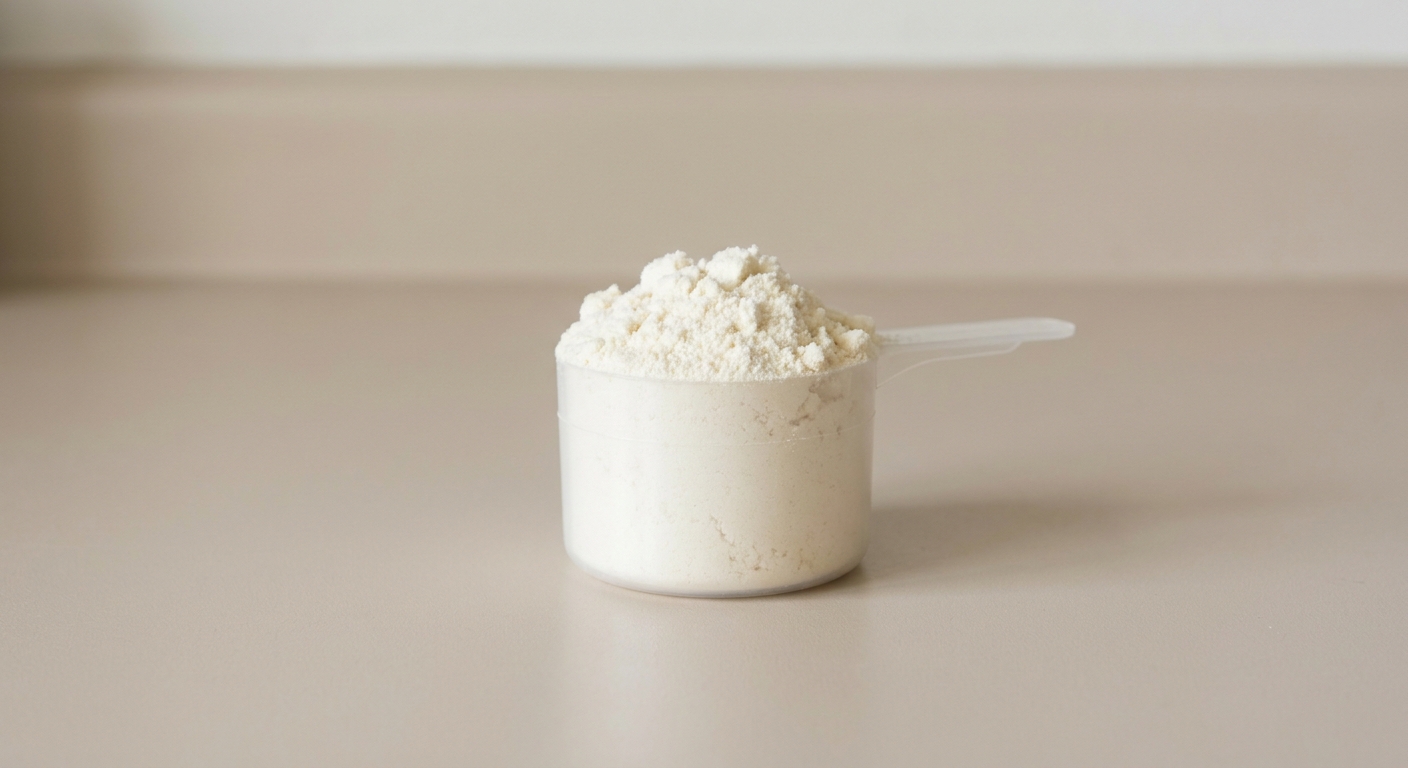
Here's what happens when you drink a whey protein shake: it spikes your blood levels of insulin-like growth factor 1 (IGF-1). That's actually part of why it's good for building muscle. IGF-1 promotes tissue growth, including muscle tissue. But IGF-1 also stimulates your sebaceous glands to produce more oil, and it ramps up androgen activity in your skin. More oil plus more androgen stimulation equals the perfect setup for clogged pores and breakouts.
A 2013 study published in the Brazilian Journal of Dermatology followed five teenage males who developed acne after starting whey protein supplementation. When they stopped the whey, their acne improved. When some of them restarted it, the acne came back (Silverberg, 2012). That's about as clear a cause-and-effect relationship as you'll find in dermatology research.
Another study from 2017 in the journal Health Promotion Perspectives found that whey protein consumption was associated with acne in gym-going young adults, with the effect being dose-dependent. The more whey they consumed, the worse the breakouts tended to be (Pontes et al., 2013).
This isn't surprising when you consider the broader dairy-acne research. A large meta-analysis published in Nutrients in 2018 that reviewed 14 studies involving nearly 80,000 participants found a positive association between dairy intake and acne, with the strongest link seen in skim milk. Whey concentrate is essentially skim milk with the casein removed, so it carries the same acne-promoting properties, possibly even more concentrated (Juhl et al., 2018).
Why Whey Specifically?
Not all protein sources affect your skin the same way. Whey has a uniquely high insulinogenic index, meaning it triggers a bigger insulin response per gram than most other foods. For comparison, whey protein produces a larger insulin spike than white bread, gram for gram (Nilsson et al., 2004). That insulin spike feeds directly into the IGF-1 pathway I mentioned above.
Casein, the other major protein in milk, also raises IGF-1 but appears to do so less aggressively than whey. Still, if you're acne-prone, I'd be cautious with casein protein powders too.
The amino acid profile of whey also matters. Whey is particularly high in leucine, which activates a cellular pathway called mTORC1. This pathway is basically a master growth switch in your cells. When mTORC1 is activated, it tells your sebaceous glands to produce more sebum and can accelerate the clogging of pores. Dr. Bodo Melnik at the University of Osnabrück has published extensively on this mechanism, arguing that the Western diet's constant activation of mTORC1 is a primary driver of acne (Melnik, 2012).
Plant-Based Protein: A Better Option for Acne-Prone Skin
If you want to keep supplementing with protein but your skin is suffering, plant-based proteins are worth trying. Pea protein, rice protein, hemp protein, and soy protein don't carry the same dairy-derived IGF-1 boosting properties.
I should note that plant proteins still contain leucine and will still raise insulin to some degree. They're not magically acne-proof. But they remove the dairy component from the equation, and for many people that's enough to make a noticeable difference.
A practical approach: switch to a plant-based protein powder for 8 to 12 weeks while keeping everything else the same. If your acne improves, you have your answer. If it doesn't change, whey probably wasn't your trigger and you can go back to it.
Some plant protein options I think are reasonable:
- Pea protein isolate has the best amino acid profile among plant sources and mixes reasonably well. The taste takes some getting used to.
- Rice protein is hypoallergenic and easy on digestion but incomplete on its own. Many brands blend it with pea protein to cover the amino acid gaps.
- Soy protein isolate is effective and well-studied. There's been a lot of fear-mongering about soy and hormones that isn't supported by the research in normal dietary amounts (Reed et al., 2021).
What About Creatine?
Good news here. Creatine monohydrate is probably the most studied sports supplement in existence, and there's no meaningful evidence linking it to acne. It doesn't significantly affect IGF-1 levels or androgen activity at standard doses of 3 to 5 grams per day.
There's a persistent gym myth that creatine raises DHT (dihydrotestosterone), which could theoretically worsen acne. This comes from a single 2009 South African study on rugby players that showed a slight increase in DHT ratios during a creatine loading phase (van der Merwe et al., 2009). No other study has replicated this finding, and the increase was within normal physiological ranges. I wouldn't lose sleep over creatine and acne.
That said, creatine does cause water retention, and some teens confuse the puffiness and bloating with skin changes. If you notice your face looking more swollen on creatine, that's water, not acne.
Pre-Workout Supplements: Check the Label
Pre-workouts are a mixed bag. The core ingredients like caffeine, beta-alanine, and citrulline aren't linked to acne. But many pre-workout formulas contain added ingredients that could be problems.
Biotin is the big one to watch for. A lot of pre-workouts, multivitamins, and "hair, skin, and nails" supplements contain high doses of biotin (vitamin B7), sometimes 5,000 to 10,000 mcg per serving. The recommended daily intake for teens is only 25 mcg. Excess biotin has been reported to cause or worsen acne in multiple case reports published in dermatology journals (Huang & Bhatt, 2020). The mechanism isn't entirely clear, but it may interfere with the absorption of pantothenic acid (vitamin B5), which plays a role in sebum regulation.
If your pre-workout lists biotin on the label, that's a potential issue. Switching to a pre-workout without biotin or just drinking coffee before your workout is an easy fix.
Niacin (vitamin B3) in high doses can also cause skin flushing and has been anecdotally associated with breakouts, though the evidence is weaker.
Artificial sweeteners and dyes in pre-workouts haven't been convincingly linked to acne in studies, despite what you might read online.
BCAAs: Probably Not a Problem, But Not Necessary Either
Branched-chain amino acids (leucine, isoleucine, and valine) are sometimes taken as a separate supplement. As I mentioned, leucine activates mTORC1, so in theory high-dose BCAA supplementation could contribute to acne through that pathway.
In practice, if you're already eating enough protein from food (which most teens who are into fitness absolutely are), supplemental BCAAs aren't giving you any additional benefit. Multiple studies have shown that BCAAs on top of adequate protein intake don't improve muscle growth or recovery (Wolfe, 2017). So my opinion is that dropping BCAAs is an easy decision. You're probably wasting money on them anyway, and removing one potential acne trigger is a bonus.
A Few Other Supplements Worth Mentioning
Mass gainers are typically whey protein mixed with a large amount of simple carbohydrates. They'll spike your insulin even more than whey alone. If acne is a concern, mass gainers are probably the worst supplement category you could choose.
Testosterone boosters marketed to teens are mostly ineffective for their stated purpose, but some contain ingredients that could affect hormonal balance unpredictably. I'd avoid them entirely, and not just because of acne.
Zinc supplements at moderate doses (15 to 30 mg daily) may actually help acne. Zinc has anti-inflammatory and anti-androgen properties, and a few studies have shown modest improvements in acne severity with zinc supplementation (Yee et al., 2020). Just don't mega-dose it. More than 40 mg daily can cause copper deficiency and GI problems.
Key Takeaways
- Whey protein has a real, research-backed connection to acne through insulin and IGF-1 pathways. If you're breaking out, it's one of the first supplements to eliminate.
- Plant-based protein powders (pea, rice, soy, hemp) are reasonable alternatives that remove the dairy factor.
- Creatine is probably fine for your skin at standard doses despite the gym rumors.
- Check pre-workouts for biotin. High-dose biotin is a sneaky acne trigger hiding in many supplement formulas.
- BCAAs are unnecessary if you eat enough protein, and cutting them removes a theoretical acne trigger while saving you money.
The Bottom Line
You don't have to choose between gains and clear skin, but you might need to choose between whey protein and clear skin. The evidence is strong enough that any teen dealing with acne should at least try switching to a plant-based protein for a couple of months to see what happens. It's a low-risk experiment with potentially high reward.
And honestly, look at the bigger picture too. If you're sleeping five hours a night, eating fast food daily, and stressed about school, swapping your protein powder alone isn't going to fix your skin. Supplements are one piece of a larger puzzle. But they're the piece most teens overlook because nobody thinks their post-workout shake could be causing their breakouts.
Sources
- Silverberg, N.B. (2012). Whey protein precipitating moderate to severe acne flares in 5 teenaged athletes. Cutis, 90(2), 70-72.
- Pontes, T.C., et al. (2013). Incidence of acne vulgaris in young adult users of protein-calorie supplements in the city of João Pessoa. Anais Brasileiros de Dermatologia, 88(6), 907-912.
- Juhl, C.R., et al. (2018). Dairy intake and acne vulgaris: A systematic review and meta-analysis of 78,529 children, adolescents, and young adults. Nutrients, 10(8), 1049.
- Nilsson, M., et al. (2004). Glycemia and insulinemia in healthy subjects after lactose-equivalent meals of milk and other food proteins. American Journal of Clinical Nutrition, 80(5), 1246-1253.
- Melnik, B.C. (2012). Diet in acne: further evidence for the role of nutrient signalling in acne pathogenesis. Acta Dermato-Venereologica, 92(3), 228-231.
- van der Merwe, J., et al. (2009). Three weeks of creatine monohydrate supplementation affects dihydrotestosterone to testosterone ratio in college-aged rugby players. Clinical Journal of Sport Medicine, 19(5), 399-404.
- Huang, S.C. & Bhatt, V. (2020). Biotin and acne. Dermatology Practical & Conceptual, 10(3), e2020063.
- Wolfe, R.R. (2017). Branched-chain amino acids and muscle protein synthesis in humans: myth or reality? Journal of the International Society of Sports Nutrition, 14, 30.
- Yee, B.E., et al. (2020). Serum zinc levels and efficacy of zinc treatment in acne vulgaris: A systematic review and meta-analysis. Dermatologic Therapy, 33(6), e14252.
- Reed, K.E., et al. (2021). Neither soy nor isoflavone intake affects male reproductive hormones. Reproductive Toxicology, 100, 60-67.
How we reviewed this article:
Our experts continually monitor the health and wellness space, and we update our articles when new information becomes available.
Read This Next

When Your Sibling Has Clear Skin and You Don't: Dealing with Acne Jealousy
Watching your sibling eat the same food, skip skincare, and have perfect skin while you break out constantly is one of the most frustrating parts of having acne.
Read More →
Does Sunlight Help or Hurt Acne? The Complicated Truth
Sun might temporarily mask acne, but it makes things worse long-term. Here's why the vacation skin effect isn't what you think and why UV isn't an acne treatment.
Read More →
Instagram Filters and Acne: How Social Media Distorts Skin Reality
Filters blur texture, erase pores, and create a version of skin that doesn't exist in real life. Here's how that messes with your head when you have acne.
Read More →
Honey for Acne: Does This Kitchen Ingredient Actually Work?
Manuka honey has real antibacterial research behind it. Regular honey, not so much. Here's what works, what doesn't, and whether it's worth the sticky mess.
Read More →
Green Tea and Acne: The Drink (and Ingredient) That Might Help
EGCG in green tea has anti-inflammatory and anti-androgenic properties that could help acne-prone skin. Here's what the research says about drinking it and putting it on your face.
Read More →