Retinol vs. Retinoid: What's the Difference and Which Do Teens Need?
Retinol vs. retinoid: what's the difference and which do teens need?
I see this confusion constantly. Someone recommends "retinol for acne," someone else says "you need a retinoid," and a third person insists they're the same thing. They're not. The difference matters, and if you pick the wrong one you'll either waste months on a product that barely works or blast your skin into peeling misery.
Here's what's actually going on.
Retinoid is the umbrella term
Every retinol is a retinoid, but not every retinoid is retinol. "Retinoid" refers to the whole family of vitamin A derivatives used in skincare. Retinol is one specific member of that family, and honestly, it's one of the weaker ones.
The family includes:
- Retinol (over the counter, weakest)
- Retinaldehyde (over the counter, slightly stronger)
- Adapalene (over the counter in the US at 0.1%, prescription at 0.3%)
- Tretinoin (prescription only, strong)
- Tazarotene (prescription only, strongest)
They all eventually do the same thing in your skin. They bind to retinoic acid receptors that regulate cell turnover, oil production, and inflammation. The difference is how many conversion steps each one needs before it gets there.
The conversion chain
Your skin can only use retinoic acid. Everything else has to be converted first.
Retinol goes through two conversion steps: retinol turns into retinaldehyde, which turns into retinoic acid. Each step loses potency. By the time retinol becomes something your skin can actually use, you've lost a lot of strength along the way.
Tretinoin (brand name Retin-A) is already retinoic acid. No conversion needed. That's why it works faster and stronger.
Adapalene is different from all of these. It's synthetic, meaning it doesn't go through the conversion chain at all. It binds directly to specific retinoic acid receptors (RAR-beta and RAR-gamma) while skipping others. This selectivity is why it causes less irritation than tretinoin while still being effective against acne (Millikan, 2000; Thiboutot et al., 2008).
Why most retinol serums won't fix your acne
This is the part that frustrates me. Brands like The Ordinary, CeraVe, and Neutrogena sell retinol serums marketed for acne. They're not useless products. But for active acne in teens, retinol is usually too weak.
The concentrations in over the counter retinol products typically range from 0.01% to 1%. After the two step conversion to retinoic acid, the effective strength is a fraction of what you started with. A 2007 study in the Journal of Drugs in Dermatology found that 0.1% retinol was roughly equivalent to 0.0025% tretinoin, which is far below the 0.025% clinical dose used for acne (Kafi et al., 2007).
Retinol products are fine for anti-aging in adults. They can help with texture over time. But if you're a teenager with persistent blackheads, whiteheads, or inflammatory acne, retinol serums are not the move. You need something that actually works at clinical strength.
Adapalene is the best starting retinoid for teens
I have a strong opinion on this: if you're a teen looking for a retinoid, start with adapalene 0.1% (Differin). Here's why.
It's available without a prescription. In 2016, the FDA approved Differin (adapalene 0.1% gel) for over the counter sale. You can buy it at any drugstore for around $13 to $15. Before this, every effective retinoid for acne required a dermatologist visit.
It's gentler than tretinoin. A head to head study published in the Journal of the American Academy of Dermatology compared adapalene 0.1% gel to tretinoin 0.025% gel in 300 patients. Both reduced acne lesions by similar amounts after 12 weeks, but adapalene caused significantly less irritation, redness, and peeling (Thiboutot et al., 2008).
It's photostable. Tretinoin breaks down in sunlight, which means it only works at night and any residue left on your skin during the day is wasted. Adapalene doesn't degrade in UV light. You should still use it at night (and always wear sunscreen), but it's more forgiving if your routine isn't perfect.
It works on both comedonal and inflammatory acne. Adapalene unclogs pores and also has direct anti-inflammatory properties. A 2003 study showed it reduces inflammatory markers (AP-1 and toll-like receptor 2) in the skin, which is something retinol can't do at over the counter concentrations (Tenaud et al., 2003).
Tretinoin vs. adapalene
If adapalene isn't enough, tretinoin is the next step. You'll need a prescription.
Tretinoin comes in strengths of 0.025%, 0.05%, and 0.1%. It's been around since the 1960s and has decades of clinical data behind it. For acne, it works by speeding up cell turnover so dead cells don't clog your pores.
The tradeoff is irritation. Tretinoin can cause real dryness, flaking, redness, and something called the "retinoid purge," where acne temporarily gets worse in the first 4 to 6 weeks as trapped comedones come to the surface. Adapalene can cause a purge too, but it tends to be milder.
A Cochrane review looking at retinoids for acne found that adapalene and tretinoin showed similar efficacy for mild to moderate acne. The review noted that adapalene had a better tolerability profile, making it a reasonable first choice (Dressler et al., 2016). Tretinoin might have a slight edge for more severe cases, or when combined with other prescription treatments.
My take: start with adapalene. If your acne doesn't improve after 12 weeks of consistent use, talk to a dermatologist about tretinoin.
The irritation spectrum and how to manage it
Every retinoid will irritate your skin to some degree when you first start. This is normal. It doesn't mean the product is too strong or that you're allergic to it.
What's happening is that the retinoid is accelerating skin cell turnover. Your skin isn't used to that speed. It responds with dryness, flaking, some redness, and sometimes a burning feeling when you apply other products.
Here's how to manage it:
Start slow. Use your retinoid twice a week for the first two weeks. Then every other night for two weeks. Then nightly. Rushing this is the number one mistake people make.
Buffer it. Apply moisturizer first, wait 10 minutes, then apply the retinoid on top. This reduces irritation without significantly reducing effectiveness. A study in the Journal of Cosmetic Dermatology confirmed that "sandwich" application (moisturizer, retinoid, moisturizer) maintained efficacy while improving tolerability (Del Rosso, 2014).
Use a plain moisturizer. CeraVe Moisturizing Cream, Vanicream, or Cetaphil. Nothing with fragrance, nothing with AHAs or BHAs, nothing "active." Your skin is already dealing with enough.
Expect 8 to 12 weeks. Retinoids are slow. You won't see results in a week or two. The acne might temporarily get worse. This is when most people quit, and it's a mistake.
Don't mix retinoids with AHAs or BHAs at first
Glycolic acid, lactic acid, salicylic acid... these are all great ingredients for acne. But combining them with a retinoid when your skin is still adjusting is asking for trouble. Both are exfoliants. Stacking them can damage your moisture barrier, leading to raw, stinging, irritated skin that's actually more prone to breakouts (Berson & Draelos, 2010).
Once your skin has fully adjusted to the retinoid (usually after 6 to 8 weeks of nightly use without irritation), you can cautiously reintroduce other actives. Use them on alternate nights, not the same night. For example, retinoid on Monday, salicylic acid on Tuesday.
But honestly, for most teens with acne, a retinoid plus a good cleanser, moisturizer, and sunscreen is plenty. Adding more products rarely helps and often backfires.
Key takeaways
- Retinol is a weak, over the counter form of vitamin A that usually isn't strong enough to treat acne. It needs two conversion steps before your skin can use it.
- Adapalene (Differin) 0.1% is available without a prescription and is the best starting retinoid for teen acne. It's nearly as effective as tretinoin with less irritation.
- Tretinoin is prescription strength and appropriate if adapalene alone isn't working after 12 weeks.
- All retinoids take 8 to 12 weeks to show results. Don't quit early.
- Don't combine retinoids with AHAs or BHAs until your skin has fully adjusted, usually 6 to 8 weeks into consistent use.
Bottom line
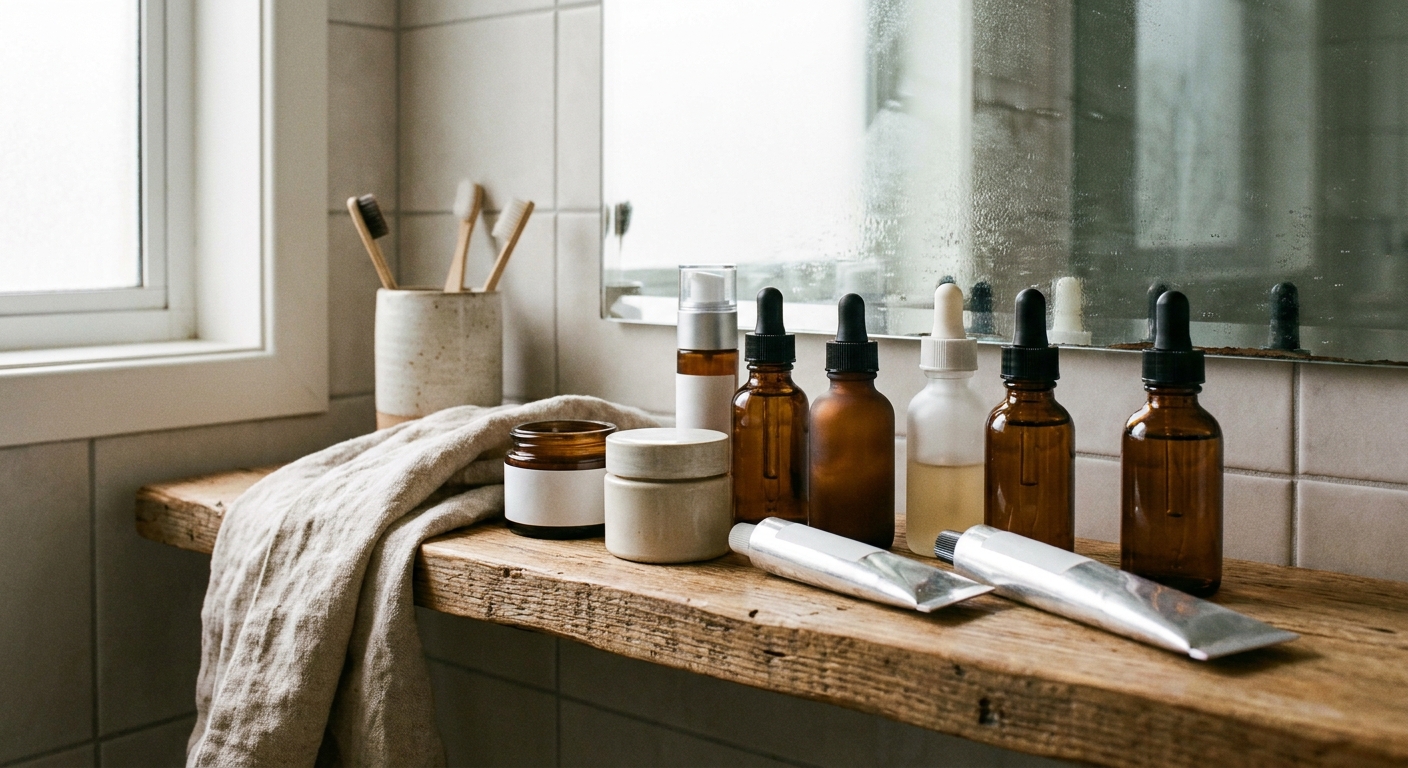
Skip the retinol serums. They're marketed heavily, they look nice on a shelfie, and they're not going to fix your acne. Adapalene 0.1% gel is cheap, available at any pharmacy, and backed by actual clinical evidence for treating acne. Start there, be patient, moisturize aggressively, and give it a full three months before you decide whether it's working.
If it's not enough, a dermatologist can prescribe something stronger. But for most teens with mild to moderate acne, adapalene paired with a basic routine does the job.
Sources
- Millikan, L.E. (2000). Pivotal clinical trials of adapalene in the treatment of acne. Journal of the European Academy of Dermatology and Venereology, 15(Suppl 3), 19-22.
- Thiboutot, D., et al. (2008). Adapalene gel 0.1% as maintenance therapy for acne vulgaris. Journal of the American Academy of Dermatology, 59(6), 990-997.
- Kafi, R., et al. (2007). Improvement of naturally aged skin with vitamin A (retinol). Archives of Dermatology, 143(5), 606-612.
- Tenaud, I., et al. (2003). In vitro modulation of TLR-2 expression on HaCaT keratinocytes by adapalene. Archives of Dermatological Research, 295(2), 94-97.
- Dressler, C., et al. (2016). Topical retinoids for acne vulgaris. Cochrane Database of Systematic Reviews.
- Del Rosso, J.Q. (2014). Clinical relevance of skin barrier changes in the management of acne vulgaris. Journal of Cosmetic Dermatology, 13(2), 87-92.
- Berson, D.S. & Draelos, Z.D. (2010). The effect of retinoid therapy on the tolerability of cosmeceuticals. Journal of Drugs in Dermatology, 9(1), 33-36.
- American Academy of Dermatology. (2024). Retinoid treatment for acne. AAD Clinical Guidelines.
How we reviewed this article:
Our experts continually monitor the health and wellness space, and we update our articles when new information becomes available.
Read This Next
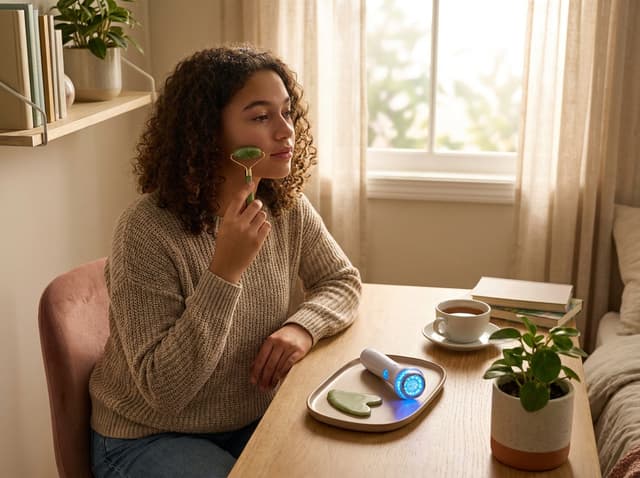
At-Home Dermatology Tools: Gua Sha, Jade Rollers, and Acne Devices
Most at-home skin tools are luxury items, not acne treatments. Here's an honest look at what works, what's harmless, and what can actually make things worse.
Read More →
Vitamin C Serum and Acne: Brightening Without Breaking Out

Ceramides and Acne: Why Your Skin Barrier Is the Foundation

Probiotics for Acne: What the Science Actually Says (So Far)
The gut-skin axis is real and the early research on probiotics for acne is interesting. But 'interesting' and 'worth spending $30/month on' aren't the same thing. Here's what we know and what we don't.
Read More →
Hormonal IUDs and Acne: Why Some Birth Control Makes Skin Worse
Levonorgestrel IUDs like Mirena and Kyleena can trigger or worsen acne because of their androgenic progestin. Here's why it happens, what to do about it, and how other birth control options compare.
Read More →