Accutane for Teens: Everything Parents and Teens Need to Know
Medically reviewed by Dr. Sarah Mitchell, MD, Board-Certified Dermatologist
Written by Teen Acne Solutions Team — Updated May 1, 2026
Key takeaways
- Accutane is reserved for severe or treatment-resistant acne because the side effects are real, but for the right candidate, the ~85% long-term clearance rate is unmatched by any other treatment.
- Every patient gets dry lips, dry skin, and monthly blood draws. These are guaranteed. Most other side effects are manageable, but you need to know what you're signing up for.
- The iPLEDGE program adds logistical hassle with monthly check-ins, pregnancy tests for females, and a narrow 7-day prescription window. Plan for it.
- Current research does not support a causal link between isotretinoin and depression, though your dermatologist should still monitor mood throughout treatment.
- Most patients describe finishing Accutane as life-changing. After years of failed treatments, waking up without new breakouts is a kind of relief that's hard to overstate.
If you're reading this, you've probably already tried a lot of things. Benzoyl peroxide, salicylic acid, maybe antibiotics, maybe a retinoid cream. Some of it helped a little. None of it fixed the problem. And now someone, probably your dermatologist, has brought up Accutane.
I think the word itself carries more weight than it should. There's a lot of fear around this drug, some of it earned and some of it leftover from decades of internet horror stories. So I want to walk through what isotretinoin actually is, what it does, what it doesn't do, and what the experience looks like in practice. This is written for both teens going through it and parents trying to decide whether it's the right call.
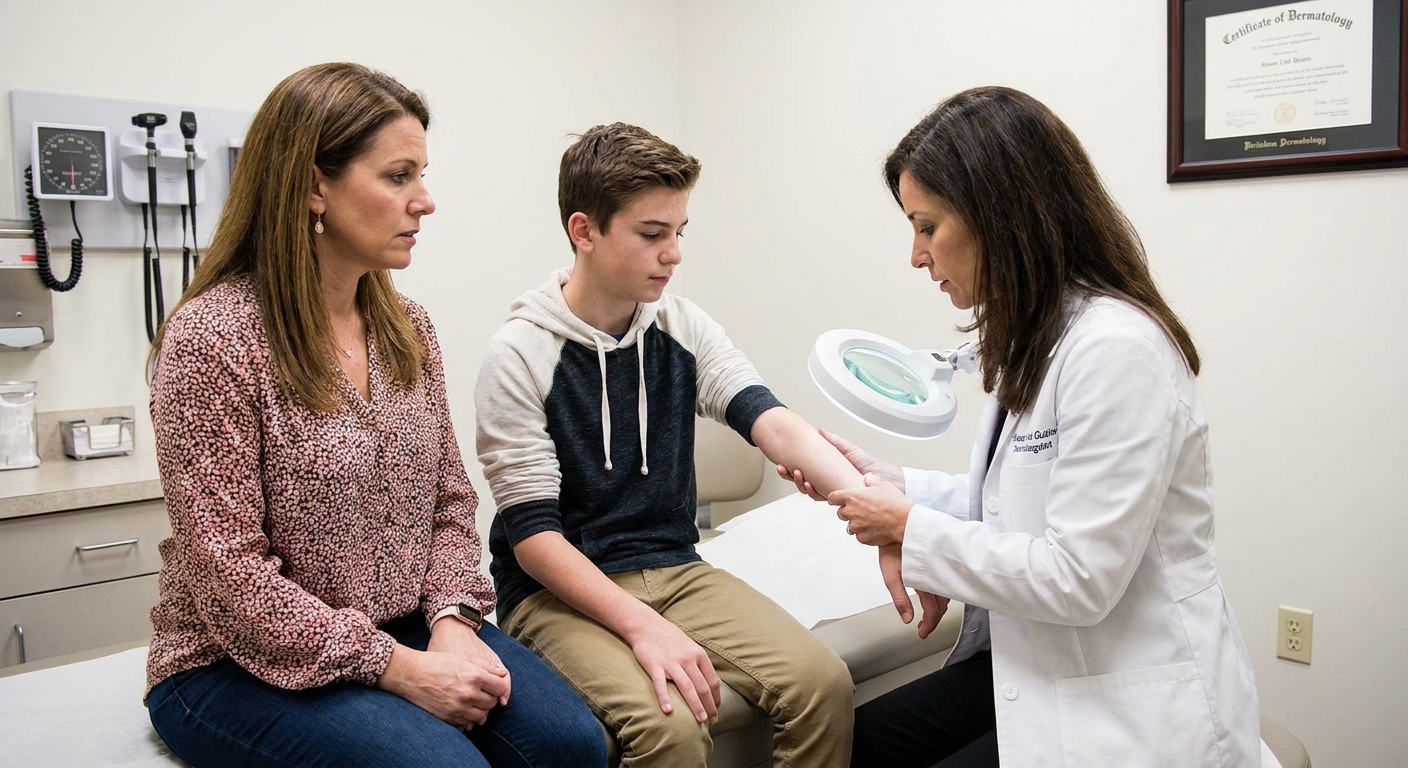
When doctors consider Accutane
Dermatologists don't reach for isotretinoin first. It's not a frontline treatment. It's what comes after the frontline treatments have failed, or when the acne is severe enough that waiting around for milder options to work means more scarring.
The typical situations where a dermatologist will bring it up:
- Severe cystic or nodular acne that's deep, painful, and leaving scars
- Moderate acne that hasn't responded to 6+ months of topical retinoids, benzoyl peroxide, and oral antibiotics
- Acne that keeps relapsing every time antibiotics are stopped
- Significant scarring that's getting worse month over month
- Severe psychological impact where the acne is seriously affecting the teen's quality of life
If your teen has a few pimples here and there, no one is going to prescribe isotretinoin. But if they're dealing with deep, scarring cysts that haven't budged after months of proper treatment, this conversation is worth having.
How isotretinoin actually works
Most acne treatments work on one or two parts of the acne process. A topical retinoid unclogs pores. An antibiotic kills bacteria. Benzoyl peroxide does both, sort of.
Isotretinoin works on basically everything.
It's a synthetic form of vitamin A that reduces the size and output of your sebaceous (oil) glands by up to 80%. This is a big deal because excess oil is one of the primary drivers of acne. But it doesn't stop there. It also reduces the amount of Cutibacterium acnes bacteria on the skin (less oil means less food for bacteria), decreases inflammation, and normalizes the way skin cells shed inside the pore so they stop clumping and forming plugs.
The oil gland shrinkage is the part that makes isotretinoin different from everything else. This effect persists long after treatment ends. Your glands do recover somewhat, but for most people they never return to their pre-treatment output levels. That's why the results tend to last. You're not just managing acne while taking the drug. You're fundamentally changing the conditions that created it.

The iPLEDGE program
If you're in the United States, you can't just get a prescription and pick it up at the pharmacy. Every patient taking isotretinoin has to be enrolled in iPLEDGE, a risk management program run by the FDA. It exists primarily to prevent pregnancies during treatment, since isotretinoin causes severe birth defects.
Here's what iPLEDGE involves in practice:
For everyone (male and female):
- Register in the iPLEDGE system before starting treatment
- Complete monthly check-ins through the iPLEDGE website or phone system
- Pick up your prescription within a 7-day window each month. Miss the window, and you need a new appointment and new authorization
For females who can become pregnant:
- Two negative pregnancy tests before starting (taken 30 days apart)
- Monthly pregnancy tests throughout treatment
- One final pregnancy test one month after stopping
- Must commit to using two forms of contraception simultaneously, or abstinence
- Must acknowledge understanding the risks each month through the iPLEDGE system
I won't pretend this isn't a hassle. It is. The 7-day pickup window is tight, and if your pharmacy has a supply issue or you forget to log into the system, you're making extra appointments. Some families find iPLEDGE to be the most frustrating part of the whole experience. But it exists for a serious reason: isotretinoin causes birth defects in an estimated 25-35% of exposed pregnancies, and those defects are devastating. The bureaucratic friction is intentional.
For male patients, iPLEDGE is less involved, but you still need to register and complete monthly check-ins.
Side effects: what to honestly expect
I want to be straightforward here because I think sugarcoating this does a disservice to anyone trying to make a real decision.
Side effects that happen to basically everyone
Dry lips. This is the universal Accutane experience. Not "a little dry," more like "cracking, peeling, sometimes bleeding." You will carry lip balm everywhere. Aquaphor becomes your best friend. This starts within the first two weeks and lasts the entire course of treatment. It goes away after you stop.
Dry skin everywhere else. Your face, your arms, your hands. Moisturizer becomes non-negotiable. Some people get eczema-like patches on their hands or forearms.
Dry eyes. Contact lens wearers often need to switch to glasses. Your eyes may feel gritty or irritated, especially in the morning.
Dry nose. Nosebleeds are common, especially in dry climates or during winter. A saline nasal spray and a humidifier in the bedroom help.
Side effects that happen to many patients
Joint and muscle pain. Somewhere between 15-30% of patients report this, often described as stiffness or achiness, worse with exercise. Athletes on isotretinoin sometimes need to scale back training intensity. This resolves after treatment.
Headaches. Usually mild and manageable with over the counter pain relievers.
Sun sensitivity. Your skin burns much more easily on isotretinoin. Sunscreen every day, no exceptions. This isn't the time for tanning.
Elevated liver enzymes and cholesterol. This is why you get monthly blood tests. Most elevations are mild and don't require stopping treatment, but your dermatologist monitors them closely. If levels rise too much, they'll lower your dose or pause treatment.
Side effects that are less common but worth knowing about
Hair thinning. Some patients notice their hair gets a bit thinner. This is usually temporary and reverses after treatment.
Night vision changes. Rarely, some patients notice reduced night vision. Tell your dermatologist if this happens.
Inflammatory bowel disease. This was a concern for years based on a few case reports and lawsuits. Large studies have since looked at this carefully. A 2010 meta-analysis found no statistically significant association between isotretinoin and IBD. The AAD considers the evidence insufficient to establish a causal link. That said, if you develop persistent abdominal pain or bloody diarrhea while on treatment, stop taking it and call your doctor.
The depression question
This is probably the concern I hear about most, and I think it deserves an honest and nuanced answer rather than a dismissive one.
In the early 2000s, there were high-profile reports linking isotretinoin to depression and suicidal thoughts. The FDA added a warning, and it became widely accepted as fact that Accutane causes depression.
The research since then has been more complicated.
A 2017 systematic review and meta-analysis in the Journal of the American Academy of Dermatology analyzed 31 studies and concluded that isotretinoin treatment was not associated with increased risk of depression. In fact, several studies found that depression scores actually improved during treatment, likely because clearing up severe acne removes a massive source of daily distress.
A separate 2007 systematic review reached a similar conclusion: "existing data are insufficient to confirm a causal relation between isotretinoin use and depression."
But here's the thing. "No causal link in population studies" doesn't mean "impossible for any individual." Some patients do report mood changes. Whether that's the drug, the experience of dealing with a purge phase and months of side effects, or pre-existing depression becoming more apparent, it's hard to untangle. Teenagers with severe acne already have higher rates of depression and anxiety than their clear-skinned peers, which makes isolating the drug's effect really difficult.
What I'd say to parents: the evidence does not support the idea that isotretinoin systematically causes depression. But monitor your teen's mood anyway. Not because of isotretinoin specifically, but because any teenager dealing with severe acne, ongoing medical treatment, and the physical discomforts of the drug deserves to have someone paying attention to how they're feeling. If mood changes happen, talk to your dermatologist. Dose adjustments or pausing treatment are options.
The purge period
Here's something that catches a lot of people off guard: your acne will probably get worse before it gets better.
In the first 2-6 weeks of treatment, many patients experience what's called a "purge" or initial flare. The drug is pushing everything to the surface. Existing clogged pores that hadn't yet become visible breakouts are accelerated into full blown pimples. It can be discouraging, especially if you started taking this medication because your skin was already at its worst.
Not everyone gets a significant purge. Some dermatologists start at a lower dose and gradually increase it to reduce the severity of the flare. But it's worth knowing about ahead of time so you don't panic and quit the medication at the three week mark thinking it's making things worse. It is making things worse, temporarily, as part of the process of making things permanently better.
How long treatment lasts
A typical isotretinoin course runs 5 to 7 months. The exact duration depends on your dose and your weight, because dermatologists aim for a cumulative dose of 120-150 mg/kg over the course of treatment. Higher cumulative doses are associated with lower relapse rates.
Most people start seeing meaningful improvement around month 2-3. By month 4-5, skin is often dramatically clearer. The final months are about reaching that cumulative dose target and locking in the results.
About 15-20% of patients will need a second course, usually because their acne was particularly severe or because they relapse after the first round. Second courses are generally just as effective as the first.
After finishing, most dermatologists recommend waiting at least two months before any other acne treatment, to let the isotretinoin fully clear your system. Your oil glands will slowly start producing a bit more sebum again, but for the majority of patients, it stays well below pre-treatment levels.
Cost and insurance
This varies a lot depending on where you live and your insurance situation.
With insurance: Most plans cover isotretinoin for severe acne after other treatments have been documented as failed. Expect copays for the medication itself (generic isotretinoin is much cheaper than old brand-name Accutane), plus copays for monthly dermatology visits and blood work. Total out of pocket across a 6 month course might be anywhere from $300 to $1,500 depending on your plan.
Without insurance: Generic isotretinoin costs roughly $200-400 per month, depending on the dose and pharmacy. Add monthly dermatology visits ($150-300 each) and lab work ($100-200 each), and you're looking at $2,500-6,000+ for a full course. GoodRx and other discount programs can reduce the medication cost significantly. Some dermatology practices offer payment plans.
The monthly visit and blood work requirement is non-negotiable. You cannot get more than a 30 day supply at a time, and you need labs each month. Budget for the time commitment as well as the financial one.
What clear skin feels like after years of acne
I want to end with this because it's the part that gets lost in all the talk about side effects and logistics.
The success rate for isotretinoin is around 85% for long-term clearance. That's not "improvement." That's clearance. For many patients, it means going from years of painful, scarring cystic acne to skin that's just... fine. Normal. Not a daily battle anymore.

Teens who've been through it describe it in ways that have nothing to do with vanity. It's being able to look in the mirror without flinching. It's not canceling plans because of a bad skin day. It's not spending twenty minutes every morning trying to cover up cysts with concealer. It's showing up to school and thinking about school instead of wondering if people are staring at your face.
For some teens, finishing Accutane is the first time they can remember not dreading mirrors. That kind of relief runs deeper than skincare. Parents sometimes notice personality shifts, not from the drug, but from the weight of chronic skin problems finally being lifted. The kid who stopped going to pool parties starts going again. The one who always looked down in conversations starts making eye contact.
None of this means Accutane is right for everyone. The side effects are real and the process is demanding. But for the teens who actually need it, who've tried everything else, who are developing scars and losing confidence month after month, it can be genuinely transformative in a way that few medical treatments are.
Bottom line
Isotretinoin is a serious medication for serious acne. It's not first-line, it's not casual, and it comes with a real commitment: monthly blood draws, dry everything, the iPLEDGE system, and 5-7 months of patience. But the roughly 85% long-term clearance rate speaks for itself. No other acne treatment comes close.
If your teen's dermatologist is recommending it, they've weighed the risks and the benefits for your specific situation. Ask every question you have. Get clear on what the experience will look like month by month. And know that for most patients who go through it, the answer to "was it worth it?" is an immediate yes.
How we reviewed this article:
Our experts continually monitor the health and wellness space, and we update our articles when new information becomes available.
- Layton AM, et al. A review on the treatment of acne vulgaris. Int J Clin Pract. 2006;60(1):64-72https://pubmed.ncbi.nlm.nih.gov/16409430/
- Strauss JS, et al. Guidelines of care for acne vulgaris management. J Am Acad Dermatol. 2007;56(4):651-663https://pubmed.ncbi.nlm.nih.gov/17276540/
- Huang YC, Cheng YC. Isotretinoin treatment for acne and risk of depression: A systematic review and meta-analysis. J Am Acad Dermatol. 2017;76(6):1068-1076https://pubmed.ncbi.nlm.nih.gov/28291553/
- Kontaxakis VP, et al. Isotretinoin and psychopathology: a review. Ann Gen Psychiatry. 2009;8:2https://pubmed.ncbi.nlm.nih.gov/19154612/
- Rademaker M, et al. Isotretinoin: dose, duration and relapse. What does 30 years of usage tell us? Australas J Dermatol. 2013;54(3):157-162https://pubmed.ncbi.nlm.nih.gov/23013115/
- American Academy of Dermatology. Isotretinoin: Overview. 2024https://www.aad.org/public/diseases/acne/derm-treat/prescription/isotretinoin
- Marqueling AL, Zane LT. Depression and suicidal behavior in acne patients treated with isotretinoin: a systematic review. Semin Cutan Med Surg. 2007;26(4):210-220https://pubmed.ncbi.nlm.nih.gov/18395669/
- Tan J, et al. Acne and the isotretinoin iPLEDGE risk evaluation and mitigation strategy. J Drugs Dermatol. 2014;13(2):176-179https://pubmed.ncbi.nlm.nih.gov/24509969/
Read This Next

25 Questions to Ask Your Dermatologist About Acne

When to Get a Second Opinion from Another Dermatologist
If your teen's acne treatment isn't working and your dermatologist isn't budging, it might be time to find someone new. Here's how to know and what to do about it.
Read More →
How to Help Your Teenager with Acne: A Complete Guide for Parents
Watching your teen struggle with acne is harder than most people realize. Here's a dermatologist-reviewed guide for parents who want to help — without overstepping, minimizing, or making things worse.
Read More →
How to Talk to Your Teenager About Acne Without Making It Worse
Bringing up acne with your teen is a minefield. Say the wrong thing and they shut down. Say nothing and they suffer alone. Here's how to start the conversation the right way.
Read More →
When to Take Your Teenager to a Dermatologist for Acne: A Parent's Decision Guide
Most parents wait too long. Here's how to know when your teen's acne has crossed the line from 'normal teenager stuff' to 'needs professional help' — and what to expect at the first appointment.
Read More →