How to Help Your Teenager with Acne: A Complete Guide for Parents
Medically reviewed by Dr. Rachel Torres, MD, Pediatric Dermatologist
Written by Teen Acne Solutions Editorial Team — Updated March 17, 2026
Key takeaways
- Your teen's acne is causing them more distress than they're showing you — take it seriously from day one
- The most helpful thing you can do first is LISTEN, not immediately jump to solutions
- Helping with a consistent routine matters more than buying expensive products
- Know when home treatment isn't enough — dermatologist visits shouldn't be a last resort
- Your reaction to their acne shapes how they feel about themselves for years
If you're reading this at midnight, phone in hand, scrolling through page after page trying to figure out how to help your teenager with acne — take a breath. You're not overreacting. You're not being dramatic. And the knot in your stomach when you see your kid staring at the mirror, picking at their skin, or refusing to leave the house? That's real, and it matters.
You probably landed here because something shifted. Maybe your teen stopped wanting to be in photos. Maybe they started wearing hoodies in July. Maybe they came home from school quiet, and when you asked what was wrong, they snapped at you — but you caught the redness around their eyes before they slammed their door. Or maybe it's simpler than that: you just noticed the breakouts getting worse and you don't know what to do about it.
Here's what I want you to know before we get into the practical stuff: you are exactly the right person to help your teenager through this. Not because you need to become a skincare expert, but because you are the one person who can make them feel like acne doesn't define them. That starts with understanding what's really going on beneath the surface — both on their skin and in their head.
This parent guide to teen acne will walk you through what the research actually says, what to avoid saying, what genuinely helps, and how to navigate everything from building a skincare routine together to deciding when it's time for a dermatologist. Let's get into it.
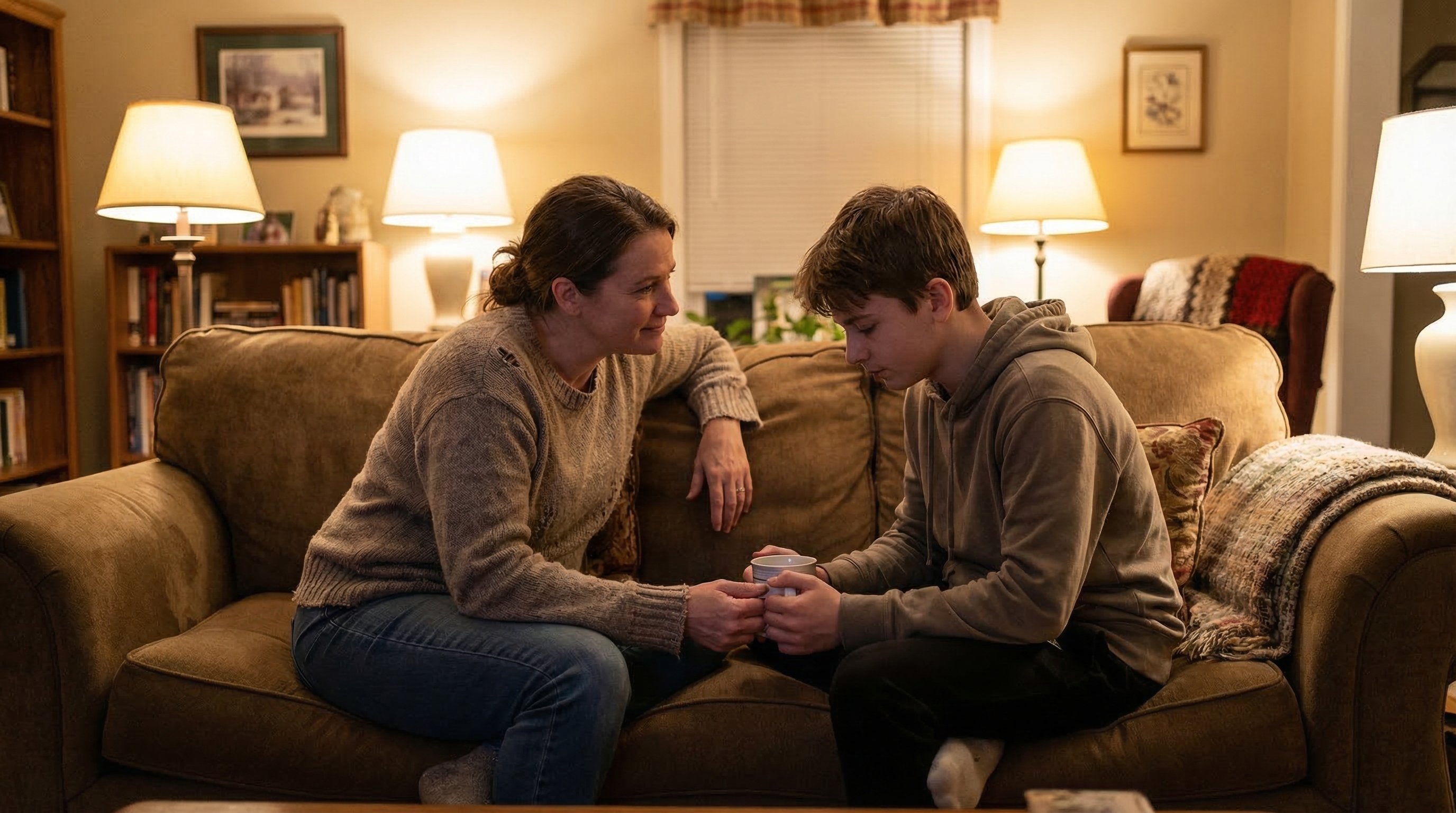
Why This Matters More Than You Think
Here's where most parents — even really good ones — underestimate the situation. Acne feels like a surface-level problem. It's skin. It's temporary. Almost everyone goes through it. All of that is technically true, and none of it matters to your teenager right now.
The research on this is sobering. A landmark study published in the Journal of Investigative Dermatology found that adolescents with acne had significantly increased rates of suicidal ideation compared to their clear-skinned peers. Not just lower self-esteem. Not just sadness. Suicidal thoughts. The same study found elevated rates of mental health problems and measurable social impairment.
Another study in the British Journal of Dermatology compared the quality-of-life impact of acne to other chronic medical conditions — including asthma, epilepsy, and diabetes. Acne scored comparably. Let that sink in: the emotional burden your teen is carrying from their skin may rival what a teenager with a chronic illness experiences.
And this isn't just about severe, cystic acne. Research published in Dermatologic Clinics found that even mild-to-moderate acne causes significant psychological and social distress in adolescents. Your teen doesn't need to have "the worst skin in school" for this to be affecting them deeply.
Why does this matter for you as a parent? Because it means your instinct that something is wrong — that this is bothering your kid more than they're letting on — is almost certainly right. Teenagers are masters of minimizing their pain, especially around the people they most want to seem okay in front of. If your teenager has acne and you think it might be affecting them, it almost certainly is. More than you know.
What Not to Say (Even When You Mean Well)
Before we talk about what helps, we need to talk about the things well-meaning parents say that make it worse. You've probably already said some of these. That's okay — we all have. The point isn't guilt. It's awareness.
"Everyone gets pimples. It's totally normal."
You're trying to normalize it. You're trying to take the weight off. But what your teen hears is: "This isn't a big deal, so your feelings about it aren't a big deal either." Normalizing the condition dismisses the experience. Yes, acne is common — roughly 85% of adolescents experience it to some degree. But common doesn't mean painless.
"I had way worse acne than you when I was your age."
This is the comparison trap. You think you're showing empathy. You think you're saying, "I understand." But your teen hears a competition for who has it worse — and they just lost. Their pain just got ranked below yours. It doesn't help.
"Are you washing your face?"
This one stings more than you think. It implies their acne is their fault — that they're dirty, lazy, or not trying hard enough. Most teens with acne are already washing their face. Many are overwashing, which makes things worse. Acne is driven by hormones, genetics, and inflammation, not by poor hygiene.
"You shouldn't eat so much junk food / chocolate / pizza."
The relationship between diet and acne is complicated and still being studied. While there is some emerging evidence about high-glycemic foods and dairy, making offhand comments about your teen's diet in relation to their skin is a fast track to disordered eating patterns, shame, and the feeling that they caused this themselves.
"Don't pick at it — you're making it worse."
They know. They absolutely know. And they can't stop. Picking is often a stress response, and pointing it out in the moment adds shame on top of the anxiety that's driving the behavior. We'll talk about how to address this more constructively later.
"Have you tried [random product your coworker mentioned]?"
Throwing products at the problem without understanding your teen's skin type, the active ingredients involved, or whether those products will interact with anything they're already using can genuinely make acne worse. It also sends the message that this is a problem that needs to be fixed urgently — rather than managed thoughtfully.
What Actually Helps
Now for the part you came here for. If your teenager has acne and you're wondering what to do, here is what the evidence and experienced dermatologists consistently recommend — translated into the real, messy reality of parenting a teenager.
1. Start by Listening, Not Solving
The single most powerful thing you can do is let your teen talk about how they feel without immediately jumping to solutions. This is hard. Every parental instinct screams fix it. But your teen doesn't need you to fix their skin right now. They need to know that their pain is real and that you see it.
This might be a five-minute conversation. It might be a sentence they drop while you're driving somewhere. It might be a look. Meet them where they are. Don't push the conversation, but make it clear the door is open.
2. Validate Before You Strategize
Before you mention a single product, appointment, or routine, say something that acknowledges their experience. Not "it'll get better" (even though it will). Not "you're beautiful no matter what" (even though they are). Something that sits with them in the hard part without rushing past it.
We'll cover specific scripts in the next section.
3. Offer a Dermatologist Visit as a Positive, Not a Punishment
Frame it the way you'd frame any health appointment: "Your skin is worth getting professional help for." Not: "Your acne is so bad we need to see a doctor." The language matters enormously. A dermatologist visit should feel like an empowering choice, not a last resort for a problem that's gotten out of control.
4. Be a Quiet Supporter of Routine
Teenagers are notoriously inconsistent. The biggest challenge with acne treatment isn't finding the right products — it's using them every single day for weeks before seeing results. You can help with this without nagging. We'll cover exactly how in the routine section.
5. Watch What You Model
If you comment on your own skin negatively, obsess over appearance, or make offhand remarks about other people's skin — your teen is absorbing all of it. Model the relationship with appearance that you want your teen to have.
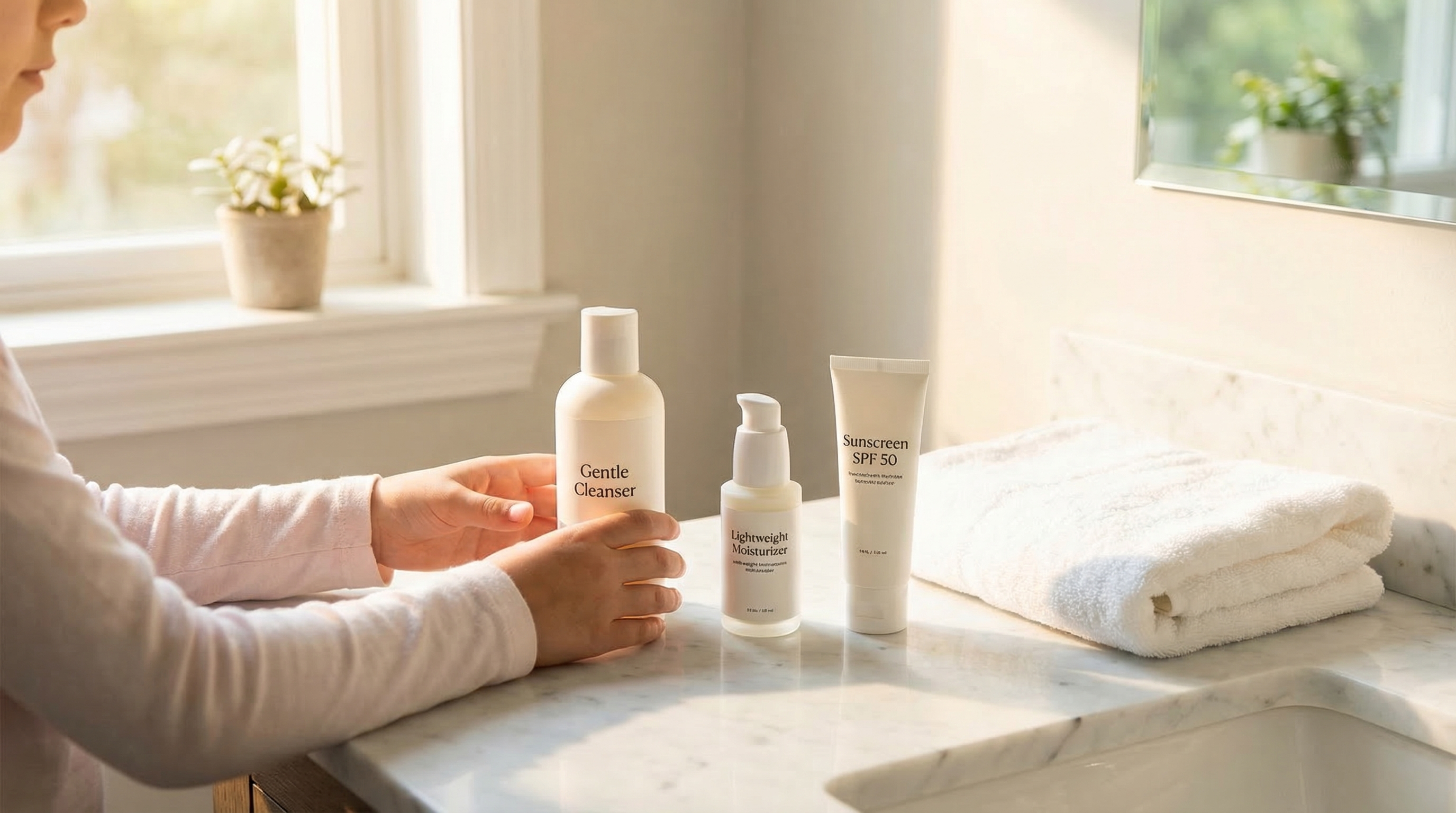
Scripts That Work: What to Actually Say
These aren't magic words. They're starting points — phrases real parents have used that opened doors instead of slamming them shut. Adapt them to sound like you, because your teen will clock inauthenticity immediately.
When they first bring it up (or you notice they're struggling):
"I've noticed your skin has been bothering you. I just want you to know — I'm not going to lecture you or throw a bunch of products at you. But I am here, and if you want help figuring it out, I'd love to do that with you."
When they're upset after a bad breakout:
"That sounds really frustrating. I'm sorry you're dealing with this. Is there anything that would help right now, or do you just need me to listen?"
When you want to suggest a dermatologist:
"I think your skin deserves some real expertise — like, someone who went to school for this. Would you be open to seeing a dermatologist? You'd be in charge of the appointment. I'll just be there for backup."
When they've been inconsistent with their routine:
"Hey — no judgment. Routines are hard. Do you want me to set a reminder with you, or would it help if I just left your stuff out on the counter at night?"
When they compare themselves to other kids:
"I know it doesn't feel fair. And you're right — it isn't fair. But this is something we can actually work on together, and what your skin looks like at 15 is not what it's going to look like forever."
When they don't want to talk about it:
"Okay. I'm not going to push. But the offer stands — whenever you're ready."
The thread running through all of these: you are respecting their autonomy while making your support unmistakable. That's the balance.
Building a Routine Together
This is where a lot of parents either do too much or too little. Too much looks like buying a twelve-step skincare system, printing out a schedule, and turning face-washing into a nightly battle. Too little looks like tossing a tube of benzoyl peroxide on their bed and hoping for the best.
The sweet spot is collaborative, simple, and low-pressure.
Keep It to Three Steps (Maximum)
For most teens with mild-to-moderate acne, a dermatologist-recommended basic routine looks like this:
- Gentle cleanser (morning and night) — not a harsh scrub, not bar soap, not whatever they're currently using that strips their skin raw
- Treatment product (benzoyl peroxide or salicylic acid, depending on their skin) — applied after cleansing
- Moisturizer with SPF (morning) and a simple moisturizer (night) — yes, even oily skin needs moisture
That's it. Three products. Two minutes, twice a day. Starting with anything more complicated than this is setting your teen up to quit after a week.
Make It Their Choice
Go shopping together — or let them pick products online. Let them choose the scents, the textures, the packaging. This isn't superficial. When a teenager feels ownership over their routine, they're dramatically more likely to stick with it. Your job is to guide the ingredients (or let the dermatologist guide them). Their job is to pick the specific products that feel right.
Set Expectations About Timing
This is critical and most parents skip it. Most acne treatments take 6-8 weeks to show visible results. Some get worse before they get better (this is called purging, and it's normal with retinoids). If your teen doesn't know this upfront, they'll quit after two weeks convinced it's not working.
Tell them: "This is a slow game. We're going to commit to this routine for two full months before we judge whether it's working. If it's not working after that, we'll adjust."
Support Without Surveillance
Don't stand in the bathroom doorway asking if they washed their face. Instead, try these lower-friction approaches:
- Leave their products out and visible (a small tray on the bathroom counter works well)
- Do your own skincare routine at the same time — making it a shared habit, not a chore you've assigned them
- If they forget, don't comment. Just gently move their products back to the visible spot the next day
When to See a Dermatologist
Too many parents treat a dermatologist visit as the nuclear option — something you do only after everything from the drugstore has failed. This is backwards. A dermatologist visit should be one of the first things you consider, not the last.
Signs It's Time to Make an Appointment
- Acne that hasn't responded to over-the-counter products after 8-12 weeks of consistent use
- Painful, deep cysts or nodules under the skin (these can cause permanent scarring)
- Acne that's leaving dark marks or scars
- Any sign that acne is affecting your teen's mental health, social life, or willingness to participate in activities
- Your teen asks for help (this alone is enough reason — you don't need to assess severity)
How to Prepare for the Visit
- Let your teen know they can speak privately with the dermatologist if they want
- Bring a list of everything they've already tried (products, how long they used them, what happened)
- Write down your teen's questions ahead of time — they'll freeze up in the appointment otherwise
- Take photos of their skin at its worst (with their permission) since skin can look different on appointment day
What to Expect
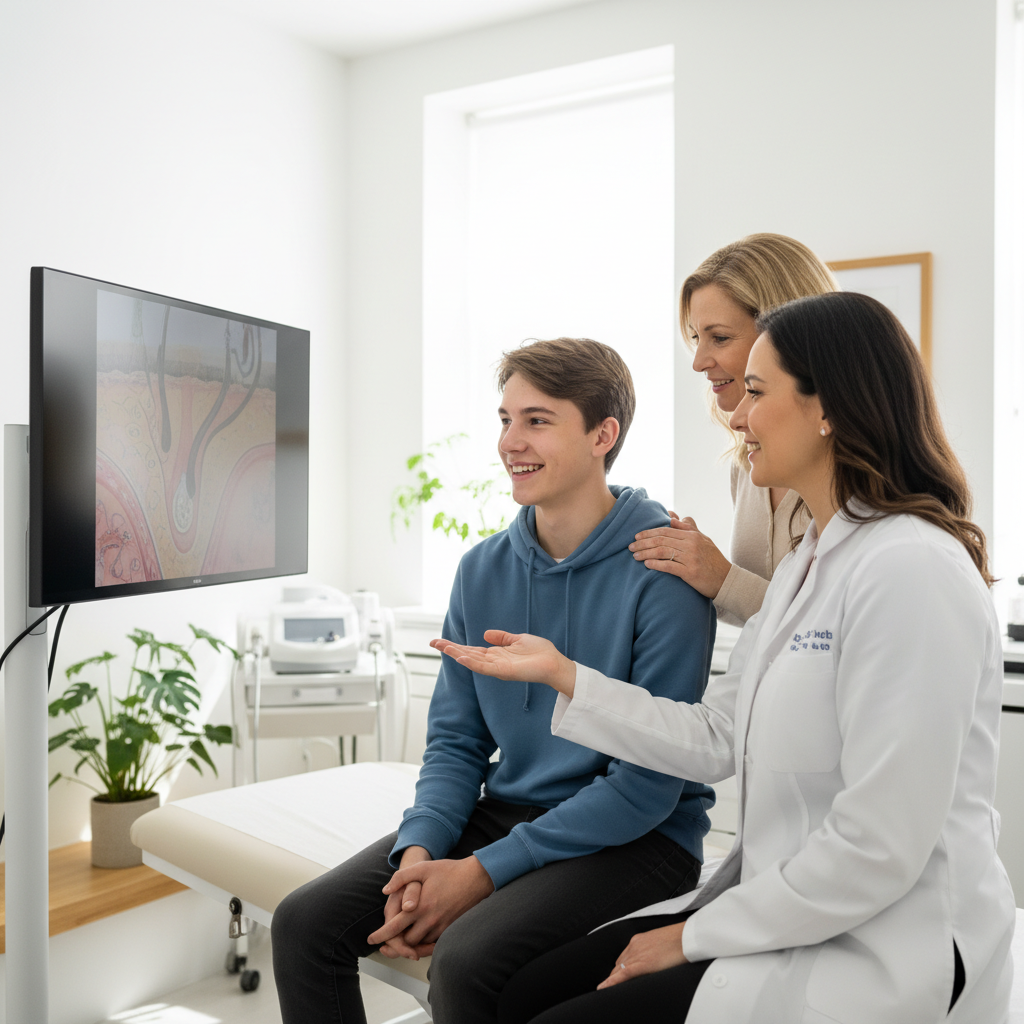
A first dermatologist visit for teen acne typically involves a skin assessment, a discussion of treatment options, and a prescription. Common first-line prescriptions include topical retinoids, topical antibiotics, benzoyl peroxide formulations, or a combination. For moderate-to-severe cases, oral medications may be discussed.
The dermatologist should explain the timeline, side effects, and follow-up plan. If they don't, ask. You're paying for expertise — use it.
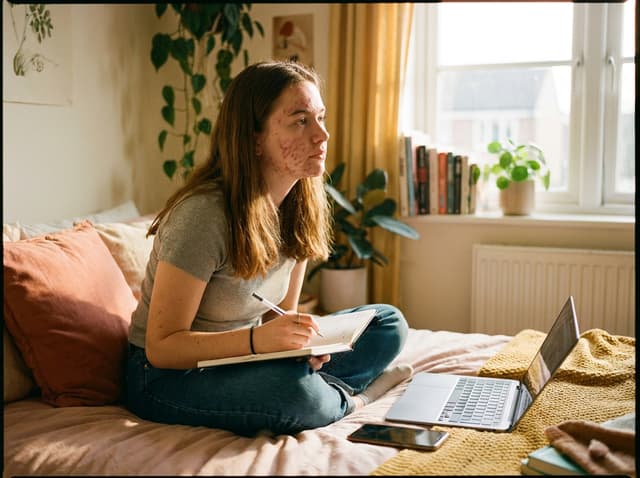
Managing the Emotional Side
Helping your teen with acne isn't just about their skin. It's about their sense of self at the most vulnerable time in their development. Research in PLOS ONE found that stigma related to acne directly predicts impaired quality of life — and that relationship holds even after controlling for acne severity. In other words, it's not just how bad the acne is. It's how the world responds to it.
As a parent, you're the most important part of your teen's world, whether they act like it or not.
Watch for Warning Signs
Acne-related emotional distress can look like:
- Withdrawing from friends and social activities
- Refusing to go to school or make excuses to stay home
- Spending excessive time in the bathroom or in front of mirrors
- Increased irritability, sadness, or emotional flatness
- Changes in eating or sleeping patterns
- Expressing hopelessness or self-hatred ("I'm so ugly," "I'll never look normal")
- Loss of interest in things they used to enjoy
If you're seeing multiple signs from this list, it's worth having a conversation — and potentially involving a therapist in addition to a dermatologist. Acne-related anxiety and depression are real clinical concerns, not just teen drama.
Don't Take Their Mood Personally
Your teenager may be short with you. They may snap when you ask about their skin. They may reject your help and then get upset that you're not helping. This is not about you. This is a teenager in pain who doesn't have the emotional vocabulary or regulation to express it cleanly. Keep showing up. Keep being steady. Keep the door open even when they slam it.
Resist the Urge to Fix Their Feelings
When your teen says, "I look disgusting," everything in you wants to say, "No you don't! You're beautiful!" And while that comes from a place of love, it can feel dismissive — like you're correcting their reality instead of honoring it. Try this instead:
"I hear you. That's a really hard way to feel about yourself. I don't see you that way, but I understand that's how it feels right now."
This validates without dismissing, and it opens space for them to keep talking instead of shutting down.
The Financial Reality
Let's talk about something most parent guides skip entirely: acne treatment can get expensive, and pretending otherwise doesn't help anyone.
The Basics
- Over-the-counter products: $30-$80 for a basic routine of cleanser, treatment, and moisturizer. These need to be replaced every 2-3 months.
- Dermatologist visit (with insurance): $20-$75 copay for the visit itself. Many plans cover dermatology, but check yours.
- Dermatologist visit (without insurance): $150-$350 for an initial consultation.
- Prescription topicals: $10-$50 with insurance; can be $200+ without. Always ask about generics.
- Oral medications: Varies widely. Antibiotics are generally affordable. Isotretinoin (Accutane) requires monthly bloodwork and monitoring, adding cost.
- Follow-up visits: Every 6-12 weeks during active treatment.
How to Manage Costs
- Ask for generics. Always. Brand-name topicals can be five to ten times the price of generic equivalents with the same active ingredients.
- Use manufacturer coupons. Many prescription acne medications have savings cards or patient assistance programs. Your dermatologist's office often has these on hand.
- Check GoodRx or similar discount tools for prescription pricing at different pharmacies — the price difference between pharmacies for the same medication can be staggering.
- Don't overbuy OTC products. A basic three-product routine is all most teens need. The 10-step routines marketed on social media are unnecessary and often counterproductive.
- If cost is a barrier, say so. Tell the dermatologist. They can almost always find a more affordable treatment option. No good dermatologist will judge you for this.
Your teen doesn't need the most expensive products. They need the right products used consistently. A $12 benzoyl peroxide wash used every night will outperform a $60 boutique cleanser used sporadically every time.

What You Can't Control (and Why That's Okay)
You can't make your teenager wash their face. You can't make them take their medication. You can't make them stop picking. You can't make their acne go away on your timeline. And you can't protect them from every unkind comment at school.
This is the hardest part of parenting a teen with acne — accepting that your role is support, not control. You are creating the conditions for healing: access to the right products, access to professional care, emotional safety, patience, and unconditional love that doesn't hinge on clear skin.
Some days your teen will follow the routine perfectly. Some days they won't touch their products. Some weeks the acne will improve; some weeks it'll flare. This is normal. This is the process. Your consistency matters more than their consistency — because your steady presence is what makes them feel safe enough to keep trying.
A Final Word for the Parent Still Reading at Midnight
If you've made it this far, you're already doing something right. The fact that you're researching how to help your teenager with acne — that you're not brushing this off, not dismissing it as vanity, not waiting for them to "grow out of it" — tells me something important about you. You see your kid. You take their pain seriously. And you're willing to learn how to help.
Your teen may not thank you for this. Not now, maybe not for years. Teenagers aren't great at gratitude in real time. But one day, when they're older and their skin has cleared and they look back on this chapter, they'll remember whether they went through it alone or whether someone was quietly, steadily in their corner.
Be that person. You already are.
Your teen's acne will get better. Not overnight, not without setbacks, but it will get better. And with your support — the kind that listens before it fixes, that shows up without controlling, that takes this seriously without catastrophizing — your teen won't just come out of this with clearer skin. They'll come out of it knowing that someone loved them through the hard, awkward, painful parts. That's the thing they'll carry long after the breakouts are gone.
This article was medically reviewed by Dr. Rachel Torres, MD, a board-certified pediatric dermatologist. It is intended for informational purposes only and does not substitute for professional medical advice. If your teen's acne is severe or affecting their mental health, please consult a healthcare provider.
How we reviewed this article:
Our experts continually monitor the health and wellness space, and we update our articles when new information becomes available.
- Halvorsen JA, et al. (2011). Suicidal ideation, mental health problems, and social impairment are increased in adolescents with acne. Journal of Investigative Dermatology.https://pubmed.ncbi.nlm.nih.gov/20944653/
- Mallon E, et al. (1999). The quality of life in acne: a comparison with general medical conditions. British Journal of Dermatology.https://pubmed.ncbi.nlm.nih.gov/10354575/
- Zaenglein AL, et al. (2016). Guidelines of care for the management of acne vulgaris. JAAD.https://pubmed.ncbi.nlm.nih.gov/26897386/
- Magin P, et al. (2006). The psychological and social effects of acne. Dermatologic Clinics.https://pubmed.ncbi.nlm.nih.gov/16677965/
- Dalgard FJ, et al. (2015). Self-esteem and body satisfaction among late adolescents with acne. JEADV.https://pubmed.ncbi.nlm.nih.gov/25059289/
- Tan JK, Bhate K. (2015). A global perspective on the epidemiology of acne. British Journal of Dermatology.https://pubmed.ncbi.nlm.nih.gov/26031612/
- American Academy of Dermatology. Acne can affect more than your skin.https://www.aad.org/public/diseases/acne/mental-health
- Smithard A, et al. (2001). Acne prevalence, knowledge about acne and psychological morbidity in mid-adolescence. British Journal of Dermatology.https://pubmed.ncbi.nlm.nih.gov/11167684/
- Kraft J, Freiman A. (2011). Management of acne. CMAJ.https://pubmed.ncbi.nlm.nih.gov/21398228/
- Davern J, O'Donnell AT. (2018). Stigma predicts health-related quality of life impairment in acne sufferers. PLOS ONE.https://pubmed.ncbi.nlm.nih.gov/30403714/
Read This Next
25 Questions to Ask Your Dermatologist About Acne

When to Get a Second Opinion from Another Dermatologist
If your teen's acne treatment isn't working and your dermatologist isn't budging, it might be time to find someone new. Here's how to know and what to do about it.
Read More →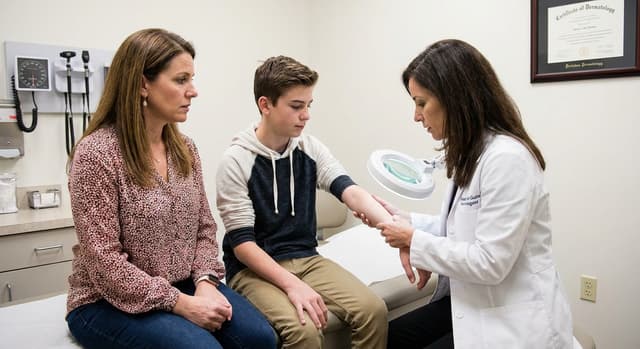
Accutane for Teens: Everything Parents and Teens Need to Know
Accutane (isotretinoin) clears severe acne in about 85% of patients, but the process involves monthly blood tests, strict pregnancy prevention, and several months of very dry everything. Here's what the experience actually looks like.
Read More →
How to Talk to Your Teenager About Acne Without Making It Worse
Bringing up acne with your teen is a minefield. Say the wrong thing and they shut down. Say nothing and they suffer alone. Here's how to start the conversation the right way.
Read More →
When to Take Your Teenager to a Dermatologist for Acne: A Parent's Decision Guide
Most parents wait too long. Here's how to know when your teen's acne has crossed the line from 'normal teenager stuff' to 'needs professional help' — and what to expect at the first appointment.
Read More →