Is My Teenager's Acne Normal? When to Worry and When to Wait
Medically reviewed by Dr. Rachel Torres, MD, Pediatric Dermatologist
Written by Teen Acne Solutions Editorial Team — Updated March 13, 2026
Key takeaways
- About 85% of teenagers get some acne — so yes, some breakouts are completely normal
- Normal teen acne is mild: scattered whiteheads, blackheads, and occasional small pimples
- Acne that's painful, deep, scarring, or significantly affecting mood is NOT 'just normal teen stuff'
- Early-onset acne (before age 8-9) can signal precocious puberty and should be evaluated
- Trust your instinct — if you're worried enough to Google it, it's worth a doctor visit
You've been watching your teenager's skin change, and you can't tell if what you're seeing is typical puberty or something that needs attention. Maybe it started with a few blackheads on their nose. Then a pimple showed up on their chin. Now you're lying awake wondering: Is my teenager's acne normal, or should I be doing something about this?
You are not overreacting. And you are not alone. This is one of the most common questions pediatric dermatologists hear from parents, and the fact that you are asking it means you are paying attention -- which is exactly what your teenager needs right now, even if they would never admit it.
Here is the truth that will probably let you exhale a little: about 85% of teenagers between the ages of 12 and 24 experience some form of acne. It is far and away the most common skin condition during adolescence. So yes, some breakouts are completely, utterly, boringly normal.
But -- and this is the part that matters -- not all acne is created equal. There is a real difference between normal teen acne and the kind that needs medical attention, and knowing where your child falls on that spectrum can save them from unnecessary scarring, both physical and emotional.
Let's walk through it together.
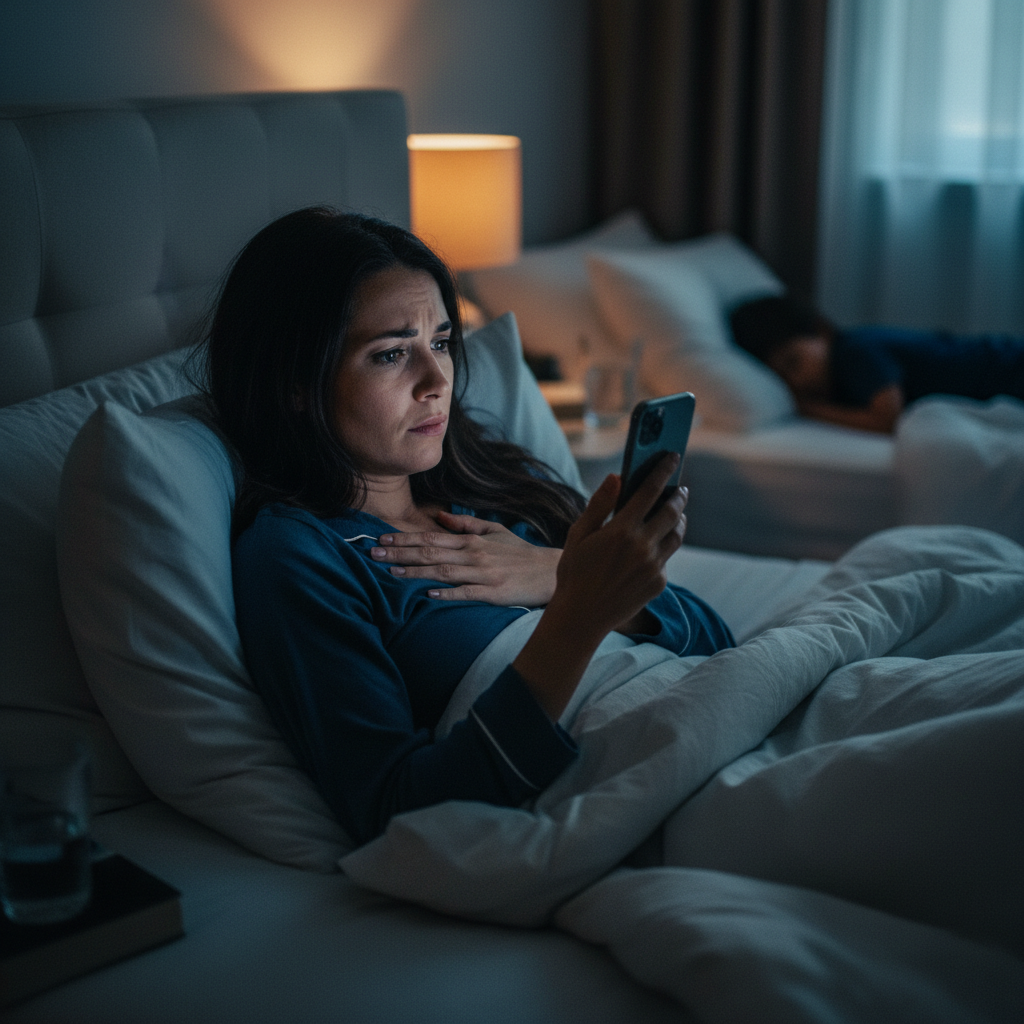 Understanding the spectrum: from normal breakouts to acne that needs medical attention.
What Normal Teen Acne Looks Like
Normal teenage acne -- the kind that dermatologists classify as mild -- is not glamorous, but it is manageable. Here is what it typically looks like:
- Blackheads (open comedones): Small dark dots, usually clustered on the nose, forehead, or chin. They are not dirt -- they are oxidized oil in open pores.
- Whiteheads (closed comedones): Tiny flesh-colored or white bumps, often on the forehead or along the jawline. They feel like rough texture under the skin.
- A few scattered pimples: Small red or pink bumps that come and go, sometimes with a white tip. They are annoying but not particularly painful.
- The T-zone pattern: Most normal teen acne concentrates on the forehead, nose, and chin -- the areas where oil glands are most active during puberty.
Normal teen acne also has a pattern to its behavior. It comes and goes. Your teenager might have a rough week and then clear up. They might break out more before a test or around their period. But overall, it waxes and wanes rather than relentlessly getting worse.
If what you are seeing on your teen's face fits this description -- some blackheads, a handful of pimples, mostly in the T-zone -- take a breath. This is normal acne during puberty. Their body is adjusting to a surge of androgens (hormones that both boys and girls produce more of during puberty), and those hormones cause oil glands to go into overdrive. The oil clogs pores. Pores become pimples. That is the whole, unremarkable story.
What Normal Teen Acne Does NOT Look Like
Before we move on, let's be equally clear about what falls outside the "normal" range:
- Pimples that are deeply painful to the touch
- Bumps that feel like hard lumps under the skin and never come to a head
- Breakouts that leave behind dark marks or actual scars
- Acne that covers large areas of the face, chest, or back
- Breakouts that are getting steadily worse despite basic care
If any of those descriptions made you think, That is exactly what I am seeing, keep reading. We are going to talk about severity next.
The Acne Severity Scale: A Parent-Friendly Guide
Dermatologists grade acne on a spectrum, but the clinical terms can be confusing. Here is a straightforward way to think about it -- a framework you can use to figure out where your teen falls.
Mild Acne
What you see: Mostly blackheads and whiteheads. A few small pimples here and there, usually fewer than 20 total. No deep or painful bumps. The skin might look a bit rough or bumpy in certain areas, but there is no significant redness or swelling.
How your teen acts: Mildly annoyed. They might ask about face wash or mention a pimple, but it is not dominating their thoughts or behavior.
Your move: This is manageable at home with a consistent over-the-counter skincare routine. A gentle cleanser with salicylic acid or benzoyl peroxide is usually enough.
Moderate Acne
What you see: More than just a few pimples -- maybe 20 to 50 lesions total. Some of them are inflamed (red, raised, tender). You might notice a few on their chest or back, not just their face. Some pimples leave behind pink or dark marks after they heal. Breakouts are frequent rather than occasional.
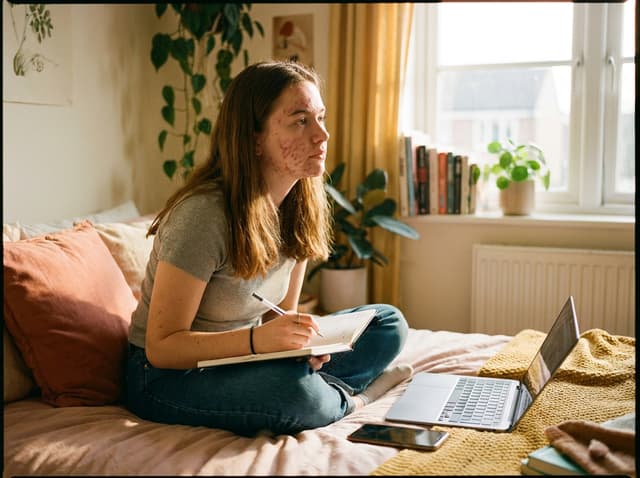
How your teen acts: Self-conscious. They might start avoiding eye contact, wearing more concealer, asking to skip events, or getting upset when you mention their skin. This is the stage where acne starts affecting confidence.
Your move: Moderate acne is worth a visit to a healthcare provider. Over-the-counter treatments may help, but they often are not enough on their own. A doctor can prescribe topical retinoids or topical antibiotics that make a real difference.
Severe Acne
What you see: Deep, painful nodules or cysts -- bumps that feel like hard, tender lumps beneath the skin. The skin may look red, swollen, or angry over large areas. There may be visible scarring already forming. Breakouts are widespread, covering much of the face, back, or chest.
How your teen acts: Withdrawn. They may refuse to go to school, stop looking in mirrors, or have noticeable mood changes. Severe acne is associated with significantly higher rates of anxiety and depression in adolescents.
Your move: See a dermatologist. Do not wait. Severe acne needs prescription-strength treatment, potentially including oral medications, and every week of delay increases the risk of permanent scarring.
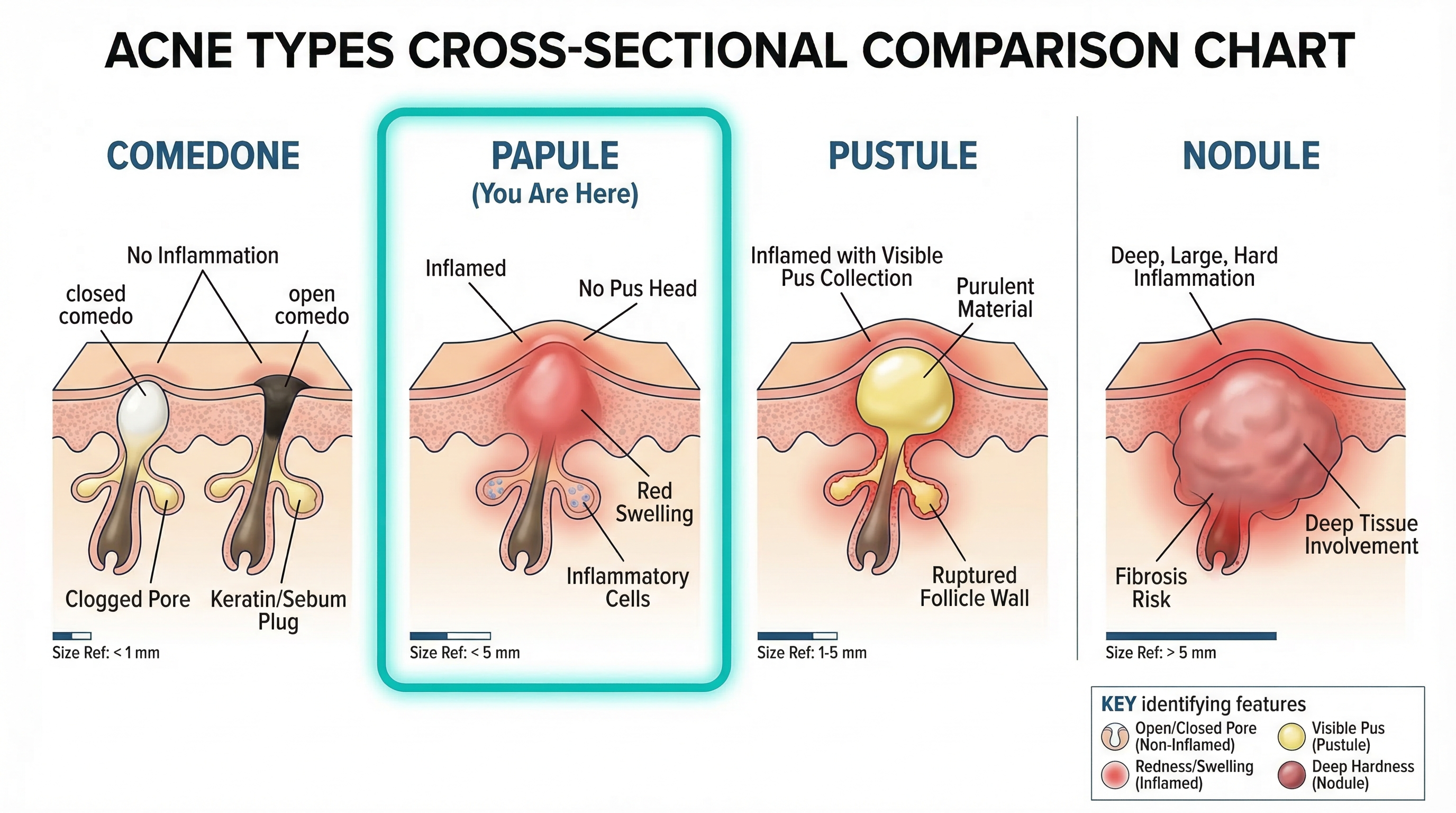 The acne severity scale: knowing where your teen falls helps you know how to respond.
The Traffic Light System: When to Relax, Monitor, or Act
Here is the simplest framework for deciding what to do right now.
Green Light: Manage at Home
- A few blackheads and whiteheads
- Occasional small pimples (fewer than 10-15 at any given time)
- Breakouts that come and go
- No painful or deep bumps
- No scarring
- Your teen is not distressed about their skin
Action: Start a simple, consistent skincare routine. Gentle cleanser twice daily, a leave-on benzoyl peroxide or salicylic acid treatment, an oil-free moisturizer, and sunscreen. Give it 6 to 8 weeks to work.
Yellow Light: Monitor Closely
- Acne is getting gradually worse over several weeks
- Some pimples are inflamed and tender
- Breakouts are leaving behind marks
- Your teen is becoming self-conscious or mentioning it frequently
- Over-the-counter products have not helped after 6 to 8 weeks of consistent use
Action: Schedule an appointment with your teen's pediatrician or a dermatologist. This level of acne often responds well to prescription treatments, and early intervention prevents scarring.
Red Light: See a Doctor
- Deep, painful cysts or nodules
- Acne that came on suddenly and severely
- Visible scarring already forming
- Acne combined with irregular periods, excessive body hair, or other hormonal symptoms
- Acne in a child under 8 or 9 years old
- Your teenager is showing signs of depression, social withdrawal, or school avoidance due to their skin
Action: Make an appointment as soon as possible. If your teen is expressing hopelessness or suicidal thoughts, treat it as the mental health emergency it is -- contact your pediatrician immediately or call 988 (Suicide & Crisis Lifeline).
Red Flags That Need Attention
Most teen acne is a nuisance, not a crisis. But certain patterns are genuine red flags that warrant prompt medical evaluation. Here is what to watch for.
Deep, Painful Cysts
If your teen has bumps that feel like hard, painful marble-sized lumps beneath the skin -- bumps that never come to a head and take weeks to go away -- that is cystic acne. It is not the same thing as getting a few pimples. Cystic acne carries a high risk of permanent scarring, and it rarely responds to over-the-counter treatment. This needs a dermatologist.
Rapid-Onset Severe Acne
If your teen went from clear skin to widespread, severe breakouts over the course of days or a few weeks, that is unusual. Normal teen acne builds gradually. A sudden explosion of severe acne can sometimes indicate a hormonal issue, a reaction to a medication or supplement (creatine and whey protein are common culprits in teen boys), or another underlying cause that needs investigation.
Acne Combined with Irregular Periods
For teen girls, the combination of persistent acne along with irregular or absent periods, weight gain, or excessive hair growth on the face or body is a pattern that should be evaluated for polycystic ovary syndrome (PCOS). PCOS affects an estimated 6-12% of women of reproductive age, and early diagnosis makes a meaningful difference in long-term health outcomes.
Acne Before Age 8-9
Very young children occasionally get acne, and neonatal acne in babies is common and harmless. But if your 7 or 8-year-old is developing acne -- especially if accompanied by body odor, pubic hair, or breast development -- this can be a sign of precocious puberty, which warrants evaluation by a pediatric endocrinologist. Research has documented that acne in premenarchal girls is one of the earliest signs of adrenarche, and unusually early onset deserves medical attention.
Acne That Is Causing Emotional Damage
This is the red flag parents most often underestimate. If your teen's acne -- regardless of its clinical severity -- is causing them to avoid social situations, skip school, withdraw from friends, or show signs of depression and anxiety, that is a red flag. Studies have found that the psychological burden of acne is comparable to that of chronic diseases like epilepsy, diabetes, and asthma. A landmark 2011 study published in the Journal of Investigative Dermatology found that adolescents with acne had significantly higher rates of suicidal ideation compared to those without.
Your teen's emotional response to their acne matters just as much as the acne itself. If their skin is damaging their mental health, it is time to act -- even if the acne looks "mild" by clinical standards.
Age-Related Expectations: What Is Typical at Each Stage
Acne does not arrive all at once. It follows a general pattern tied to puberty's timeline, though every teenager is different.
Ages 8-10: The Early Signs
Some children, especially girls, begin seeing the very first signs of acne during adrenarche -- the stage when the adrenal glands begin producing more androgens. This might look like a few scattered blackheads on the nose or forehead, or an increase in skin oiliness. At this age, it is usually very mild and nothing to worry about. However, if acne is prominent or accompanied by other signs of early puberty, mention it to your pediatrician.
Ages 11-13: Puberty Ramps Up
This is when most teens start noticing acne for the first time. Blackheads, whiteheads, and occasional pimples become more common as hormone levels climb. Girls tend to develop acne earlier than boys (mirroring their earlier onset of puberty). At this stage, mild acne is entirely expected.
Ages 14-16: The Peak Years
For many teenagers, acne reaches its peak during mid-adolescence. Boys often experience more severe acne than girls during this window, driven by higher levels of testosterone. The face, chest, and back may all be affected. This is the age range where moderate acne is most common and where the gap between "normal" and "needs treatment" becomes most important to assess.
Ages 17-19: Gradual Improvement (Usually)
Most teens see their acne begin to improve in the later teen years as hormone levels start to stabilize. However, some -- particularly girls -- may continue to experience hormonal acne into their twenties. If acne is still severe or worsening at this age rather than improving, it is worth a dermatology visit to discuss longer-term management strategies.
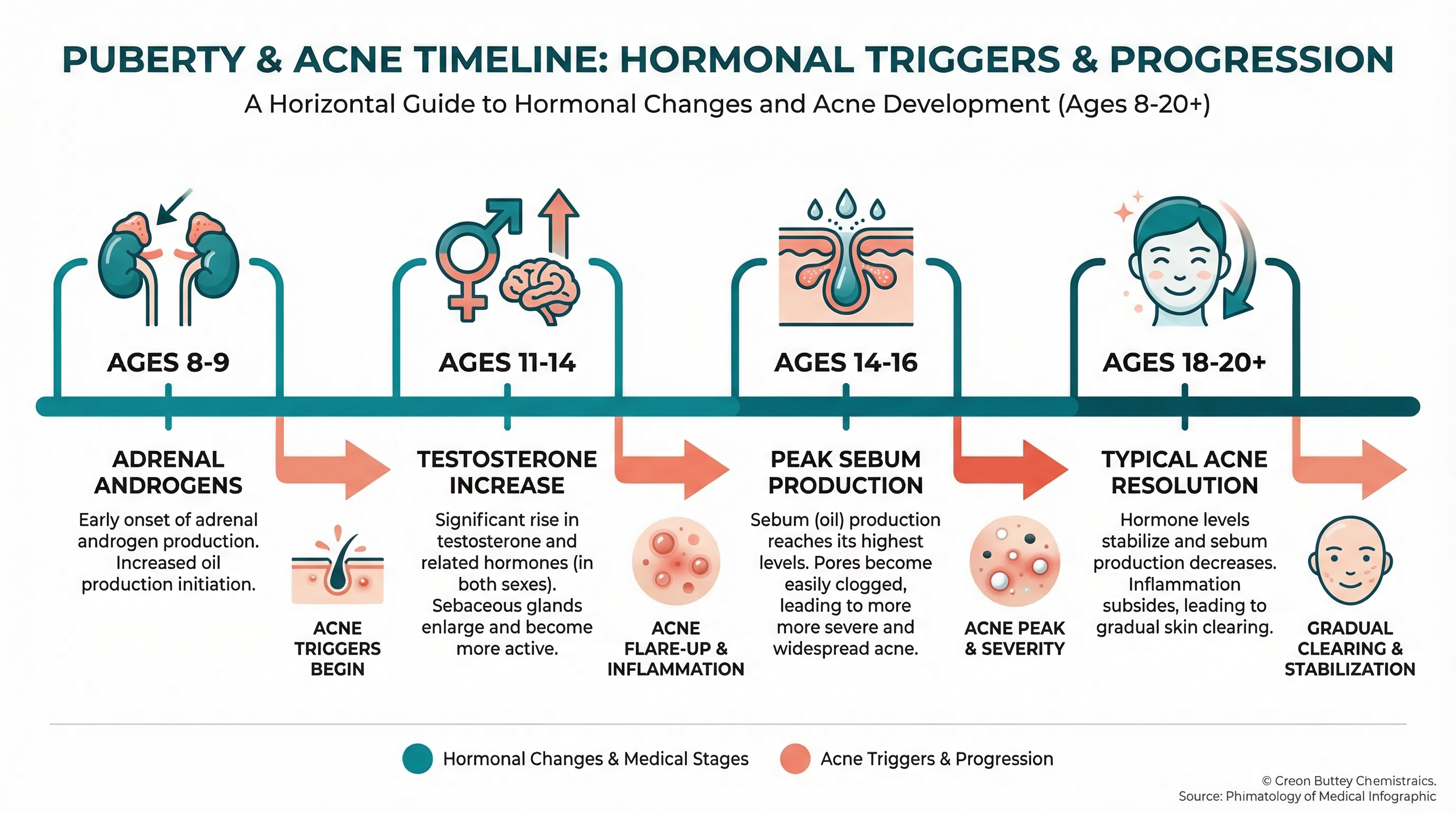 Acne follows a general timeline through puberty, though every teen's experience is unique.
When Acne Signals Something Else
In the vast majority of cases, teen acne is just acne -- a normal consequence of puberty hormones. But occasionally, acne is a visible clue that something else is going on in your teen's body.
Polycystic Ovary Syndrome (PCOS)
PCOS is the most common hormonal disorder in young women, and acne is one of its hallmark symptoms. If your daughter has persistent acne (especially along the jawline and chin), combined with any of the following, ask her doctor to evaluate for PCOS:
- Irregular or absent periods
- Unexplained weight gain, particularly around the midsection
- Excessive hair growth on the face, chest, or abdomen
- Thinning hair on the scalp
- Darkening of skin in body folds (neck, armpits, groin)
Early diagnosis and management of PCOS can help prevent long-term complications including insulin resistance, type 2 diabetes, and fertility challenges.
Adrenal Gland Disorders
Rarely, severe or treatment-resistant acne in younger children or teens can be associated with adrenal gland issues, including congenital adrenal hyperplasia or, very rarely, adrenal tumors. These conditions cause excess androgen production. Signs that point toward an adrenal issue include very early onset of acne (before age 8), rapid virilization (deepening voice, increased muscle mass, excessive body hair), or acne that does not respond to standard treatments.
Medication and Supplement Side Effects
If your teen's acne appeared or dramatically worsened after starting a new medication or supplement, there may be a connection. Common culprits include:
- Corticosteroids (prednisone and similar medications)
- Certain antiepileptic medications
- Lithium
- Anabolic steroids (a serious concern in teen athletes)
- Whey protein supplements and creatine (increasingly common among teen boys pursuing fitness goals)
- Certain hormonal contraceptives (some can worsen acne while others improve it)
Always mention all medications and supplements to your teen's doctor when discussing acne.
The "Wait and See" Timeline: How Long to Try Before Escalating
One of the hardest things about teen acne is the waiting. You start a new face wash, and then you watch. And wait. And wonder if it is working.
Here is a clear timeline to follow so you are not waiting blindly.
Weeks 1-2: Do not expect visible improvement. Skin cells take about 4 to 6 weeks to turn over, so even effective treatments need time to show results. In fact, some treatments -- particularly retinoids -- can cause a temporary worsening called "purging" before things improve.
Weeks 3-4: You might begin to see fewer new breakouts forming, even if existing pimples are still healing. This is a good early sign.
Weeks 6-8: This is the real checkpoint. If your teen has been using an over-the-counter product consistently (this means every single day, not just when they remember), you should be seeing meaningful improvement by now. Not perfection -- but clear progress.
After 8 weeks with no improvement: It is time to level up. If a consistent over-the-counter routine has not made a noticeable difference after two full months, the acne likely needs prescription-strength treatment. Schedule that doctor's appointment.
After 3-4 months of prescription treatment with no improvement: Go back to the doctor. The treatment plan may need adjustment, or further evaluation may be warranted.
The Cost of Waiting Too Long
Here is the part that keeps dermatologists up at night: acne scarring is largely preventable, but only if you treat the acne before the scarring happens.
Every deep, inflamed breakout carries a risk of leaving a permanent scar. Once a scar forms, it is dramatically harder (and more expensive) to treat than the acne that caused it. Chemical peels, laser treatments, microneedling -- scar revision procedures can cost thousands of dollars and require multiple sessions.
The message is not meant to scare you. It is meant to give you permission to act. If your teen's acne is moderate to severe, waiting months or years to "see if they grow out of it" is a gamble with their skin. The potential downside of seeing a dermatologist early is essentially zero. The potential downside of waiting too long is permanent scarring.
Trust Your Gut: The Most Underrated Parenting Tool
Here is something no clinical guideline will tell you, but every pediatric dermatologist knows: parents who bring their teens in because something "just doesn't seem right" are almost always correct.
You know your child. You see them every day. You notice changes in their skin, their confidence, their willingness to look in a mirror. If something feels off -- if you have a nagging sense that this is more than just a few pimples -- trust that instinct.
There is no penalty for seeing a doctor and being told, "This is normal, here are some tips, come back if it gets worse." That is a perfectly fine outcome. You have lost nothing except a co-pay and gained peace of mind.
On the other hand, there is a real cost to ignoring your instincts and waiting. That cost might be measured in scars, or it might be measured in months of unnecessary suffering for a teenager who is already navigating the hardest years of their life.
What to Say to Your Teen
Bringing up acne with a teenager requires some finesse. Here are a few approaches that tend to work better than others:
Instead of: "Your skin is getting really bad. We need to do something about it." Try: "I noticed you've been dealing with some breakouts. Would you want to see a doctor about it? There are treatments that can really help."
Instead of: "Stop touching your face -- you're making it worse." Try: "I know the breakouts are frustrating. Let me know if you want to try a different approach."
Instead of: "It's just acne. Everyone gets it." Try: "I can see this is bothering you, and I want to help. Your feelings about it matter."
The goal is to be your teen's ally, not their critic. Let them know you see what they are going through, you take it seriously, and you are ready to help when they are ready to accept it.
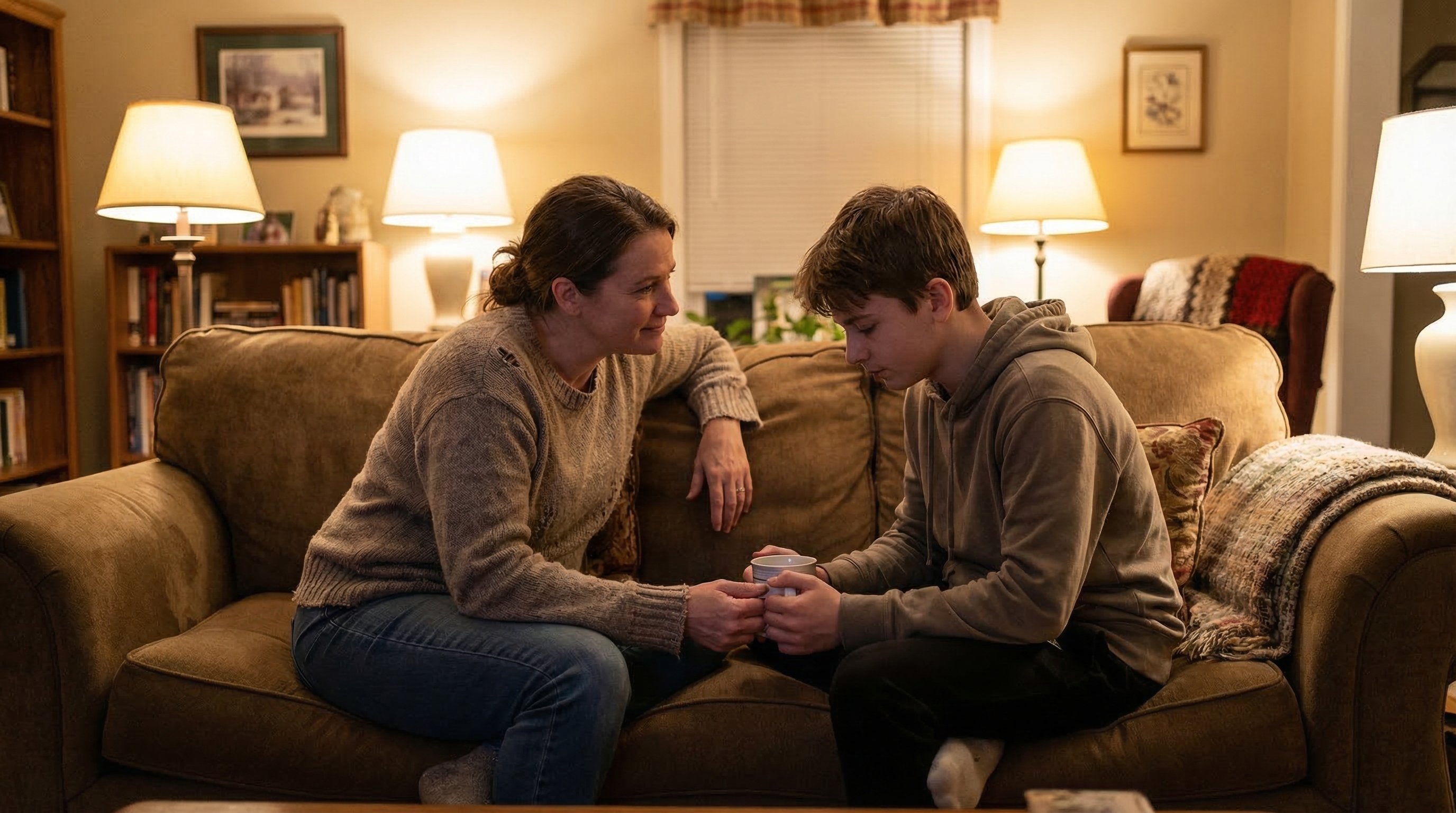 Approaching the acne conversation with empathy makes your teen more likely to accept help.
The Bottom Line: Normal vs. Not Normal
Let's bring it all together with the clearest possible summary.
It IS normal if your teen has:
- Scattered blackheads and whiteheads, mostly in the T-zone
- A few pimples that come and go
- Breakouts that seem to follow stress or their menstrual cycle
- Mild oiliness in the face
- Acne that responds to consistent over-the-counter treatment
It is NOT "just normal teen stuff" if your teen has:
- Deep, painful cysts or nodules that take weeks to resolve
- Acne that is rapidly getting worse
- Breakouts that are leaving scars
- Acne combined with hormonal red flags (irregular periods, excess hair growth, very early onset)
- Skin that is causing emotional distress, social withdrawal, or depression
- Acne that has not improved after 6-8 weeks of consistent over-the-counter treatment
You do not need to be a dermatologist to tell the difference. You just need to look honestly at what you are seeing and resist the urge to dismiss it as "just a phase" if it clearly is not.
Your teen's acne might be completely normal -- and if so, a simple skincare routine and a little patience will carry them through. But if it is not, the best thing you can do is act. Make the appointment. Ask the questions. Get the help.
Either way, you are doing the right thing by paying attention. That is never overreacting. That is parenting.
This article was medically reviewed by Dr. Rachel Torres, MD, a board-certified pediatric dermatologist. It is intended for informational purposes and should not replace personalized medical advice. If you are concerned about your teenager's acne, consult a healthcare provider.
How we reviewed this article:
Our experts continually monitor the health and wellness space, and we update our articles when new information becomes available.
- Bhate K, Williams HC. (2013). Epidemiology of acne vulgaris. British Journal of Dermatology.https://pubmed.ncbi.nlm.nih.gov/23210645/
- Tan JK, Bhate K. (2015). A global perspective on the epidemiology of acne. British Journal of Dermatology.https://pubmed.ncbi.nlm.nih.gov/26031612/
- Zaenglein AL, et al. (2016). Guidelines of care for acne vulgaris. JAAD.https://pubmed.ncbi.nlm.nih.gov/26897386/
- Lucky AW, et al. (1994). Acne vulgaris in premenarchal girls. Archives of Dermatology.https://pubmed.ncbi.nlm.nih.gov/8002649/
- Halvorsen JA, et al. (2011). Suicidal ideation, mental health problems in adolescents with acne. JID.https://pubmed.ncbi.nlm.nih.gov/20944653/
- Gollnick H, et al. (2003). Management of acne. JAAD.https://pubmed.ncbi.nlm.nih.gov/12734496/
- Kraft J, Freiman A. (2011). Management of acne. CMAJ.https://pubmed.ncbi.nlm.nih.gov/21398228/
- Thiboutot D. (2004). Acne: Hormonal concepts and therapy. Clinics in Dermatology.https://pubmed.ncbi.nlm.nih.gov/15556720/
- American Academy of Dermatology. Acne: Overview.https://www.aad.org/public/diseases/acne
- Mallon E, et al. (1999). Quality of life in acne. British Journal of Dermatology.https://pubmed.ncbi.nlm.nih.gov/10354575/
- Strauss JS, et al. (2007). Guidelines of care for acne vulgaris. JAAD.https://pubmed.ncbi.nlm.nih.gov/17276540/
Read This Next
25 Questions to Ask Your Dermatologist About Acne

When to Get a Second Opinion from Another Dermatologist
If your teen's acne treatment isn't working and your dermatologist isn't budging, it might be time to find someone new. Here's how to know and what to do about it.
Read More →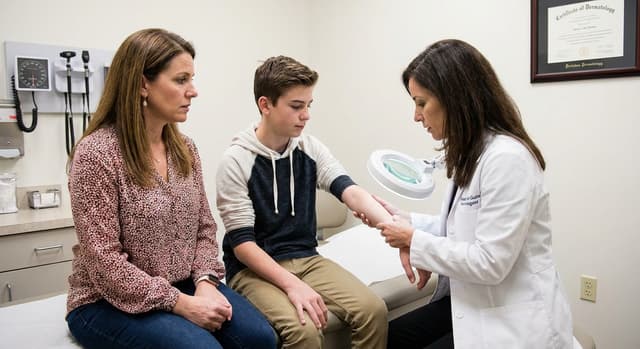
Accutane for Teens: Everything Parents and Teens Need to Know
Accutane (isotretinoin) clears severe acne in about 85% of patients, but the process involves monthly blood tests, strict pregnancy prevention, and several months of very dry everything. Here's what the experience actually looks like.
Read More →
How to Help Your Teenager with Acne: A Complete Guide for Parents
Watching your teen struggle with acne is harder than most people realize. Here's a dermatologist-reviewed guide for parents who want to help — without overstepping, minimizing, or making things worse.
Read More →
How to Talk to Your Teenager About Acne Without Making It Worse
Bringing up acne with your teen is a minefield. Say the wrong thing and they shut down. Say nothing and they suffer alone. Here's how to start the conversation the right way.
Read More →