Acne Mechanica: How Helmets, Masks, Backpacks, and Sports Gear Cause Breakouts
Medically reviewed by Dr. James Chen, MD, Dermatology & Nutrition
Written by Teen Acne Solutions Editorial Team — Updated March 9, 2026
Key takeaways
- Acne mechanica is caused by friction, pressure, and heat trapping sweat against skin — not by bacteria alone
- Common culprits for teens: football/hockey helmets, face masks, backpack straps, sports bras, and phone screens
- 'Maskne' (mask acne) became widespread during COVID and remains common in healthcare and sports settings
- Prevention is more effective than treatment — barriers, moisture-wicking fabrics, and immediate cleansing after contact
- Unlike regular acne, mechanica clears relatively quickly once the friction source is addressed
You just got home from football practice. You pull off your helmet and catch a glimpse of yourself in the mirror — a fresh crop of angry red bumps lines your forehead exactly where the helmet padding sits. Your chin is broken out along the strap line. Your shoulders, where your pads press down, look the same.
Sound familiar? You are not imagining the connection. Those breakouts are not random, and they are not just "regular" acne acting up because you were sweating. What you are dealing with has a specific name: acne mechanica — and understanding what causes it is the first step toward clearing it up for good.
What Is Acne Mechanica?
Acne mechanica is a form of acne triggered by a combination of friction, sustained pressure, heat, and occlusion (when something covers your skin and traps moisture against it). Unlike common acne vulgaris, which is primarily driven by hormones, excess oil production, and bacterial overgrowth, acne mechanica has a clear external, physical cause.
The term was first coined by dermatologists Kligman and Mills in the early 1970s after they noticed a distinct pattern of breakouts in athletes and military personnel — people whose skin was regularly subjected to rubbing gear, tight clothing, and heavy equipment.
Here is what makes acne mechanica different from the breakouts you might already be dealing with:
- It follows a pattern. The bumps appear exactly where something touches, rubs, or presses against your skin — and nowhere else.
- It has an identifiable trigger. Remove the friction source, and the breakouts improve. Keep the friction source, and they persist or worsen.
- It can affect anyone. Even teens who have never had a single pimple can develop acne mechanica if the right combination of pressure and heat is present.
That last point is important. Acne mechanica does not require oily skin, hormonal fluctuations, or a genetic predisposition to acne. It is purely mechanical — your skin reacting to a physical insult.
How Friction Causes Breakouts: The Mechanism Behind Acne Mechanica
To understand why a helmet or backpack strap can make you break out, you need to know what is happening beneath the surface of your skin.
Step 1: Friction Damages the Follicular Wall
Your skin is covered with tiny hair follicles, each connected to a sebaceous (oil) gland. Under normal conditions, oil flows up through the follicle and out onto the skin surface. When something repeatedly rubs against your skin — a helmet shifting during a tackle, a backpack bouncing as you walk — it creates micro-irritation along the walls of those follicles. This friction can actually damage the delicate lining of the follicular canal, making it more vulnerable to blockage.
Step 2: Pressure and Occlusion Trap Sweat and Oil
While friction is weakening the follicle walls, the pressure from your gear is simultaneously pressing down on the skin surface. This occlusion (covering) prevents sweat, oil, and dead skin cells from escaping normally. Instead of evaporating or being wiped away, sweat pools against your skin, mixing with sebum and creating a sticky film that clogs pores.
Step 3: Heat Creates a Bacterial Breeding Ground
Anywhere gear sits against your skin, heat gets trapped. This warm, moist microenvironment is ideal for the bacteria that contribute to acne — particularly Cutibacterium acnes (formerly Propionibacterium acnes). These bacteria thrive in low-oxygen, warm, humid conditions, which is precisely what occurs under a football helmet, a face mask, or a tightly cinched backpack strap.
Step 4: Inflammation and Breakouts Appear
The combination of follicular damage, clogged pores, and increased bacterial activity triggers your immune system's inflammatory response. The result: red, inflamed bumps, pustules, and sometimes deeper painful nodules — all confined to the area where the friction and pressure occurred.
This is why acne mechanica breakouts have such a distinctive "map" pattern. They are not scattered randomly across your face or body. They trace the exact outline of whatever was pressing against your skin.
Common Causes of Acne Mechanica for Teens
If you are a teenager, your daily life is practically an obstacle course of acne mechanica triggers. Here are the most common culprits:
Sports Helmets
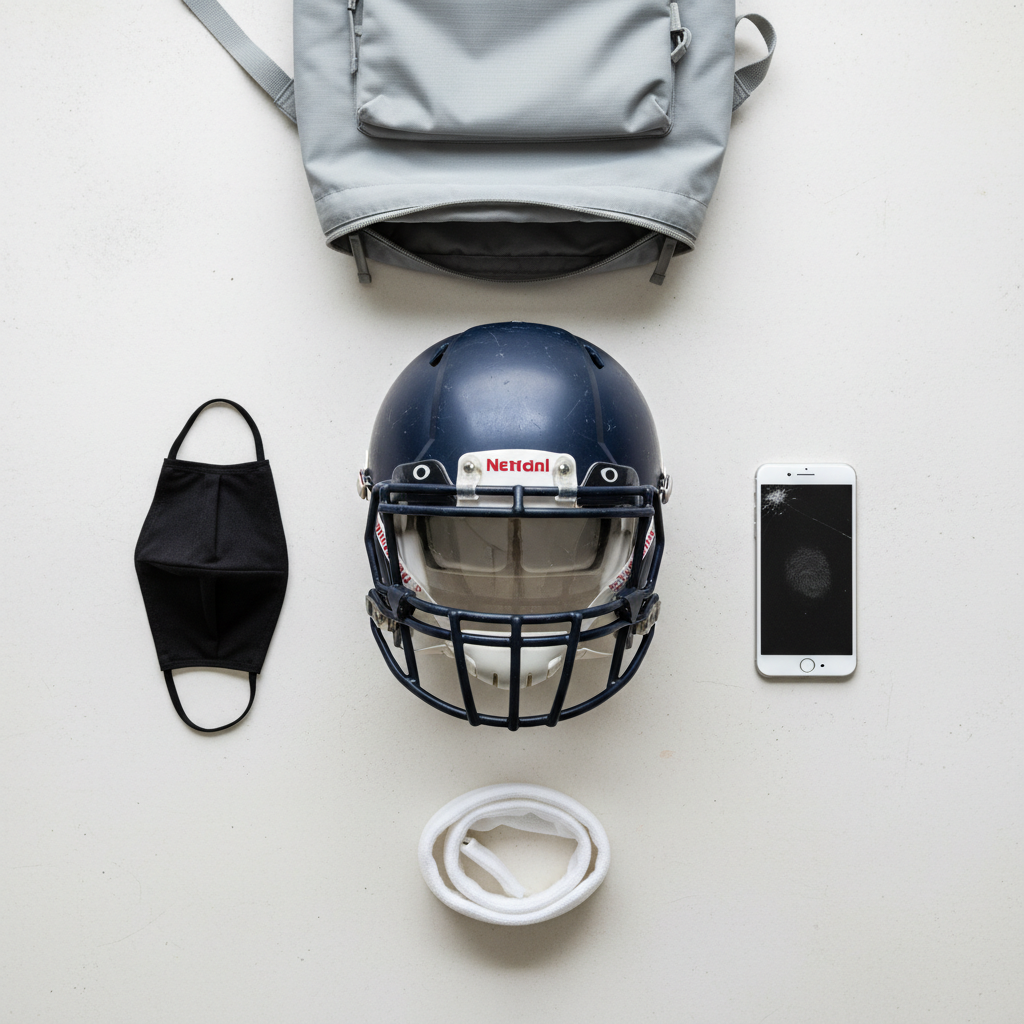
Football helmets, hockey helmets, lacrosse helmets, and baseball batting helmets are some of the most frequent causes of acne mechanica in teens. The combination of a tight-fitting shell, interior foam padding, and a chin strap creates the perfect storm of friction, pressure, heat, and occlusion. Breakouts typically appear across the forehead (where the helmet rim sits), along the jawline and chin (from the strap), and sometimes on the cheeks and bridge of the nose (from the face cage or visor).
Chin Straps and Face Guards
Chin straps deserve their own mention because they are one of the worst offenders. A chin strap applies constant, focused pressure on a relatively small area of skin that is already prone to acne in many teens. Every time you talk, chew, or move your jaw during play, that strap shifts and rubs. Football, lacrosse, and hockey players often develop a characteristic band of acne running from ear to ear along the jaw — sometimes called "chin strap acne."
Backpack Straps
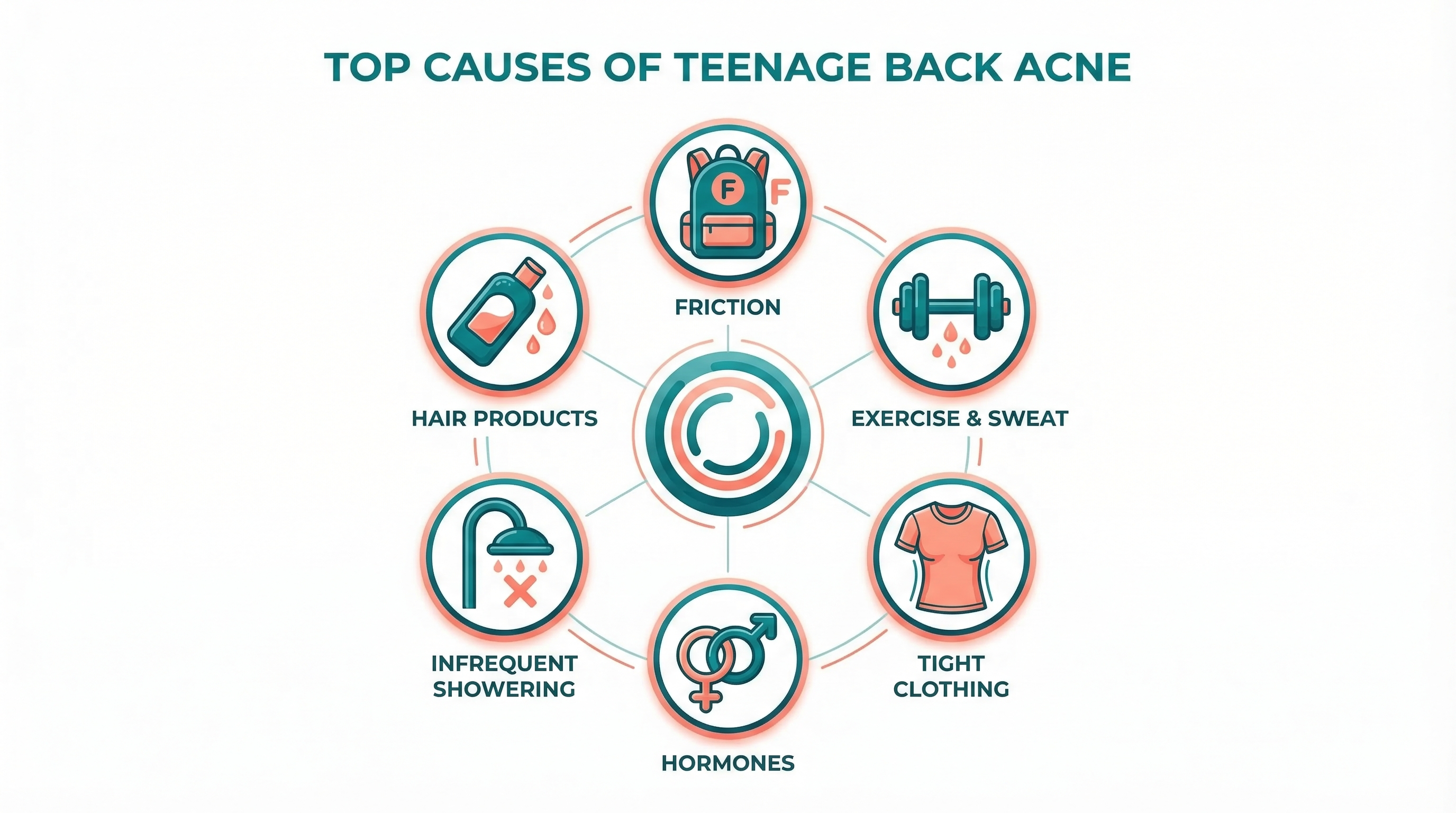
This is one that affects almost every teen, athlete or not. Heavy backpacks loaded with textbooks, laptops, and water bottles create significant downward pressure on the shoulders. As you walk, the straps shift and rub. If you are wearing the backpack over a thin T-shirt in warm weather, you may notice clusters of bumps on both shoulders that correspond exactly to where the straps sit. Students who carry especially heavy loads or walk long distances to school are most susceptible.
Sports Bras and Compression Gear
Tight-fitting athletic wear — sports bras, compression shirts, spandex shorts — can cause acne mechanica along the areas where elastic bands press against the skin. For teen girls, sports bra acne typically appears as a band of bumps across the upper back, around the ribcage, and along the shoulder straps. Compression gear worn for extended periods during tournaments or all-day practices is a common trigger for body acne that many teens do not connect to their clothing.
Hats, Headbands, and Visors
If you wear a baseball cap daily, you may have noticed a line of bumps across your forehead exactly where the cap's inner band sits. Athletic headbands, sweatbands, and visors cause the same issue. The tighter the fit and the longer you wear it, the worse the breakouts tend to be.
Your Phone
Here is one that surprises many teens: pressing your phone against your cheek during long calls creates the exact conditions for acne mechanica. The phone surface traps heat, blocks airflow, and rubs against your skin. If you notice that your breakouts are worse on the side of your face you hold your phone on, your device may be a contributing factor. Add to that the bacteria living on your phone screen, and it becomes a significant acne trigger.
Violin and Other Instrument Chin Rests
Student musicians who play violin or viola often develop a distinctive patch of acne (or irritation called "fiddler's neck") on the left side of their jaw and neck where the chin rest makes contact. Hours of daily practice means hours of friction and pressure in a concentrated area.
Maskne Explained: The COVID Legacy That Did Not Go Away
The COVID-19 pandemic introduced millions of teens to a specific subtype of acne mechanica that earned its own nickname: maskne. While widespread mask mandates have largely ended, maskne remains relevant for teens who wear masks in healthcare settings, during sports with face shields, or in other situations.
How Masks Trigger Breakouts
Face masks create a warm, humid microclimate against the lower half of your face. Every time you exhale, warm moist air gets trapped between the mask and your skin. Studies published in the International Journal of Dermatology and the Journal of the American Academy of Dermatology found that this environment leads to several acne-promoting changes:
- Increased skin hydration and pH disruption. The trapped moisture softens the outer layer of skin (stratum corneum), causing it to swell. This disrupts the skin's natural barrier function and alters its pH, making it more vulnerable to bacterial overgrowth.
- Friction from mask movement. Every time you talk, smile, or adjust your mask, it shifts against your skin. Over the course of a school day, this adds up to hundreds or thousands of micro-friction events.
- Disruption of the skin microbiome. The warm, occluded environment under a mask favors certain bacteria and fungi over others, potentially shifting the skin's microbial balance in ways that promote breakouts.
- Irritant contact. Some mask materials can directly irritate the skin, contributing to inflammation even without bacterial involvement.
Who Still Deals With Maskne?
Even though daily mask-wearing is no longer the norm for most teens, several groups still experience maskne regularly:
- Teens working part-time jobs in healthcare or food service where masks are required
- Athletes who wear face shields, catchers' masks, or goalie masks
- Teens who choose to mask during cold and flu season
- Students in certain school settings or regions where masks are still recommended
If you dealt with maskne during the pandemic and thought it was behind you, but you now break out from sports face guards, the underlying mechanism is exactly the same.
Sports and Acne Mechanica: A Deep Dive
Sports are far and away the biggest driver of acne mechanica in teenagers. The combination of heavy protective equipment, prolonged wear times, intense sweating, and limited ability to cleanse during activity creates ideal conditions for friction-induced breakouts.
High-Risk Sports
Some sports carry a higher risk of acne mechanica than others:
- Football: Helmets, chin straps, shoulder pads, and chest protectors create multiple friction zones. Football players frequently develop acne on the forehead, chin, jawline, shoulders, and upper chest.
- Hockey: Full-face cages, tight-fitting helmets, and heavy shoulder and chest pads make hockey players highly susceptible. The cold-then-hot temperature swings (cold rink to overheated body) can worsen the issue.
- Lacrosse: Helmets with face guards and chin straps, plus shoulder and arm pads, create many of the same friction points as football.
- Wrestling: Headgear, constant skin-to-skin and skin-to-mat contact, and heavy sweating make wrestlers vulnerable to both acne mechanica and other skin conditions.
- Cycling: Close-fitting helmets worn for extended rides, combined with chin straps and sweat, commonly cause forehead and chin breakouts.
The "After-Practice" Mistake
One of the biggest mistakes teen athletes make is not addressing their skin immediately after removing gear. Many teens finish practice, stuff their equipment in a bag, hang out with teammates for a while, and do not shower or wash their face for an hour or more. During that window, all the sweat, oil, and bacteria that accumulated under their gear continue to sit on their skin, deepening the clogging process and increasing the chance of a breakout.
The first 10 minutes after you remove your gear are the most important window for prevention.
How to Identify Acne Mechanica
If you are unsure whether your breakouts qualify as acne mechanica, here are the telltale signs:
Pattern matching. The single most reliable indicator is location. If you can hold up the suspected trigger (a helmet, a strap, a mask) and the breakout area matches the contact points exactly, it is almost certainly mechanica.
Timing correlation. Acne mechanica tends to flare within 24 to 48 hours after prolonged contact with the trigger. If your breakouts consistently appear the day after practice or after a long school day with a heavy backpack, the timing supports a mechanica diagnosis.
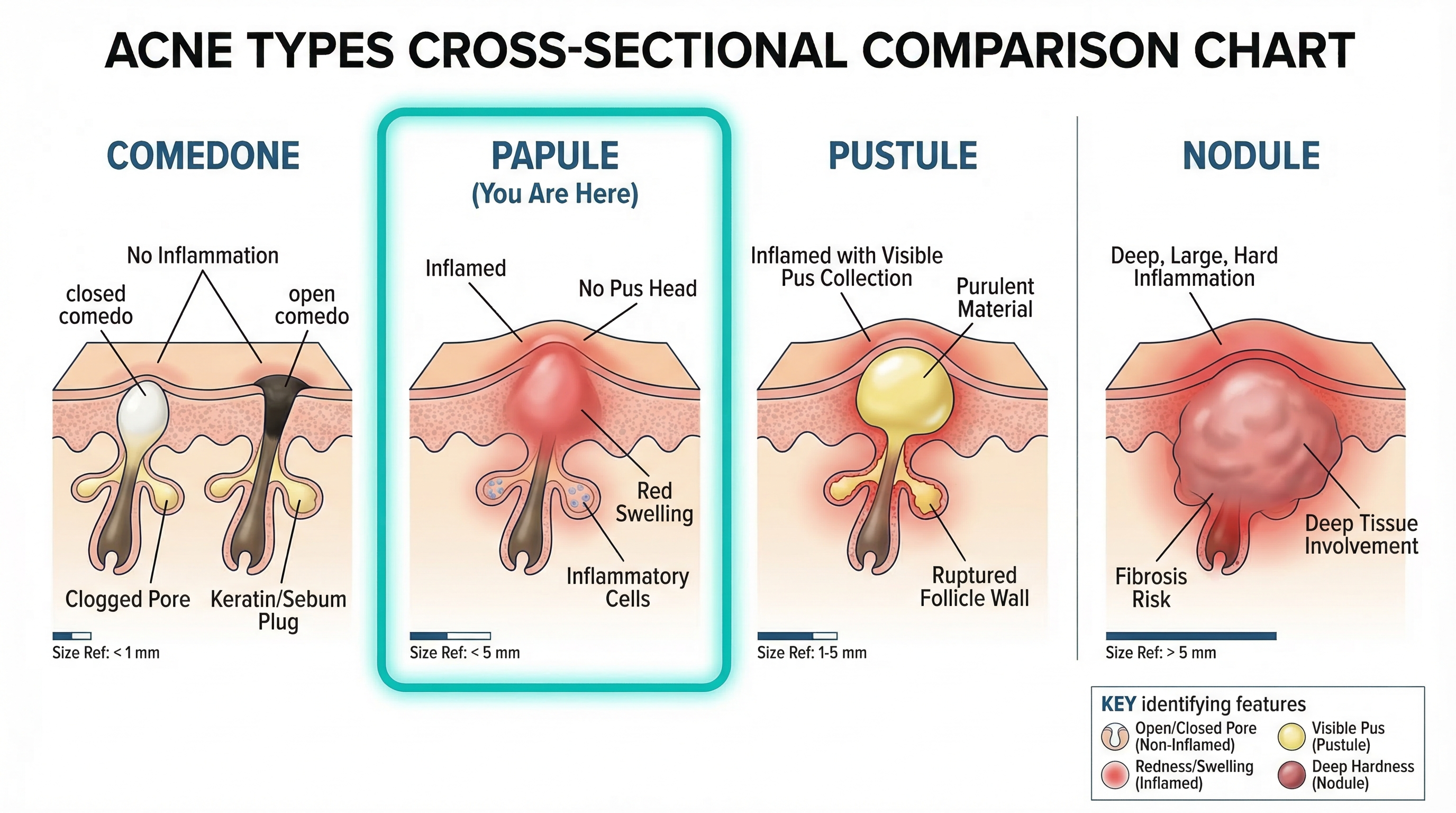
Bump type. Acne mechanica often presents as a mix of small comedones (blackheads and whiteheads), inflamed papules (red bumps without a head), and sometimes pustules. The bumps tend to be relatively uniform in size and clustered together.
Response to removing the trigger. If your breakouts improve significantly during off-season, vacations, or any period when you are not using the suspected gear, that strongly suggests mechanica.
Treatment and Prevention
The good news about acne mechanica is that it responds well to targeted strategies — and prevention is significantly more effective than treatment after the fact. Here is your action plan.
Immediate Post-Contact Cleansing
This is the single most impactful habit you can adopt. As soon as you remove your helmet, mask, or gear:
- Cleanse the affected areas within 10 minutes. Use a gentle, non-comedogenic cleanser or a medicated wash containing 2-5% benzoyl peroxide. Benzoyl peroxide is particularly effective because it kills acne-causing bacteria on contact and helps clear pores of debris.
- Use pre-moistened cleansing wipes if a sink is not available. Keep a pack of salicylic acid wipes in your sports bag for immediate post-practice use. They are not a perfect substitute for a full wash, but they are far better than nothing.
- Shower as soon as possible. If you have body acne mechanica from pads, compression gear, or sports bras, a full shower with a benzoyl peroxide body wash should be part of your post-practice routine.
Topical Treatments
For active acne mechanica breakouts, the following over-the-counter treatments are most effective:
- Benzoyl peroxide (2.5-5%). Apply as a leave-on treatment to affected areas after cleansing. Start with 2.5% to minimize irritation. Benzoyl peroxide is the gold standard for acne mechanica because it targets the bacterial component directly.
- Salicylic acid (0.5-2%). A beta-hydroxy acid that penetrates into pores and helps dissolve the oil-and-dead-skin-cell plugs that cause comedones. Useful as a daily preventive treatment on mechanica-prone areas.
- Adapalene (0.1%). Available over the counter as Differin, this retinoid helps prevent pore clogging and promotes cell turnover. It is a good option for teens dealing with both mechanica and regular acne simultaneously.
A note on irritation: Acne mechanica skin is already irritated from friction. Be cautious about layering multiple active ingredients on areas that are rubbed raw. Sometimes gentle cleansing plus a single treatment is more effective than an aggressive multi-product approach that further damages the skin barrier.
Barrier Protection
Applying a barrier between your skin and the friction source can prevent breakouts from forming in the first place:
- Non-comedogenic moisturizer. Applying a lightweight, oil-free moisturizer before putting on gear creates a protective layer that reduces friction. Look for products labeled "non-comedogenic" (will not clog pores).
- Anti-chafing balms. Products designed to prevent chafing (like those used by runners) can reduce friction on areas like the shoulders and chest.
- Zinc oxide-based products. Some dermatologists recommend thin applications of zinc oxide cream as a barrier. Zinc also has mild antibacterial and anti-inflammatory properties.
Moisture-Wicking Layers
Wearing a thin, moisture-wicking layer between your skin and your gear is one of the most effective prevention strategies:
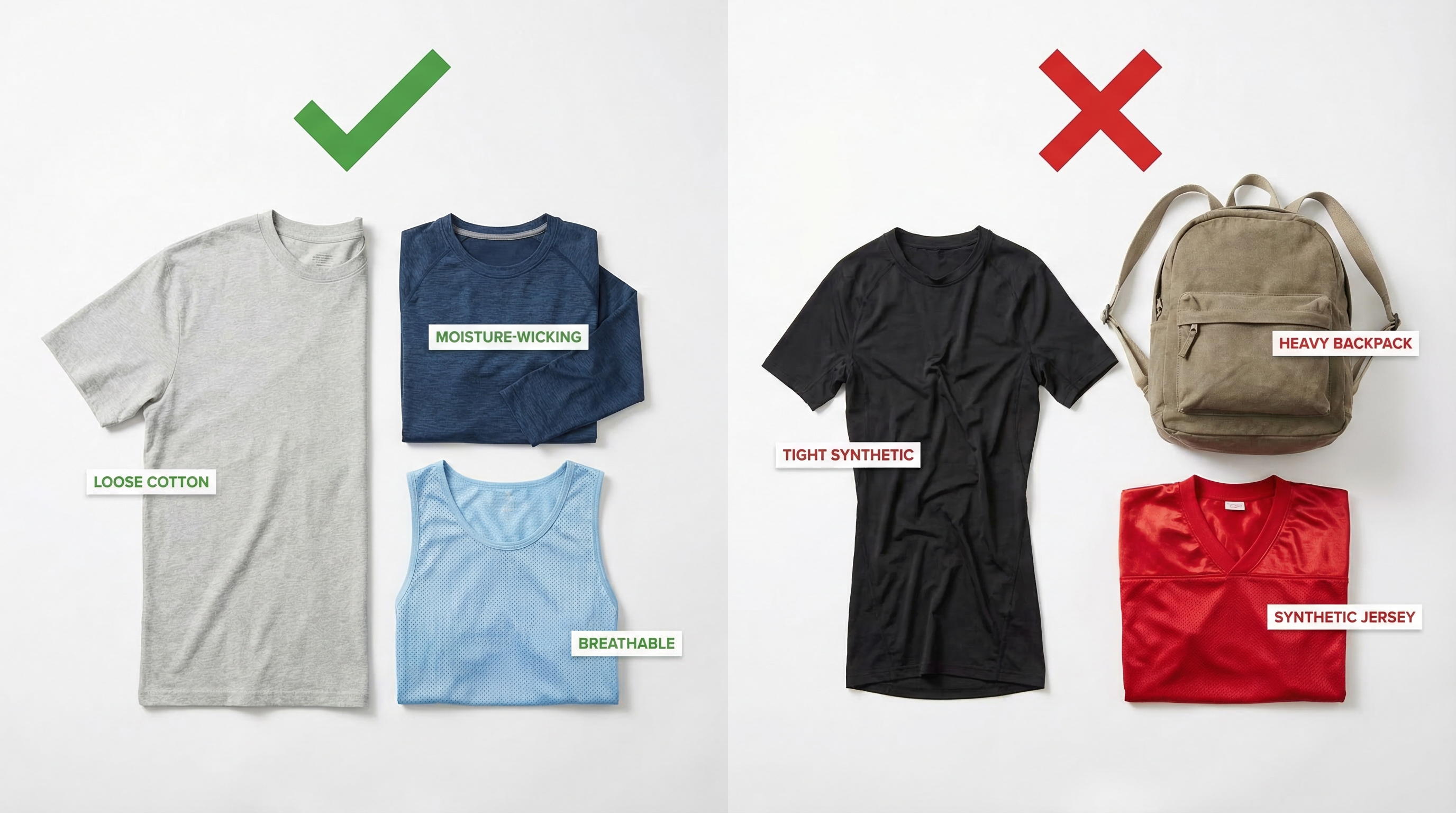
- Helmet liners. Thin, washable skull caps made from moisture-wicking material (often marketed as "helmet liners" or "skull caps") absorb sweat and reduce direct friction between the helmet padding and your forehead. Many football and hockey players swear by these.
- Moisture-wicking undershirts. Wearing a breathable athletic shirt under shoulder pads and chest protectors reduces skin contact with the rough padding.
- Moisture-wicking sports bras. Choose sports bras made from technical fabrics that pull sweat away from the skin rather than cotton, which absorbs moisture and holds it against you.
Gear Modifications That Help
Sometimes small changes to your equipment can make a big difference in acne mechanica.
Clean Your Gear Regularly
This sounds obvious, but most teen athletes do not do it nearly often enough. Helmet padding, chin straps, and pads accumulate sweat, oil, bacteria, and dead skin cells with every use. If you are putting on gear that is still damp and dirty from yesterday's practice, you are reintroducing a concentrated bacterial load directly onto your skin.
- Wipe down helmet interiors with an antibacterial wipe after every practice.
- Wash removable padding weekly, or more often during heavy training periods.
- Air out all gear between uses. Do not seal damp equipment in a closed bag.
- Replace chin strap pads regularly — they are inexpensive and absorb an enormous amount of sweat.
Adjust the Fit
Gear that is too tight creates more pressure and friction. Gear that is too loose shifts and rubs more during movement. Work with your coach or equipment manager to ensure your helmet and pads fit properly — snug enough to be safe, but not so tight that they are grinding against your skin.
Add Padding to Problem Areas
For areas where friction is unavoidable (like the forehead under a helmet rim), adding a thin layer of soft, breathable padding can help distribute pressure more evenly and reduce direct rubbing. Some companies make adhesive foam strips specifically designed to line the inside of helmets and reduce acne.
Switch to Smoother Materials Where Possible
If you have a choice between rough, textured gear padding and smooth, moisture-wicking alternatives, choose the smoother option. Rough textures create more friction and more follicular irritation with every movement.
When Acne Mechanica Combines With Regular Acne
Here is where things get complicated for many teens: if you already have hormonal or inflammatory acne, adding mechanical friction on top of it makes everything worse. The areas where gear contacts your skin may break out more severely than the rest of your face or body, and it can be difficult to tell where "regular" acne ends and mechanica begins.
If you are dealing with both types simultaneously, here is how to approach it:
- Treat the underlying acne. Follow your dermatologist's recommendations for your baseline acne (whether that involves topical retinoids, benzoyl peroxide, or other treatments).
- Add mechanica-specific prevention. Layer the strategies described above — cleansing after gear use, barrier products, moisture-wicking layers — on top of your existing routine.
- Be honest with your dermatologist. Tell them specifically which sports you play, what gear you wear, and where your worst breakouts occur. This information helps them distinguish between hormonal and mechanical triggers and tailor your treatment accordingly.
- Do not skip sports. Some teens consider quitting their sport to avoid breakouts. In the vast majority of cases, acne mechanica can be managed effectively without giving up the activities you love. The physical and mental health benefits of sports far outweigh the inconvenience of managing friction-related breakouts.
Your Acne Mechanica Action Plan
If you have made it this far, here is a summary you can put into practice today:
- Identify your triggers. Map your breakout patterns to your gear, clothing, and daily habits.
- Cleanse immediately after contact. Keep cleansing wipes in your sports bag and wash affected areas within 10 minutes of removing gear.
- Add a moisture-wicking barrier. Helmet liners, undershirts, and technical fabrics reduce friction and wick sweat away from skin.
- Clean your gear. Wipe down helmets and straps after every use. Wash removable padding weekly.
- Treat active breakouts gently. Benzoyl peroxide wash and a lightweight non-comedogenic moisturizer are your first-line treatments.
- See a dermatologist if it persists. If your acne mechanica does not improve within 4 to 6 weeks of consistent prevention, or if you are developing deep, painful cysts, professional evaluation is warranted.
The most encouraging thing about acne mechanica is that it has a clear cause — and addressing that cause produces real, visible results. Unlike hormonal acne, which can feel frustratingly unpredictable, friction acne follows rules. Once you understand those rules and build prevention habits around them, you are in control.
Disclaimer: This article is for informational purposes only and does not constitute medical advice. Always consult with a qualified healthcare provider or board-certified dermatologist for diagnosis and treatment of skin conditions. Individual results from any products or treatments mentioned may vary.
How we reviewed this article:
Our experts continually monitor the health and wellness space, and we update our articles when new information becomes available.
- Kligman AM, Mills OH. (1972). Acne mechanica. Archives of Dermatology.https://pubmed.ncbi.nlm.nih.gov/4260198/
- Mills OH, Kligman A. (1975). Acne mechanica. Archives of Dermatology.https://pubmed.ncbi.nlm.nih.gov/123732/
- Zaenglein AL, et al. (2016). Guidelines of care for acne vulgaris. JAAD.https://pubmed.ncbi.nlm.nih.gov/26897386/
- Teo WL. (2021). The 'Maskne' microbiome — pathophysiology and therapeutics. International Journal of Dermatology.https://pubmed.ncbi.nlm.nih.gov/33377507/
- Damiani G, et al. (2020). Mask-related acne ('maskne') during the COVID-19 pandemic. Journal of the American Academy of Dermatology.https://pubmed.ncbi.nlm.nih.gov/33011328/
- Kazandjieva J, Tsankov N. (2007). Drug-induced acne. Clinics in Dermatology.https://pubmed.ncbi.nlm.nih.gov/17870528/
- Bergler-Czop B. (2014). The aetiopathogenesis of acne vulgaris. Postepy Dermatologii I Alergologii.https://pubmed.ncbi.nlm.nih.gov/25489343/
- American Academy of Dermatology. Acne: Tips for Managing.https://www.aad.org/public/diseases/acne/skin-care/tips
- Kraft J, Freiman A. (2011). Management of acne. CMAJ.https://pubmed.ncbi.nlm.nih.gov/21398228/
- Han C, et al. (2020). Face mask use triggers acne-like dermatosis. Dermatologic Therapy.https://pubmed.ncbi.nlm.nih.gov/33012019/
Read This Next

Acne Face Mapping: Does Where You Break Out Tell You Why?

PCOS and Acne in Teens: When Breakouts Signal Something Bigger
If your acne won't respond to normal treatments and comes with irregular periods, it might be PCOS. Here's what teen girls and their parents need to know about diagnosis and treatment.
Read More →
Testosterone and Acne: Why Hormones Drive Most Teen Breakouts
Testosterone gets converted to DHT, which ramps up your oil glands. This is the core reason acne peaks during puberty and why boys tend to get it worse than girls.
Read More →
Inflammatory Acne: Papules, Pustules, and Why Your Skin Hurts
Inflammatory acne is the red, painful kind that actually hurts. Understanding the immune response behind it changes how you treat it and helps you stop making it worse.
Read More →
Comedonal Acne: Why Your Skin Is Bumpy But Not Red (And How to Fix It)
Comedonal acne gives you textured, bumpy skin without the redness of typical pimples. It's frustrating because it doesn't respond to the usual treatments. Here's what actually works.
Read More →