Blackheads (Open Comedones): Why They're Dark, How to Remove Them Safely, and What Actually Prevents Them
Medically reviewed by Dr. James Chen, MD, Dermatology & Nutrition
Written by Teen Acne Solutions Editorial Team — Updated March 16, 2026
Key takeaways
- Blackheads are NOT caused by dirt — the dark color comes from oxidized melanin and sebum exposed to air
- They're open comedones, meaning the pore is dilated and the plug is exposed to the surface
- Pore strips provide temporary satisfaction but don't prevent blackheads from returning
- Salicylic acid is the most effective OTC ingredient because it dissolves oil inside pores
- The nose, chin, and forehead (T-zone) are most affected because these areas have the highest density of oil glands
If you've ever leaned into a mirror and noticed tiny dark dots scattered across your nose, you've met blackheads. And if your first instinct was to scrub your face harder because you assumed those dark spots meant your skin was dirty, you're not alone. That's one of the most persistent myths in skincare, and it's completely wrong.
Blackheads --- technically called open comedones --- are one of the most common forms of acne, especially during the teenage years. Nearly everyone will deal with them at some point, and the frustration they cause is real. They're stubborn, they seem to reappear overnight, and the internet is overflowing with questionable advice about how to handle them.
This guide breaks down the real science behind blackheads: what they actually are at a structural level, why they look dark, what causes them to form, and --- most importantly --- the evidence-based treatments and prevention strategies that dermatologists actually recommend. No gimmicks, no miracle cures. Just the facts.
What Are Blackheads, Really?
To understand blackheads, you first need a quick anatomy lesson about your pores.
Every hair follicle on your face sits inside a tiny opening in the skin --- a pore. Attached to each follicle is a sebaceous gland, which produces an oily substance called sebum. Sebum is not your enemy. It's your skin's natural moisturizer, keeping things soft, supple, and protected from the environment.
The problem starts when dead skin cells, which are constantly being shed inside the pore lining, mix with sebum and form a sticky plug. This plug is called a comedone (pronounced com-uh-DOHN). It's the foundational lesion of acne --- meaning that virtually all acne, from mild to severe, begins with a comedone forming inside a pore.
Now, there are two types of comedones:
- Closed comedone (whitehead): The pore opening remains narrow or sealed. The plug stays trapped beneath a thin layer of skin, giving it a white or flesh-colored bump appearance.
- Open comedone (blackhead): The pore opening is dilated --- stretched wider than normal. The plug of dead skin cells and sebum is directly exposed to the air at the skin's surface.
That exposure to air is the critical difference, and it's what gives blackheads their distinctive color.
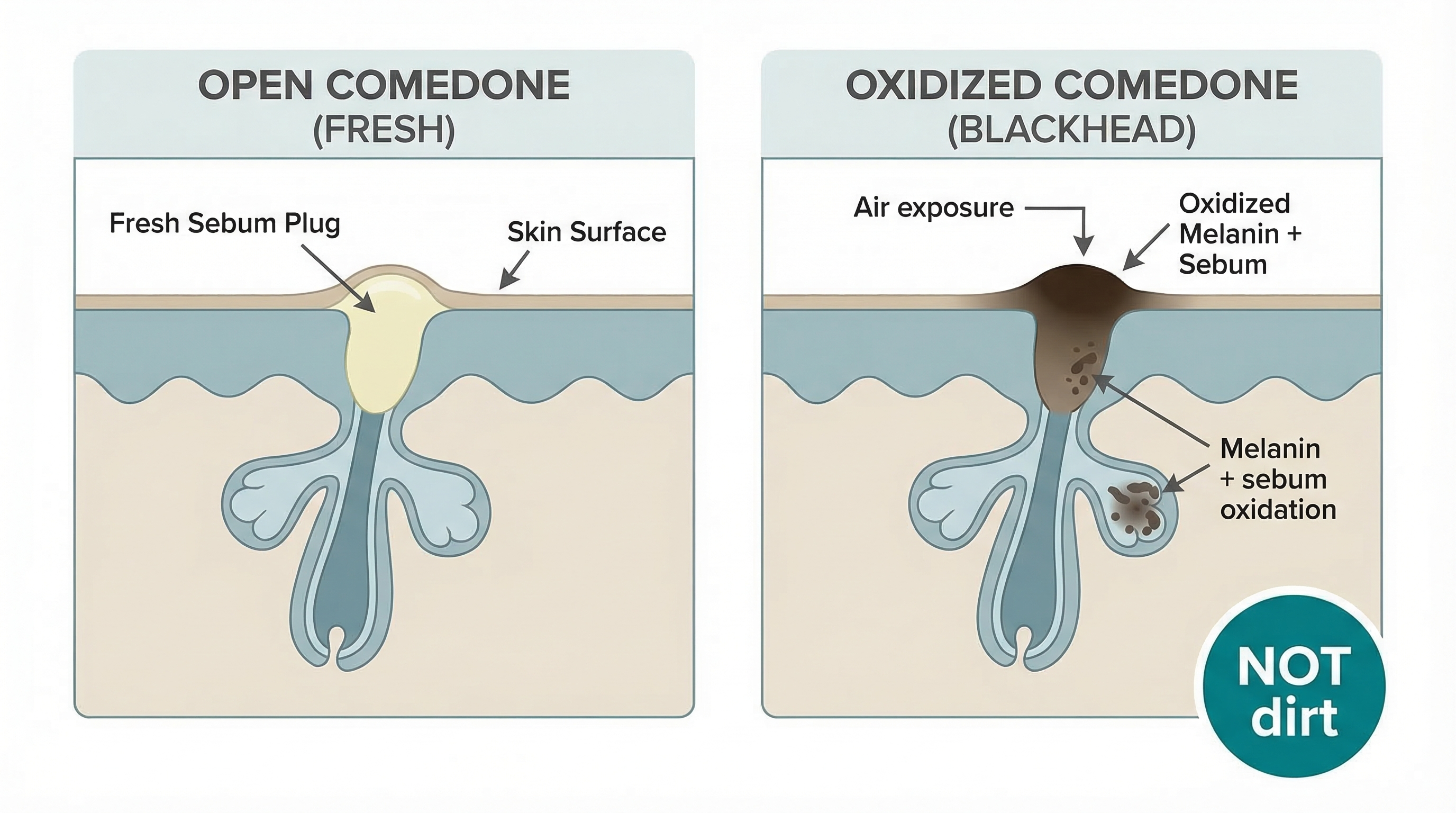 A blackhead is an open comedone --- the pore is dilated and the plug is exposed to air. A whitehead is closed, with the plug trapped beneath the skin's surface.
Why Blackheads Look Black (And Why It Has Nothing to Do With Dirt)
This is the single most important myth to bust about blackheads: the dark color is not dirt.
When the plug inside an open comedone is exposed to air, two things happen:
-
Melanin oxidation: Your skin cells contain melanin, the pigment responsible for skin color. When the dead skin cells packed into the comedone come into contact with oxygen, the melanin in those cells undergoes a chemical reaction called oxidation. This turns the surface of the plug dark brown or black.
-
Sebum oxidation: The oily sebum in the plug also oxidizes on contact with air, further contributing to the darkened appearance.
It's the same basic chemical process that turns a sliced apple brown. The apple isn't dirty --- it's simply reacting to oxygen in the air. Your blackheads work the same way.
This matters because when people believe blackheads are dirt, they tend to over-wash and aggressively scrub their skin, which actually makes the problem worse (more on that later). Understanding that the color is a simple chemical reaction should change your entire approach to treatment.
Common Causes of Blackheads
Blackheads don't appear randomly. Several specific factors drive their formation, and most of them are amplified during the teenage years.
Excess Sebum Production
The number one driver of blackheads is overactive sebaceous glands producing more oil than the pore can efficiently clear. When sebum production outpaces the natural shedding process, the excess oil gets trapped alongside dead cells, forming the comedonal plug.
During puberty, rising androgen hormones (particularly testosterone and its derivative DHT) directly stimulate sebaceous glands to produce significantly more sebum. This is why blackheads tend to appear for the first time between ages 10 and 14, right when hormonal shifts kick into high gear.
Hormonal Fluctuations
Beyond puberty itself, ongoing hormonal changes continue to influence blackhead formation throughout the teen years. Stress hormones like cortisol can also spike oil production. For those who menstruate, the hormonal shifts during the menstrual cycle --- particularly in the days leading up to a period --- can trigger increased sebum output and a corresponding flare of comedones.
Abnormal Keratinization
Inside your pores, skin cells are constantly being produced, dying, and shedding. In acne-prone skin, this process goes slightly haywire. The dead cells become stickier than normal and don't shed cleanly. Instead, they clump together and adhere to the walls of the pore, building up a plug that traps sebum beneath it. Dermatologists call this process follicular hyperkeratinization, and it's considered one of the four core mechanisms of acne development.
Comedogenic Products
Not all skincare and cosmetic products are created equal. Some contain ingredients that are comedogenic --- meaning they have a tendency to clog pores. Heavy, oil-based moisturizers, certain sunscreens, thick foundations, and hair products that migrate onto the forehead are common culprits.
If you're regularly applying products to your face without checking whether they're labeled "non-comedogenic" or "oil-free," you may be unknowingly contributing to the problem.
Inadequate Cleansing
While blackheads aren't caused by dirt, failing to cleanse your skin properly can still play a role. If you don't wash your face at night, a full day's worth of excess oil, environmental pollutants, sweat, and product residue sits on your skin and inside your pores overnight. This doesn't cause blackheads directly, but it creates the conditions that make comedone formation more likely.
The key distinction: the problem isn't that your face is dirty in the colloquial sense. It's that accumulated surface debris contributes to the pore-clogging cascade.
Friction and Pressure
Anything that creates repeated friction or pressure against the skin --- like resting your chin on your hands, wearing tight headbands, or pressing a phone against your cheek --- can contribute to comedone formation in those areas. This is sometimes called acne mechanica.
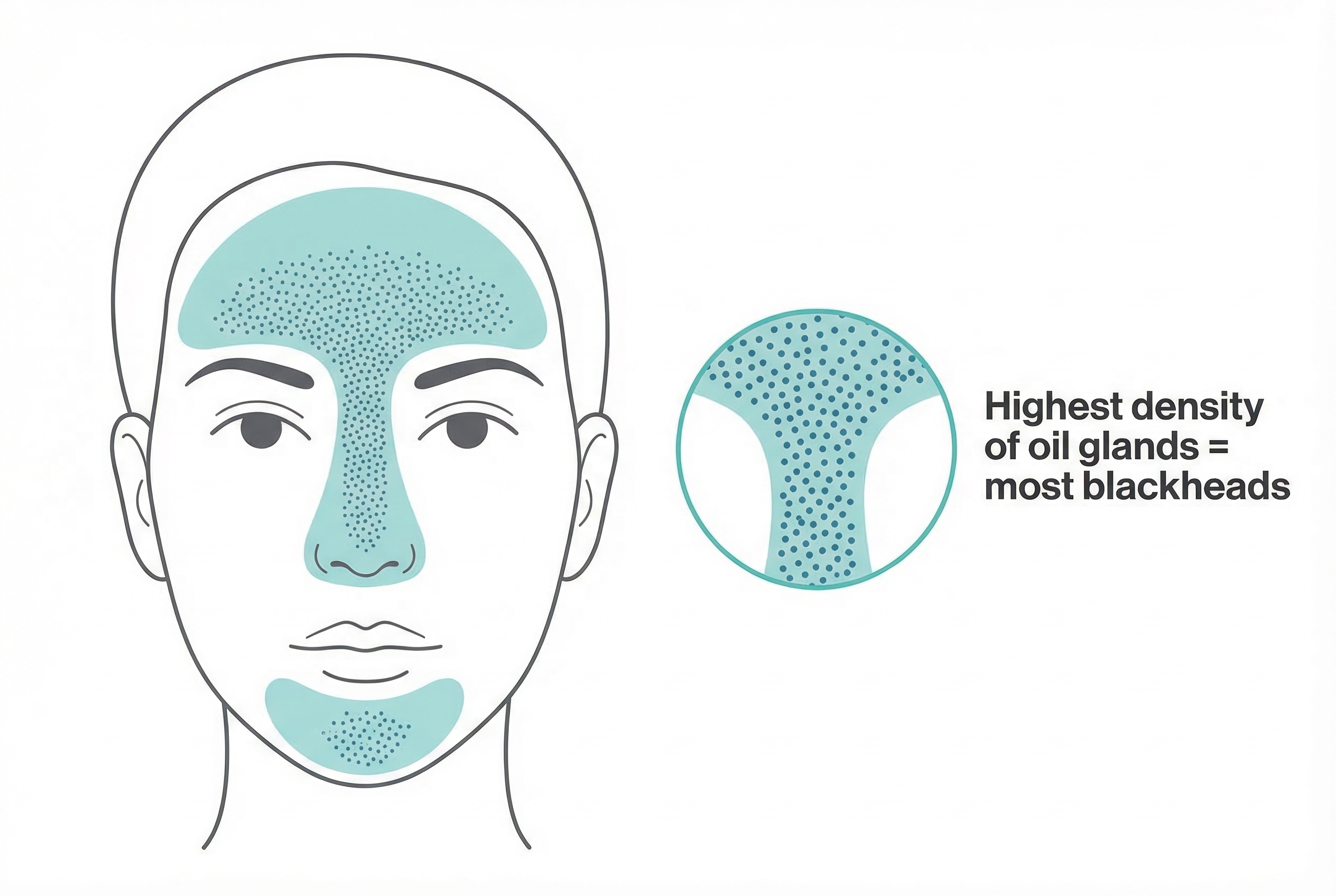 Blackheads are most common in the T-zone --- the forehead, nose, and chin --- where oil glands are densest.
The T-Zone Connection: Why Your Nose Gets Hit the Hardest
If you've noticed that blackheads on your nose are far worse than anywhere else on your face, there's a straightforward anatomical reason.
The T-zone --- the area covering your forehead, nose, and chin --- contains a significantly higher concentration of sebaceous glands compared to the rest of your face. Your nose alone has some of the largest and most active oil glands anywhere on your body.
More oil glands mean more sebum production. More sebum production means a higher likelihood of pore plugs forming. The pores on the nose also tend to be naturally larger and more visible, which makes them more prone to becoming open comedones.
This is also why the nose is one of the last places to clear up, even when the rest of your acne is improving. Those large, active pores on the nose require consistent, ongoing management rather than a one-time fix.
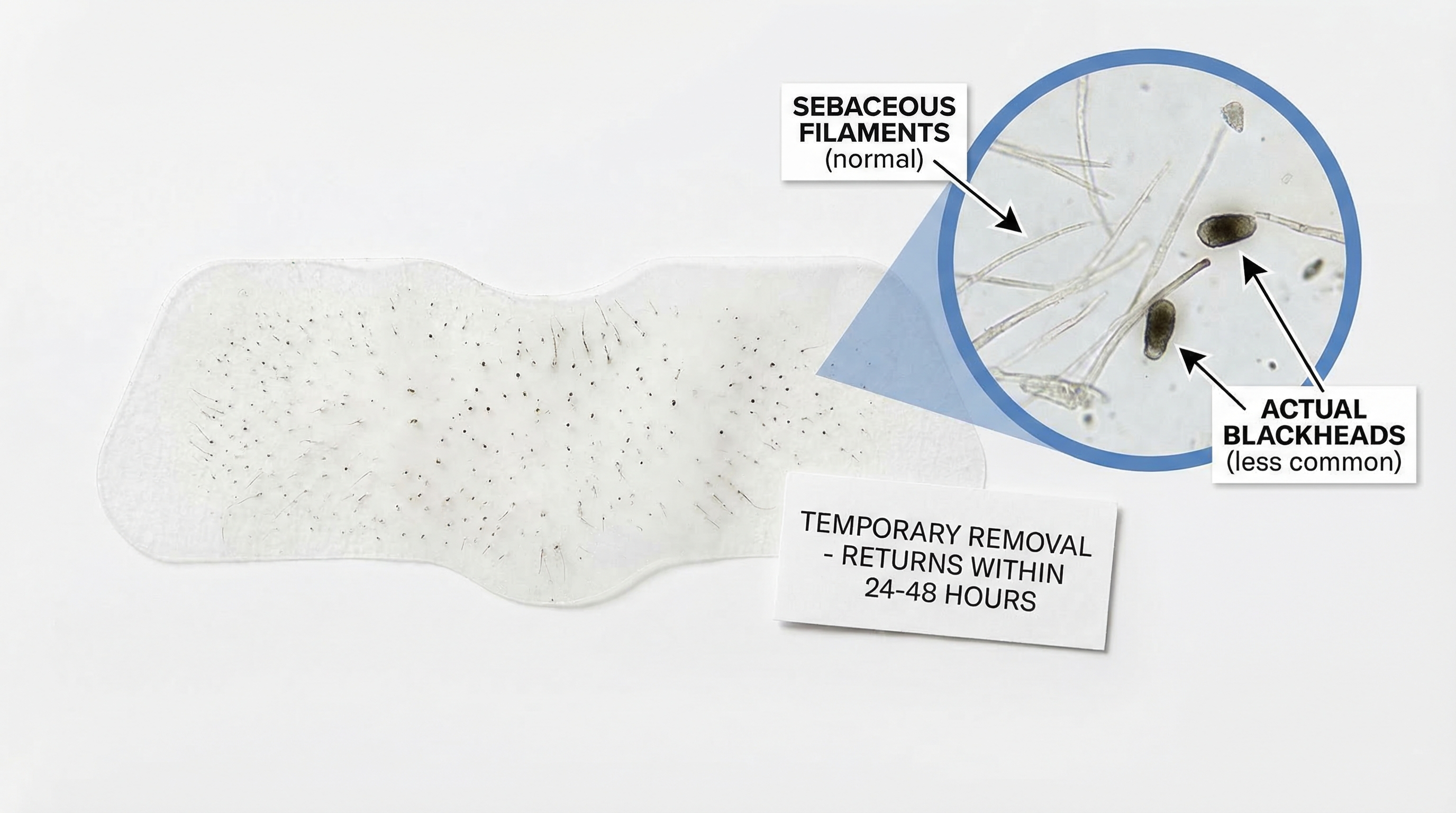
A note on sebaceous filaments: Not every dark dot on your nose is actually a blackhead. Many people mistake sebaceous filaments for blackheads. Sebaceous filaments are thin, hair-like columns of sebum that naturally fill your pores. They may appear as tiny grayish or yellowish dots, and when squeezed, they produce a thin, thread-like string of oil. They're a normal part of skin anatomy and cannot be permanently removed. If the dots on your nose are uniform, evenly distributed, and relatively light in color, they're likely sebaceous filaments rather than true blackheads.
Common Myths About Blackheads --- Debunked
Before we get to what actually works, let's clear out the misinformation.
Myth: Scrubbing Harder Will Remove Blackheads
Aggressive scrubbing with harsh exfoliants or rough washcloths does not clean out blackheads. The plug is deep inside the pore, below the skin's surface. Abrasive scrubbing only irritates the surrounding skin, strips away the protective lipid barrier, and can actually trigger more oil production as your skin overcompensates for the dryness. This creates a vicious cycle: more scrubbing, more irritation, more oil, more blackheads.
Myth: Steaming Opens Your Pores
Pores are not muscles. They do not open and close based on temperature. Steam may temporarily soften the surface of the skin and loosen some surface debris, but it does not fundamentally change the size of your pores or allow deep-seated comedonal plugs to simply float out. Professional extractors sometimes use warm compresses before extractions to make the process slightly easier, but steaming alone as a blackhead treatment is largely ineffective.
Myth: Pore Strips Are a Long-Term Solution
Pore strips can pull out the visible surface portion of a blackhead (or a sebaceous filament), and the immediate result looks satisfying. But they only remove what's at the very top of the pore. The underlying conditions that created the blackhead --- excess oil production, sticky cell turnover, dilated pore --- remain completely unchanged. The blackhead will reform, often within days. Pore strips also carry a risk of irritation, broken capillaries, and skin damage if used too aggressively or too frequently.
Myth: Toothpaste, Baking Soda, or Lemon Juice Can Treat Blackheads
DIY remedies circulated on social media are rarely backed by evidence and can cause real harm. Toothpaste contains ingredients like menthol and sodium lauryl sulfate that irritate skin. Baking soda has an extremely alkaline pH that disrupts the skin's acid mantle. Lemon juice is highly acidic and can cause chemical burns and photosensitivity. None of these address the actual mechanism of comedone formation.
Treatment That Actually Works
Now for what the evidence actually supports. Effective blackhead treatment targets the root mechanisms: excess oil, abnormal cell shedding, and pore congestion.
Salicylic Acid (BHA)
Salicylic acid is the gold standard over-the-counter ingredient for blackheads, and there's a specific reason why. Unlike water-soluble exfoliants that work only on the skin's surface, salicylic acid is oil-soluble. This means it can penetrate through the oily sebum inside the pore and exfoliate the dead cells that are forming the plug --- from the inside out.
Salicylic acid is a beta-hydroxy acid (BHA), and at concentrations of 0.5% to 2%, it:
- Dissolves the intercellular "glue" holding dead cells together inside the pore
- Helps normalize the shedding process (keratinization)
- Has mild anti-inflammatory properties
- Reduces excess oiliness on the skin's surface
For blackheads specifically, a leave-on salicylic acid product (like a serum, toner, or treatment pad) is more effective than a cleanser, because it stays in contact with the skin long enough to work. Look for products with 2% salicylic acid as the active ingredient.
How to use it: Start with every other night to assess tolerance. If your skin handles it without excessive dryness or irritation, move to nightly use. Always follow with a non-comedogenic moisturizer.
Retinoids
Retinoids --- derivatives of vitamin A --- are considered the cornerstone of comedonal acne treatment by dermatologists. They work by fundamentally changing how skin cells behave inside the pore: speeding up cell turnover, preventing dead cells from clumping together, and reducing the formation of new comedones over time.
- Over-the-counter: Adapalene 0.1% (Differin) is available without a prescription and is an excellent starting retinoid for teens dealing with persistent blackheads.
- Prescription: Tretinoin and tazarotene are stronger prescription retinoids that a dermatologist might recommend for more stubborn cases.
Retinoids take time. You likely won't see significant improvement for 8 to 12 weeks, and there may be an initial "purging" phase where comedones come to the surface before clearing. This is normal and expected. Consistency is everything.
Important: Retinoids make your skin more sensitive to UV light. Daily sunscreen (SPF 30 or higher, non-comedogenic) is non-negotiable when using any retinoid.
Benzoyl Peroxide
While benzoyl peroxide is best known for killing acne-causing bacteria (making it more effective for inflammatory acne like pimples and pustules), it does have some comedolytic properties at lower concentrations (2.5% to 5%). It can be a useful addition to a blackhead-fighting routine, particularly if you have a mix of blackheads and inflammatory acne.
Professional Chemical Peels
For persistent blackheads that don't respond well to at-home treatments, a dermatologist may recommend in-office chemical peels using glycolic acid, salicylic acid, or combination formulations. These are applied at higher concentrations than OTC products and can more aggressively clear pore congestion. They're typically done in a series of sessions spaced a few weeks apart.
 Consistent use of salicylic acid over 8-12 weeks can significantly reduce blackheads --- but patience and daily commitment are key.
Extraction: Safe vs. Dangerous
Let's address the elephant in the room: squeezing.
The urge to squeeze blackheads is powerful. Extraction videos have millions of views for a reason. And unlike inflammatory pimples (which should almost never be squeezed), blackheads are technically more "extractable" because the pore is open and the plug is accessible at the surface.
But there's a right way and a very wrong way to do it.
Dangerous: DIY Squeezing With Your Fingers
Pressing on a blackhead with your fingernails or fingertips applies uneven, uncontrolled pressure to the surrounding tissue. This can:
- Push the plug deeper into the pore instead of out
- Rupture the pore wall beneath the skin, leading to inflammation, infection, and potential scarring
- Introduce bacteria from your fingers into the open pore
- Cause post-inflammatory hyperpigmentation (dark marks), especially on darker skin tones
- Damage the surrounding tissue, leading to enlarged pores over time
Safer: Professional Extraction
Dermatologists and licensed estheticians use a tool called a comedone extractor --- a small metal loop that applies even, centered pressure around the blackhead to push the plug out cleanly. When done by a trained professional in a sterile environment, this is a safe and effective way to clear stubborn blackheads.
Professional extraction is particularly useful for:
- Large, deep blackheads that haven't responded to topical treatments
- Clearing out significant congestion as a "reset" before beginning a topical regimen
- Areas where comedones are densely packed
If you're determined to do some extraction at home, here are the ground rules:
- Cleanse your face thoroughly first
- Apply a warm (not hot) damp cloth for a few minutes to soften the skin
- Use a clean, sterilized comedone extractor tool --- never your fingernails
- Apply gentle, even pressure. If the blackhead doesn't come out easily with light pressure, stop
- Apply a non-comedogenic antiseptic or salicylic acid treatment afterward
- Never extract the same spot repeatedly in one session
If it requires force, leave it alone and let your topical treatments work on it over time.
The Truth About Pore Strips
Pore strips deserve their own section because they occupy a unique space in blackhead treatment: they're not harmful when used occasionally, but they're also not solving the problem.
What pore strips actually do: The adhesive on the strip bonds to the top portion of whatever is inside your pores --- the surface of a blackhead plug, sebaceous filaments, loose dead skin cells, and tiny hairs (vellus hair). When you peel the strip off, it pulls this surface material out.
What pore strips don't do: They don't change sebum production, normalize cell turnover, reduce pore size, or address any of the underlying factors that cause blackheads. Within 24 to 72 hours, the pores refill.
The verdict: If you enjoy using pore strips as an occasional part of your routine and your skin tolerates them, they're not going to cause major harm (limit use to once a week at most). Just don't rely on them as your primary blackhead strategy. Pair them with consistent daily use of salicylic acid or a retinoid, which actually treat the root cause.
Prevention Strategies That Actually Work
Getting rid of existing blackheads is only half the battle. The other half is preventing new ones from forming. Since the underlying factors (oil production, cell turnover) are ongoing, prevention is a long-term commitment, not a one-time fix.
Build a Consistent, Simple Routine
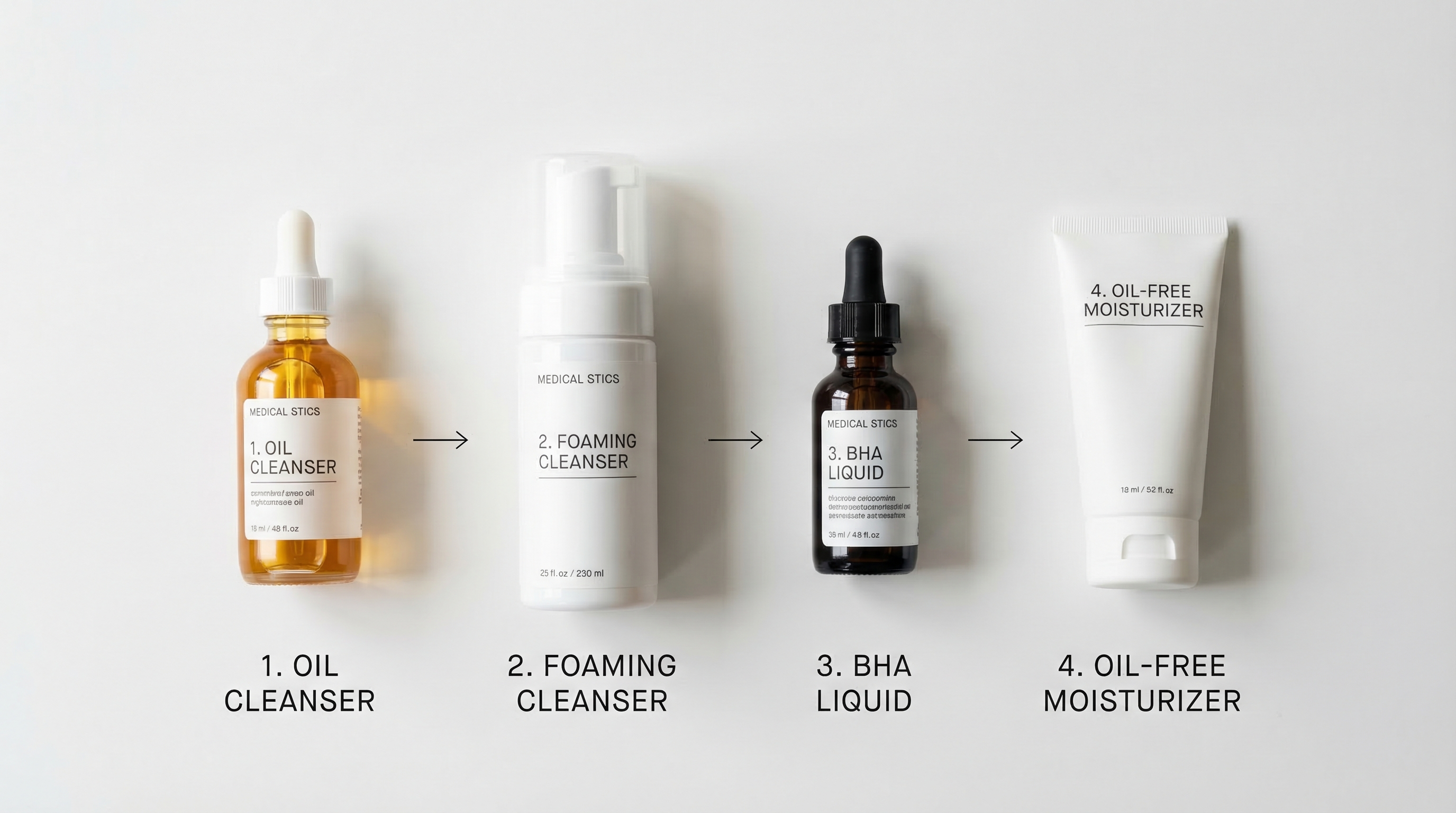
You don't need ten products. A solid anti-blackhead routine looks like this:
Morning:
- Gentle, non-comedogenic cleanser (or just rinse with water if your skin feels dry)
- Non-comedogenic moisturizer with SPF 30+
Evening:
- Gentle cleanser (double cleanse if you wore sunscreen or makeup --- oil-based cleanser first, then water-based)
- Salicylic acid treatment OR retinoid (alternate or use one consistently, depending on your dermatologist's recommendation)
- Non-comedogenic moisturizer
That's it. Consistency with a simple routine will outperform a complicated routine you only follow sporadically.
Double Cleansing
If you wear sunscreen, makeup, or any kind of tinted product during the day, double cleansing at night is one of the most effective things you can do for blackhead prevention. The first cleanse with a gentle oil-based or balm cleanser dissolves oil-based debris (sunscreen, sebum, makeup). The second cleanse with a water-based gel or foam cleanser removes any remaining residue and water-soluble impurities. This ensures your pores are truly clear before you apply your treatment products.
Choose Non-Comedogenic Everything
Read labels. If you're prone to blackheads, every product that touches your face should be labeled non-comedogenic or oil-free:
- Moisturizer
- Sunscreen
- Foundation and concealer
- Primer
- Hair products (gels, sprays, and oils can migrate onto your forehead and hairline)
Use BHA Regularly, Not Reactively
The most common mistake with salicylic acid is using it only when blackheads appear and then stopping once they clear. BHA works best as a preventive maintenance ingredient used consistently. When you stop, the conditions that cause blackheads haven't changed, and the comedones return. Think of it like brushing your teeth: you don't stop just because you don't currently have a cavity.
Hands Off Your Face
This is simple but surprisingly impactful. Every time you touch your face, you transfer oil, bacteria, and debris from your hands to your skin. Resting your chin on your hands, touching your nose, or absentmindedly rubbing your forehead throughout the day all contribute to pore congestion over time. Breaking this habit --- especially during school when it's common to lean on your hands --- can make a noticeable difference.
Wash Pillowcases and Phone Screens
Your pillowcase accumulates oil, dead skin cells, and product residue night after night. Changing or washing it at least once a week reduces the amount of pore-clogging material your face rests against for hours. Similarly, wiping down your phone screen regularly prevents transferring oil and bacteria to your cheek and jawline.
 An effective blackhead prevention routine doesn't need to be complicated --- a gentle cleanser, BHA treatment, moisturizer, and sunscreen cover the essentials.
When Blackheads Signal Something More
For most teens, blackheads are a normal, manageable part of puberty-related skin changes. But there are situations where blackheads can indicate a need for professional evaluation:
See a dermatologist if:
- You have widespread, densely packed blackheads that cover large areas of your face
- Blackheads persist despite 8-12 weeks of consistent over-the-counter treatment with salicylic acid or adapalene
- Blackheads are accompanied by significant inflammatory acne (red, painful pimples, cysts, or nodules)
- You're developing scarring or persistent dark marks from blackheads or attempts to extract them
- Blackheads are severely affecting your self-esteem or daily functioning
A dermatologist can prescribe stronger retinoids, combination therapies, or in some cases, medications that reduce oil production at a hormonal level. They can also properly assess whether what you're seeing are true blackheads, sebaceous filaments, or another condition entirely (like solar comedones or chloracne, which have different causes and treatments).
The bottom line on blackheads: They're one of the most common and most treatable forms of acne. The dark color isn't dirt, scrubbing harder won't fix them, and pore strips are a temporary band-aid at best. What does work is understanding the science --- excess oil plus sticky dead cells plus an open pore equals blackhead --- and consistently using ingredients like salicylic acid and retinoids that address those root causes. Be patient, be gentle with your skin, and give your routine time to work. The results will come.
This article is for informational purposes only and does not constitute medical advice. Always consult a board-certified dermatologist for personalized acne treatment recommendations.
How we reviewed this article:
Our experts continually monitor the health and wellness space, and we update our articles when new information becomes available.
- Zaenglein AL, et al. (2016). Guidelines of care for the management of acne vulgaris. JAAD.https://pubmed.ncbi.nlm.nih.gov/26897386/
- Cunliffe WJ, Holland DB, Jeremy A. (2004). Comedone formation: Etiology, clinical presentation, and treatment. Clinics in Dermatology.https://pubmed.ncbi.nlm.nih.gov/15556729/
- Thiboutot DM, et al. (2009). New insights into the management of acne. JAAD.https://pubmed.ncbi.nlm.nih.gov/19467365/
- Leyden JJ. (1995). New understandings of the pathogenesis of acne. JAAD.https://pubmed.ncbi.nlm.nih.gov/7775256/
- Kligman AM. (2004). An overview of acne. Journal of Investigative Dermatology.https://pubmed.ncbi.nlm.nih.gov/15191554/
- Del Rosso JQ, Levin J. (2011). The clinical relevance of maintaining the functional integrity of the stratum corneum in both healthy and disease-affected skin. Journal of Clinical and Aesthetic Dermatology.https://pubmed.ncbi.nlm.nih.gov/22125656/
- Kraft J, Freiman A. (2011). Management of acne. CMAJ.https://pubmed.ncbi.nlm.nih.gov/21398228/
- American Academy of Dermatology. Acne: Tips for Managing.https://www.aad.org/public/diseases/acne/skin-care/tips
- Webster GF. (2005). The pathophysiology of acne. Cutis.https://pubmed.ncbi.nlm.nih.gov/15916220/
- Gollnick H, et al. (2003). Management of acne. JAAD.https://pubmed.ncbi.nlm.nih.gov/12734496/
Read This Next

Acne Face Mapping: Does Where You Break Out Tell You Why?

PCOS and Acne in Teens: When Breakouts Signal Something Bigger
If your acne won't respond to normal treatments and comes with irregular periods, it might be PCOS. Here's what teen girls and their parents need to know about diagnosis and treatment.
Read More →
Testosterone and Acne: Why Hormones Drive Most Teen Breakouts
Testosterone gets converted to DHT, which ramps up your oil glands. This is the core reason acne peaks during puberty and why boys tend to get it worse than girls.
Read More →
Inflammatory Acne: Papules, Pustules, and Why Your Skin Hurts
Inflammatory acne is the red, painful kind that actually hurts. Understanding the immune response behind it changes how you treat it and helps you stop making it worse.
Read More →
Comedonal Acne: Why Your Skin Is Bumpy But Not Red (And How to Fix It)
Comedonal acne gives you textured, bumpy skin without the redness of typical pimples. It's frustrating because it doesn't respond to the usual treatments. Here's what actually works.
Read More →