Body Dysmorphia and Acne: When You Can't Stop Seeing Flaws
Medically reviewed by Dr. Rachel Torres, MD, Pediatric Dermatologist
Written by Teen Acne Solutions Editorial Team — Updated April 25, 2026
Body Dysmorphia and Acne: When You Can't Stop Seeing Flaws
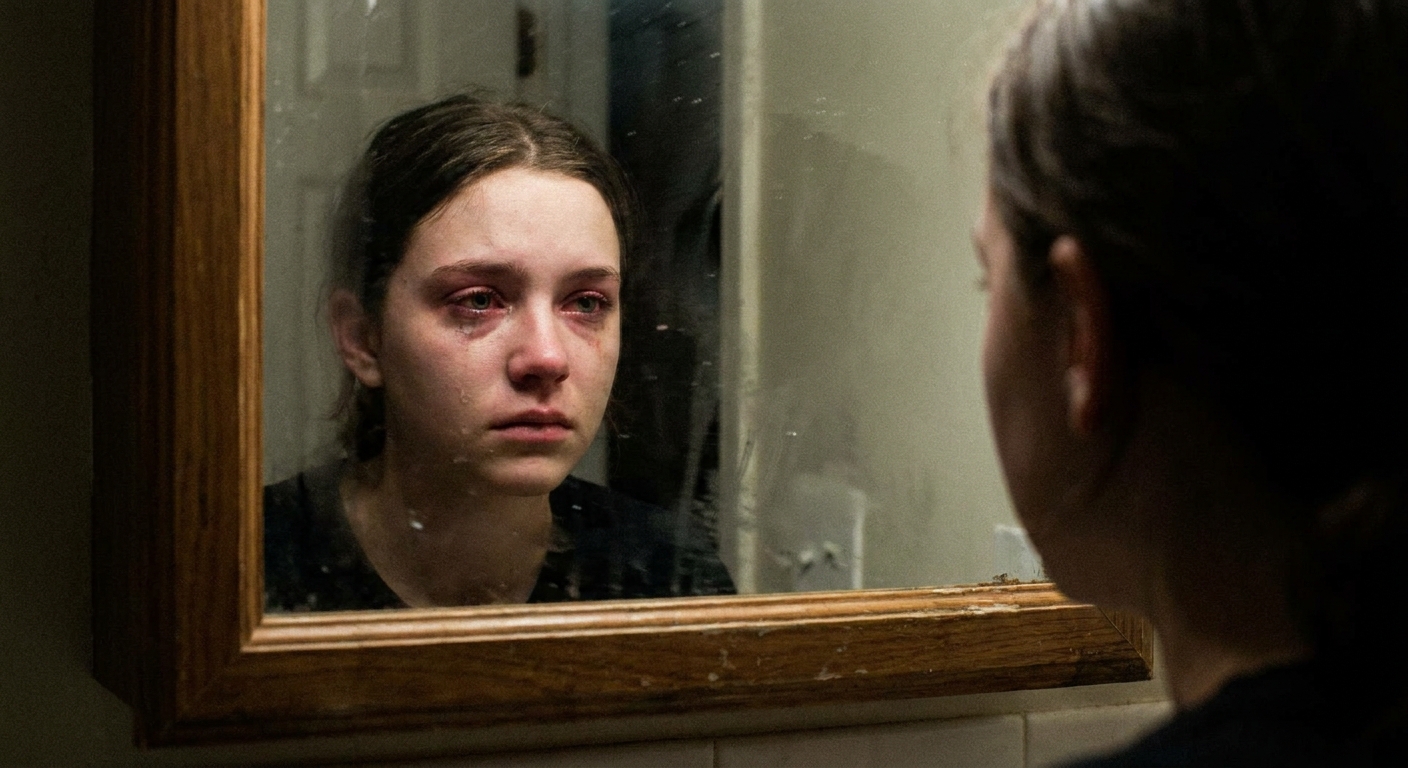
I want to talk about something that doesn't get nearly enough attention when we discuss acne: the point where worrying about your skin stops being a normal part of having breakouts and turns into something that genuinely controls your life.
There's a condition called Body Dysmorphic Disorder, or BDD, and it's shockingly common in people with acne. I think most teens who deal with persistent breakouts have at least brushed up against it, even if they've never heard the name. And the frustrating part is that people around you — parents, friends, even some doctors — might wave it off as vanity or being "too focused on looks."
It's not vanity. Not even close.
What BDD Actually Is
Body Dysmorphic Disorder is a mental health condition where you become fixated on a perceived flaw in your appearance that other people either don't notice or see as minor. The key word there is "perceived" — and I want to be careful with it, because if you have acne, the flaw isn't imaginary. You really do have breakouts. But BDD warps how you see those breakouts. It turns a few pimples into something that feels catastrophic, disfiguring, impossible to live with.
The Diagnostic and Statistical Manual of Mental Disorders (DSM-5) classifies BDD as an obsessive-compulsive related disorder. That placement matters. BDD shares brain circuitry with OCD — the same loops of intrusive thoughts and compulsive behaviors show up in both conditions (Phillips, 2005). Your brain gets stuck. It locks onto the flaw and won't let go, no matter how many times you check the mirror or ask someone for reassurance.
Research suggests BDD affects about 2-3% of the general population, but among dermatology patients, that number jumps to somewhere between 9-15% (Veale et al., 2016). For teens specifically, one study found that adolescents with acne were significantly more likely to report BDD symptoms than their peers with clear skin (Bowe et al., 2007).
So if you feel like your relationship with your skin has crossed some invisible line — if it feels different from how your friends think about their appearance — you might be right. And that's worth paying attention to.
How Acne Becomes a BDD Trigger
Not everyone with acne develops BDD. But acne has a few qualities that make it a particularly effective trigger.
First, it's on your face. You can't hide it with clothing. Every social interaction becomes an exposure event — you're convinced people are staring at your skin, even when they're not. A 2018 study in the British Journal of Dermatology found that individuals with facial skin conditions were significantly more likely to develop BDD than those with skin conditions on other body parts (Krebs et al., 2018).
Second, acne is unpredictable. You can do everything right — follow your routine, eat well, sleep enough — and still wake up with a new breakout. That unpredictability feeds the obsessive monitoring. You check your skin constantly because you feel like you need to catch problems early, which pulls you deeper into the cycle.
Third, acne hits during adolescence, when your identity is still forming and social comparison is at its peak. Your brain is literally in the process of building your self-concept, and persistent breakouts can become woven into that foundation in ways that stick around long after your skin clears up.
I've heard from people in their twenties and thirties who still feel a spike of panic when they get a single pimple — not because the pimple itself is distressing, but because it reactivates all the patterns from when their acne was at its worst.
Mirror Checking vs. Mirror Avoidance
Here's something that surprises most people: BDD doesn't always look the same. There are two common patterns, and they seem like opposites.
Mirror checking is what most people picture. You spend long stretches examining your skin up close — sometimes in specific lighting, sometimes at certain angles. You might use your phone camera throughout the day to check whether your breakouts look different than they did an hour ago. Some people describe spending 30 minutes to an hour in front of the mirror before school, not doing their hair or getting ready, just... looking. Inspecting. Cataloging every spot.

Mirror avoidance is the flip side. You stop looking altogether. You cover mirrors, you avoid reflective surfaces, you might even stop making eye contact with people because you're afraid of catching a glimpse of yourself. This can look like "not caring about appearance" from the outside, which is why it often gets missed.
Both patterns serve the same underlying purpose: trying to manage the anxiety. Checking is an attempt to monitor and control. Avoiding is an attempt to not trigger the distress at all. Neither one actually works — the anxiety stays, or gets worse.
A study by Windheim et al. (2011) found that mirror-gazing in people with BDD actually increased their distress and negative self-perception compared to baseline. The more they looked, the worse they felt. If you recognize that pattern in yourself — where checking your skin makes you feel worse, but you can't stop doing it — that's a significant signal.
When "Caring About Your Skin" Crosses a Line
Every teen with acne cares about their skin. That's normal and healthy. But there's a difference between caring and being consumed. Here are some patterns that suggest things have shifted:
Time. You spend more than an hour a day thinking about your skin — not actively doing your skincare routine, just thinking, worrying, planning, checking. The American Academy of Dermatology notes that this level of preoccupation is a red flag for BDD in acne patients (AAD, 2024).
Avoidance. You've started skipping things you used to enjoy — parties, sports, hanging out with friends — because of how your skin looks. Not occasionally, when you have a particularly bad breakout, but regularly.
Reassurance-seeking. You repeatedly ask people if your skin looks okay. And when they say it looks fine, it doesn't help. Or it helps for about ten minutes before the doubt creeps back in.
Comparison. You spend significant time comparing your skin to other people's — in person, on social media, in photos. You zoom in on selfies to examine your pores and texture. You feel genuinely distressed after seeing someone with clear skin.
Camouflaging. You won't leave the house without heavy concealer, or you arrange your hair to cover as much of your face as possible, or you won't let anyone see you in certain lighting. This goes beyond normal makeup use — it feels more like a requirement for survival.
Functioning. This is the big one. Your grades have dropped, or your relationships are suffering, or you've missed school, or you've thought seriously about whether life is worth living if your skin doesn't get better.
If you're reading those and thinking "that's just what having acne is like," I'd gently push back. It doesn't have to be. Acne is unpleasant, but it shouldn't make you unable to function.
Screening Questions to Ask Yourself
Mental health professionals use specific screening tools for BDD, but here are some honest questions you can sit with:
- Do you spend more than an hour a day thinking about flaws in your appearance?
- Do your appearance concerns cause you significant emotional distress (not mild annoyance, but real suffering)?
- Have your appearance concerns led you to avoid social situations, school, or activities?
- Do you perform repetitive behaviors related to your appearance — checking mirrors, comparing yourself to others, picking at your skin, seeking reassurance — that feel hard to control?
- Has anyone told you that your skin concerns seem out of proportion to how your skin actually looks?
That last question is tricky because BDD can make you believe everyone else is just being nice. But if multiple people — not just your mom — have told you they genuinely don't see what you're seeing, it's worth considering that your brain might be distorting things.
The Phillips BDD Questionnaire (BDDQ) is a validated screening tool that's freely available and takes about five minutes to complete (Phillips, 2005). It's not a diagnosis, but it can give you a starting point.
Telling Your Parents
This is the part where most teens get stuck. Talking to your parents about mental health is hard under the best circumstances. Talking about something that sounds like "I think too much about how I look" feels like an invitation to be dismissed.

Here's what I'd suggest:
Use the name. Say "Body Dysmorphic Disorder" or "BDD." It signals that this is a real, recognized condition, not a general complaint. Parents respond differently to "I think I might have something called BDD" versus "I can't stop worrying about my skin."
Be specific about impact. Don't just describe the feelings — describe what's changed. "I've missed four days of school this month because I couldn't face going in" is harder to dismiss than "I feel bad about my acne."
Bring information. The International OCD Foundation has a section specifically about BDD (iocdf.org/bdd). Printing out a fact sheet or having a link ready can help parents understand that this isn't about being dramatic.
Consider a letter. If saying it face-to-face feels impossible, writing it down is completely valid. Some things are easier to express in writing, and it gives your parents time to process without having to respond immediately.
Ask for a specific next step. "I'd like to see a therapist who knows about BDD" is better than an open-ended "I need help." It gives your parents something concrete to act on.
If your parents aren't receptive, talk to a school counselor, a trusted teacher, or your primary care doctor. You deserve support whether or not the adults closest to you understand what's happening right away.
Treatment That Actually Works
BDD is treatable. That's the good news. The less-good news is that standard acne treatment alone usually won't resolve BDD — even if your skin improves dramatically, the distorted thinking patterns can persist. This is why BDD needs to be treated as its own separate condition.
Cognitive Behavioral Therapy (CBT) is the gold-standard treatment for BDD. Specifically, a modified version called CBT-BDD that targets the thought patterns, compulsive behaviors, and avoidance that maintain the disorder. A meta-analysis by Harrison et al. (2016) found that CBT produced significant improvements in BDD symptoms, and those improvements held at follow-up.
In CBT for BDD, you'll work on:
- Identifying and challenging distorted beliefs about your appearance
- Gradually reducing compulsive behaviors (mirror checking, reassurance seeking)
- Exposure exercises where you face avoided situations in a controlled way
- Building a more balanced relationship with your appearance
SSRIs (selective serotonin reuptake inhibitors) are the medication class that works best for BDD. Phillips and Hollander (2008) found that SSRIs like fluoxetine and escitalopram can significantly reduce BDD symptoms, often at higher doses than those used for depression. This isn't a "happy pill" situation — SSRIs seem to help quiet the obsessive loops that keep BDD running.
For moderate to severe BDD, many specialists recommend combining CBT with an SSRI. The medication can take the edge off enough for therapy to gain traction.
What doesn't work: reassurance (it feeds the cycle), cosmetic procedures (studies consistently show they don't improve BDD symptoms and can make them worse), and "just stop thinking about it" (if you could, you would have already).
Key Takeaways
- BDD is not vanity. It's an obsessive-compulsive related disorder that affects how your brain processes your own appearance.
- Acne is a known trigger for BDD in teens, especially because it's visible, unpredictable, and hits during a vulnerable developmental period.
- Both mirror checking and mirror avoidance can be signs of BDD. The behaviors look different but serve the same function.
- If skin concerns are affecting your ability to function — attend school, maintain relationships, participate in activities — that's beyond normal acne distress.
- CBT and SSRIs are effective treatments for BDD, and you should seek a therapist with specific BDD experience, not just general counseling.
The Bottom Line
If your acne worries have become something bigger than worrying — if they've turned into a force that shapes your entire day, dictates where you go and who you see, and makes you feel fundamentally broken — please know that what you're experiencing has a name, it's well-studied, and it responds to treatment. You're not weak for struggling with this. Your brain is doing something specific and identifiable, and there are people who know exactly how to help.
You don't have to wait until your skin is clear to start feeling better. In fact, treating the BDD might matter more than treating the acne.
Sources:
- Phillips, K. A. (2005). The Broken Mirror: Understanding and Treating Body Dysmorphic Disorder. Oxford University Press.
- Veale, D., Gledhill, L. J., Christodoulou, P., & Hodsoll, J. (2016). Body dysmorphic disorder in different settings: A systematic review and estimated weighted prevalence. Body Image, 18, 168-186.
- Bowe, W. P., Doyle, A. K., Crerand, C. E., Margolis, D. J., & Shalita, A. R. (2007). Body dysmorphic disorder symptoms among patients with acne vulgaris. Journal of the American Academy of Dermatology, 57(2), 222-230.
- Krebs, G., Fernández de la Cruz, L., & Mataix-Cols, D. (2018). Recent advances in understanding and managing body dysmorphic disorder. British Journal of Dermatology, 178(5), 1045-1050.
- Windheim, K., Veale, D., & Anson, M. (2011). Mirror gazing in body dysmorphic disorder and healthy controls: Effects of duration of gazing. Behaviour Research and Therapy, 49(9), 555-564.
- American Academy of Dermatology. (2024). Body dysmorphic disorder and skin conditions. AAD Patient Resources.
- Harrison, A., Fernández de la Cruz, L., Enander, J., Radua, J., & Mataix-Cols, D. (2016). Cognitive-behavioral therapy for body dysmorphic disorder: A systematic review and meta-analysis. Clinical Psychology Review, 48, 43-51.
- Phillips, K. A., & Hollander, E. (2008). Treating body dysmorphic disorder with medication: Evidence, misconceptions, and a suggested approach. Body Image, 5(1), 13-27.
How we reviewed this article:
Our experts continually monitor the health and wellness space, and we update our articles when new information becomes available.
Read This Next
When Your Sibling Has Clear Skin and You Don't: Dealing with Acne Jealousy
Watching your sibling eat the same food, skip skincare, and have perfect skin while you break out constantly is one of the most frustrating parts of having acne.
Read More →
Does Sunlight Help or Hurt Acne? The Complicated Truth
Sun might temporarily mask acne, but it makes things worse long-term. Here's why the vacation skin effect isn't what you think and why UV isn't an acne treatment.
Read More →
Instagram Filters and Acne: How Social Media Distorts Skin Reality
Filters blur texture, erase pores, and create a version of skin that doesn't exist in real life. Here's how that messes with your head when you have acne.
Read More →
Honey for Acne: Does This Kitchen Ingredient Actually Work?
Manuka honey has real antibacterial research behind it. Regular honey, not so much. Here's what works, what doesn't, and whether it's worth the sticky mess.
Read More →
Green Tea and Acne: The Drink (and Ingredient) That Might Help
EGCG in green tea has anti-inflammatory and anti-androgenic properties that could help acne-prone skin. Here's what the research says about drinking it and putting it on your face.
Read More →