'Clean' Skin Doesn't Mean Clear Skin: Why Over-Washing Makes Acne Worse
Medically reviewed by Dr. Rachel Torres, MD, Pediatric Dermatologist
Written by Teen Acne Solutions Editorial Team — Updated April 25, 2026
'Clean' Skin Doesn't Mean Clear Skin: Why Over-Washing Makes Acne Worse

There's a belief about acne that's so deeply embedded in our culture it almost feels like a fact: acne means your skin is dirty, and the solution is to wash more.
I believed this for a long time. I think most people do. It's intuitive — breakouts look like something that needs to be scrubbed away, and that "squeaky clean" feeling after a good wash feels like progress. It feels like you're doing something right.
You're not. That squeaky feeling is actually your skin telling you something has gone wrong.
I want to walk through exactly what happens when you over-wash your face, because understanding the mechanism is what finally gets most people to change their habits. It's not enough to just hear "wash less" — you need to understand why, or you'll go right back to scrubbing the moment a new breakout appears.
The "Dirty Skin" Myth
Let's get this out of the way: acne is not caused by dirty skin. Full stop.
Acne is caused by a combination of excess sebum production, abnormal shedding of skin cells inside the pore (follicular hyperkeratinization), bacterial colonization by Cutibacterium acnes, and inflammation (Williams et al., 2012). These are biological processes happening inside your pores and driven largely by hormones. Surface dirt and grime are not meaningfully involved.
The American Academy of Dermatology explicitly states that acne is not caused by dirty skin, and that aggressive washing can worsen the condition (AAD, 2024). Yet here we are, still telling teens to wash their faces more.
This myth persists partly because it's morally convenient. If acne is about cleanliness, then having acne is a personal failing — you just aren't trying hard enough. That framing is wrong, and it causes real damage. Teens who believe their acne is a hygiene problem tend to wash more aggressively, which damages their skin, which causes more breakouts, which "confirms" the belief that they're not washing enough. It's a trap.
A cross-sectional study of over 2,000 adolescents by Poli et al. (2001) found no significant association between face-washing frequency and acne severity. Teens who washed four times a day didn't have clearer skin than those who washed twice. Some of them had worse skin.
What Your Skin Barrier Actually Does
Your skin has a protective outer layer called the stratum corneum. Picture it like a brick wall: the "bricks" are dead skin cells (corneocytes) and the "mortar" is a mix of ceramides, cholesterol, and fatty acids. This structure is your moisture barrier, and its job is to keep water in and irritants out.
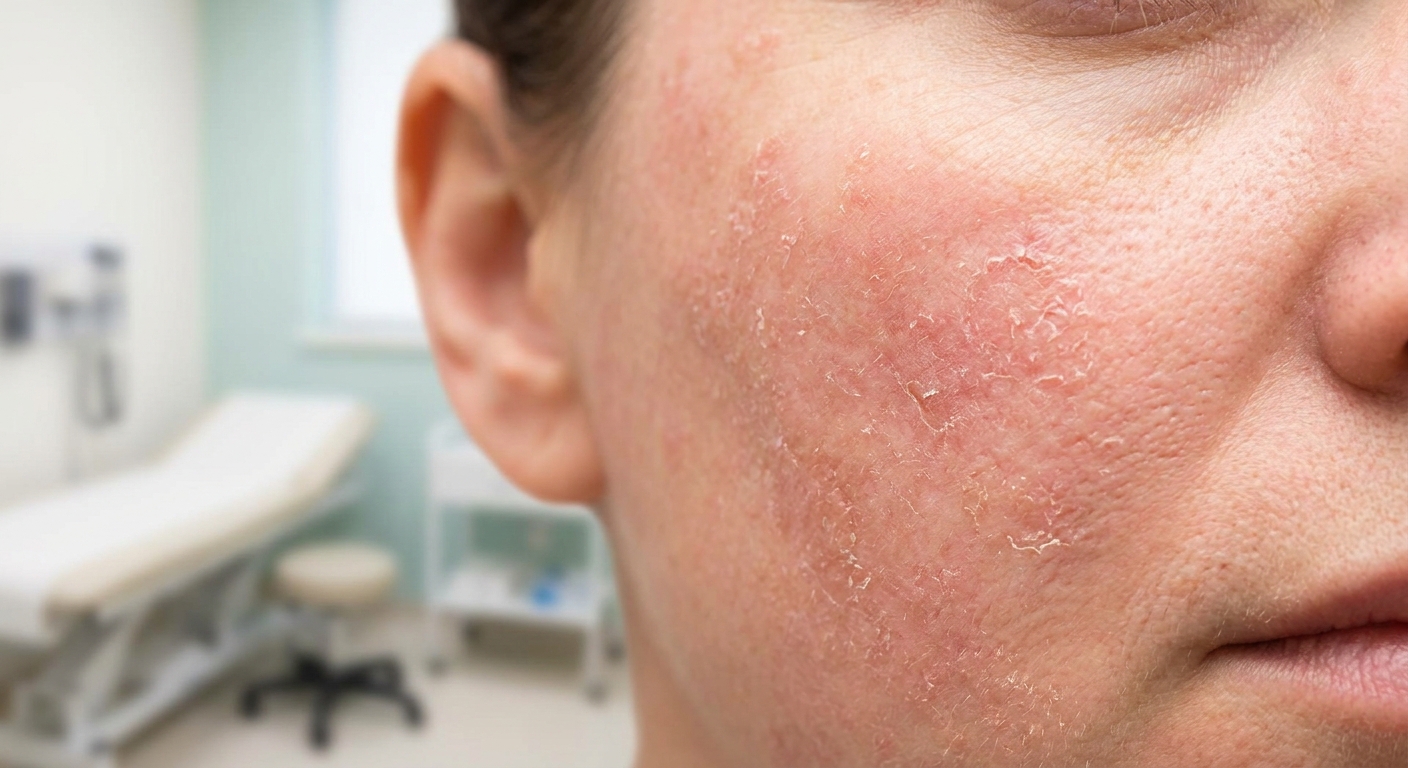
When this barrier is intact, your skin stays hydrated, resilient, and better able to resist bacterial invasion. When it's damaged, everything falls apart. Water escapes (transepidermal water loss, or TEWL), irritants get in more easily, and the skin becomes red, sensitive, and reactive.
Here's the part that matters for acne: a damaged barrier triggers an inflammatory response. Your skin goes into repair mode, which includes ramping up oil production and increasing cell turnover — both of which contribute directly to clogged pores and breakouts (Del Rosso & Levin, 2011). So damaging your barrier in an attempt to fight acne actually accelerates the processes that cause acne. It's genuinely counterproductive.
Cleansers are the number one way teens damage their moisture barrier. Not the weather, not pollution, not genetics — cleansers. Specifically, the wrong cleansers used too often.
Why Washing 4x a Day Makes Things Worse
I've talked to teens who wash their face in the morning, at lunch, after school, and before bed. Some splash water on their face every time they use the bathroom. The logic seems sound: if bacteria and oil cause acne, removing them frequently should help.
The problem is that your skin isn't designed to be stripped down to nothing multiple times a day. Each wash — especially with a foaming or soap-based cleanser — removes some of the lipids that make up your moisture barrier. Your skin can recover from this once or twice a day. Four times? It can't keep up.
A study by Korting et al. (2010) found that frequent use of alkaline cleansers (like bar soap) significantly increased skin pH, disrupted the acid mantle, and promoted the growth of pathogenic bacteria on the skin surface. Your skin's natural pH sits around 4.5-5.5 — mildly acidic. Most bar soaps and many foaming cleansers have a pH of 9 or higher. Every wash temporarily pushes your skin's pH up, and frequent washing keeps it elevated, which compromises the skin's natural antimicrobial defenses.
Additionally, when you strip your skin's oil, your sebaceous glands interpret the dryness as a signal to produce more oil. This is called reactive seborrhea. A study by Draelos (2004) demonstrated that harsh cleansers increased sebum production as a compensatory mechanism. So you're washing to remove oil, and your skin is responding by making more of it. The more aggressively you try to de-grease your face, the greasier it gets. It feels like your skin is working against you, but really, your cleansing routine is working against your skin.
That "Squeaky Clean" Feeling Is Actually Bad
I want to specifically address this because it's the sensory cue that leads so many people astray.
After a thorough wash with a strong cleanser, your skin feels tight and smooth — almost like it's "squeaking" when you run your finger across it. That feeling is satisfying. It feels like you've really gotten your skin clean. Mission accomplished.
What you're actually feeling is the removal of your skin's natural oils and part of its outer lipid layer. The tightness is your dehydrated skin contracting. The smoothness is the absence of the protective film that should be there. It's the sensation of a compromised barrier.
Dermatologist Dr. Shari Marchbein described this well in an interview with the AAD: if your skin feels tight or dry after washing, your cleanser is too harsh or you're using it too frequently (AAD, 2024). Properly cleansed skin should feel comfortable — not tight, not greasy, just normal.
I know this goes against every instinct. When you have acne and your skin is oily, the last thing you want is a cleanser that leaves any residue of oil behind. It feels unclean. But that subtle layer of oil is your skin's first line of defense, and stripping it is what starts the whole cascade of barrier damage, inflammation, and increased oil production.
How to Actually Wash Your Face (The Boring Answer)
The right approach is so boring it almost feels wrong. You'll probably read this and think it's not enough. I felt that way too. But the research is clear, and the results speak for themselves once you give it a few weeks.
Twice a day. Morning and night. That's it. If you work out or get genuinely sweaty during the day, a third wash with just water or a very gentle cleanser is fine. But under normal circumstances, twice is the number.
Lukewarm water. Hot water strips lipids from your skin more effectively than cold or lukewarm water. It feels good, especially in winter, but it's doing damage. Lukewarm is the sweet spot — warm enough to dissolve surface dirt and oil, not hot enough to compromise the barrier. A study by Gfatter et al. (1997) found that water temperature significantly affected skin lipid removal and post-wash dryness, with higher temperatures causing more barrier disruption.
Gentle, pH-balanced cleanser. You're looking for something with a pH between 4.5 and 6.5. It should be fragrance-free (fragrance is an irritant that serves no functional purpose in a cleanser), and it shouldn't produce a mountain of foam. Foaming agents like sodium lauryl sulfate (SLS) are effective surfactants but are well-documented to impair barrier function (Ananthapadmanabhan et al., 2004).
Good options include:
- Ceramide-containing cleansers (CeraVe Hydrating Cleanser is the classic example — it's cheap, effective, and widely available)
- Micellar water for the morning wash if your skin is on the drier side
- Gentle gel cleansers without SLS
What to avoid:
- Bar soap (almost always too alkaline)
- "Acne wash" products with high concentrations of salicylic acid or benzoyl peroxide built into the cleanser (these actives work better as leave-on treatments where they have time to penetrate the pore — in a wash-off product, they mostly just irritate)
- Scrubs with physical particles (walnut shell scrubs, apricot kernel, etc.)
- Anything that advertises "deep cleaning" or "pore stripping"
Use your fingertips. Not a washcloth. Not a brush. Not a rough sponge. Your fingertips, with light pressure, for about 30-60 seconds. Massage the cleanser gently across your face and rinse.
Pat dry. Don't rub with a towel. Press the towel gently against your face and let it absorb the water.

I can already hear the objection: "That won't do anything. My skin needs more than that." I get it. But here's the thing — your cleanser's job is to remove surface dirt, excess oil, sunscreen, and makeup. That's it. It's not supposed to treat your acne. Acne treatment happens with leave-on products (benzoyl peroxide, retinoids, etc.) that you apply after cleansing. The cleanser just prepares the canvas.
Stripping Cleansers vs. Gentle Ones: What the Studies Show
If you're skeptical about the difference, the data is pretty stark.
Ananthapadmanabhan et al. (2004) published one of the most cited papers on this topic in Dermatologic Therapy. They found that harsh surfactants (like SLS) caused measurable damage to the stratum corneum, increased TEWL, and triggered an inflammatory response in the skin. Gentler surfactants left barrier function largely intact while still removing surface impurities.
Mukhopadhyay (2011) reviewed cleansing practices across different skin types and concluded that patients with acne-prone skin particularly benefit from gentle, pH-balanced cleansers. Harsh cleansers didn't improve acne outcomes and frequently worsened the clinical picture by adding irritation on top of the existing inflammatory condition.
A particularly interesting study by Choi et al. (2006) looked at what happens when you switch from a harsh cleanser to a gentle one. Within two weeks, participants showed measurable improvements in barrier function, reduced TEWL, and decreased skin surface pH (meaning the acid mantle was recovering). Two weeks. That's how quickly your skin can start to bounce back when you stop assaulting it.
What to Do If You've Already Damaged Your Barrier
If you've been over-washing and your skin is currently red, tight, flaky, burning when you apply products, or more breakout-prone than usual, you're probably dealing with a compromised barrier. Here's how to start repairing it.
Simplify immediately. Strip your routine down to cleanser, moisturizer, and sunscreen. Nothing else. No actives, no exfoliants, no serums, no treatments. Your skin needs to heal before it can tolerate anything extra. This might feel terrifying if you have active acne — "but I need my benzoyl peroxide!" — but applying actives to a damaged barrier makes everything worse. Pause for 2-4 weeks.
Moisturize even if your skin is oily. Your skin is overproducing oil because it's dehydrated. Adding moisture from a non-comedogenic moisturizer tells your sebaceous glands to ease off. Look for moisturizers with ceramides, hyaluronic acid, or niacinamide. Apply to slightly damp skin right after cleansing.
Sunscreen every day. A damaged barrier is more vulnerable to UV damage, which worsens hyperpigmentation from acne marks and further impairs healing. SPF 30 minimum, broad spectrum. This is non-negotiable during repair.
Be patient. The skin barrier takes roughly 2-4 weeks to repair under ideal conditions (Elias, 2005). You will probably still break out during this time. That's not the gentle routine "failing" — it's your skin still dealing with the damage from before. Stick with it.
Key Takeaways
- Acne is not caused by dirty skin. It's caused by hormones, oil production, cell turnover, and bacteria. Washing more doesn't address any of these root causes.
- Over-washing damages your moisture barrier, which triggers inflammation and increased oil production — both of which make acne worse.
- The "squeaky clean" feeling means your cleanser is too harsh. Properly cleansed skin feels comfortable, not tight.
- Wash twice daily with a gentle, pH-balanced cleanser and lukewarm water. Use your fingertips, spend about 60 seconds, and pat dry.
- Your cleanser isn't your acne treatment. It's a prep step. Leave-on products like benzoyl peroxide and retinoids are what actually target breakouts.
The Bottom Line
I know it feels wrong to be gentle with skin that's actively breaking out. Every instinct says to fight harder, scrub more, strip the oil away. But your skin is an organ with its own defense systems, and when you wage war on it, it fights back in ways that make acne worse.
The boring routine — gentle cleanser, lukewarm water, twice a day — isn't exciting. It won't give you that satisfying squeaky-clean feeling. It won't feel like enough. But it protects the barrier that your skin needs to function, heal, and regulate itself properly. And when your barrier is intact, everything else you do for your acne — the treatments, the medications, the products — works better.
Stop trying to scrub your acne away. Start working with your skin instead of against it.
Sources:
- Williams, H. C., Dellavalle, R. P., & Garner, S. (2012). Acne vulgaris. The Lancet, 379(9813), 361-372.
- American Academy of Dermatology. (2024). Acne: Tips for managing. AAD Patient Resources.
- Poli, F., Dreno, B., & Verschoore, M. (2001). An epidemiological study of acne in female adults: Results of a survey conducted in France. Journal of the European Academy of Dermatology and Venereology, 15(6), 541-545.
- Del Rosso, J. Q., & Levin, J. (2011). The clinical relevance of maintaining the functional integrity of the stratum corneum in both healthy and disease-affected skin. Journal of Clinical and Aesthetic Dermatology, 4(9), 22-42.
- Korting, H. C., Hubner, K., Greiner, K., Hamm, G., & Braun-Falco, O. (2010). Differences in the skin surface pH and bacterial microflora due to the long-term application of synthetic detergent preparations of pH 5.5 and pH 7.0. Acta Dermato-Venereologica, 70(5), 429-431.
- Draelos, Z. D. (2004). The effect of a daily facial cleanser for normal to oily skin on the skin barrier of subjects with acne. Cutis, 73(6 Suppl), 4-8.
- Gfatter, R., Hackl, P., & Braun, F. (1997). Effects of soap and detergents on skin surface pH, stratum corneum hydration and fat content in infants. Dermatology, 195(3), 258-262.
- Ananthapadmanabhan, K. P., Moore, D. J., Subramanyan, K., Misra, M., & Meyer, F. (2004). Cleansing without compromise: The impact of cleansers on the skin barrier and the technology of mild cleansing. Dermatologic Therapy, 17(Suppl 1), 16-25.
- Mukhopadhyay, P. (2011). Cleansers and their role in various dermatological disorders. Indian Journal of Dermatology, 56(1), 2-6.
- Choi, C. M., & Berson, D. S. (2006). Cosmeceuticals. Seminars in Cutaneous Medicine and Surgery, 25(3), 163-168.
- Elias, P. M. (2005). Stratum corneum defensive functions: An integrated view. Journal of Investigative Dermatology, 125(2), 183-200.
How we reviewed this article:
Our experts continually monitor the health and wellness space, and we update our articles when new information becomes available.
Read This Next

When Your Sibling Has Clear Skin and You Don't: Dealing with Acne Jealousy
Watching your sibling eat the same food, skip skincare, and have perfect skin while you break out constantly is one of the most frustrating parts of having acne.
Read More →
Does Sunlight Help or Hurt Acne? The Complicated Truth
Sun might temporarily mask acne, but it makes things worse long-term. Here's why the vacation skin effect isn't what you think and why UV isn't an acne treatment.
Read More →
Instagram Filters and Acne: How Social Media Distorts Skin Reality
Filters blur texture, erase pores, and create a version of skin that doesn't exist in real life. Here's how that messes with your head when you have acne.
Read More →
Honey for Acne: Does This Kitchen Ingredient Actually Work?
Manuka honey has real antibacterial research behind it. Regular honey, not so much. Here's what works, what doesn't, and whether it's worth the sticky mess.
Read More →
Green Tea and Acne: The Drink (and Ingredient) That Might Help
EGCG in green tea has anti-inflammatory and anti-androgenic properties that could help acne-prone skin. Here's what the research says about drinking it and putting it on your face.
Read More →