Complete Skincare Routine for Teenage Acne: A Step-by-Step Guide
Medically reviewed by Dr. Sarah Mitchell, MD, Board-Certified Dermatologist
Written by Teen Acne Solutions Editorial Team — Updated March 17, 2026
Key takeaways
- A consistent, simple routine with the right active ingredients is more effective than a complex 10-step regimen
- Your morning routine should focus on protection (SPF and lightweight hydration), while your evening routine is for treatment
- Salicylic acid and benzoyl peroxide are the two most evidence-backed over-the-counter ingredients for teen acne
- Over-cleansing and skipping moisturizer are the two most common mistakes that make teenage acne worse
- Give any new routine at least 6-8 weeks before deciding whether it's working
If you're a teenager dealing with acne, you've probably already Googled some version of "how to get rid of acne" at two in the morning. Maybe you've tried a random face wash your friend recommended, or squeezed a tube of toothpaste onto a pimple (please don't do that again). You're not alone -- about 85% of teens experience some form of acne, and it can feel incredibly frustrating when you don't know where to start.
Here's the thing: the right skincare routine for teenage acne doesn't have to be complicated. In fact, the simpler and more consistent you keep it, the better your results will be. This guide walks you through everything -- a complete morning routine, an evening routine, weekly boosters, common traps to avoid, and how to know when it's time to level up your approach.
No fluff. No trendy nonsense. Just the stuff that dermatologists actually recommend, broken down so it makes sense.
Why Teens Need a Different Approach to Skincare
Before we get into the step-by-step routine, it helps to understand why your skin is breaking out in the first place. During puberty, your body ramps up production of androgens (hormones like testosterone), which stimulate your sebaceous glands to produce more sebum -- that oily substance your skin naturally makes. When excess sebum mixes with dead skin cells inside a pore, it creates a plug. Bacteria (specifically Cutibacterium acnes) then feed on the trapped sebum, triggering inflammation. That's the redness, swelling, and pain you feel with a breakout.
This is important because it means teen acne is primarily hormonal and biological, not a hygiene problem. You could wash your face five times a day and still break out. In fact, over-washing usually makes things worse -- but more on that later.
Because teenage skin tends to be oilier than adult skin but also more reactive and sensitive than you'd expect, the ideal skincare routine for teens with acne is one that:
- Controls excess oil without stripping the skin barrier
- Gently exfoliates to keep pores clear
- Targets acne-causing bacteria
- Maintains hydration (yes, even oily skin needs moisture)
- Protects from sun damage, especially when using acne treatments
That's exactly what we're going to build.
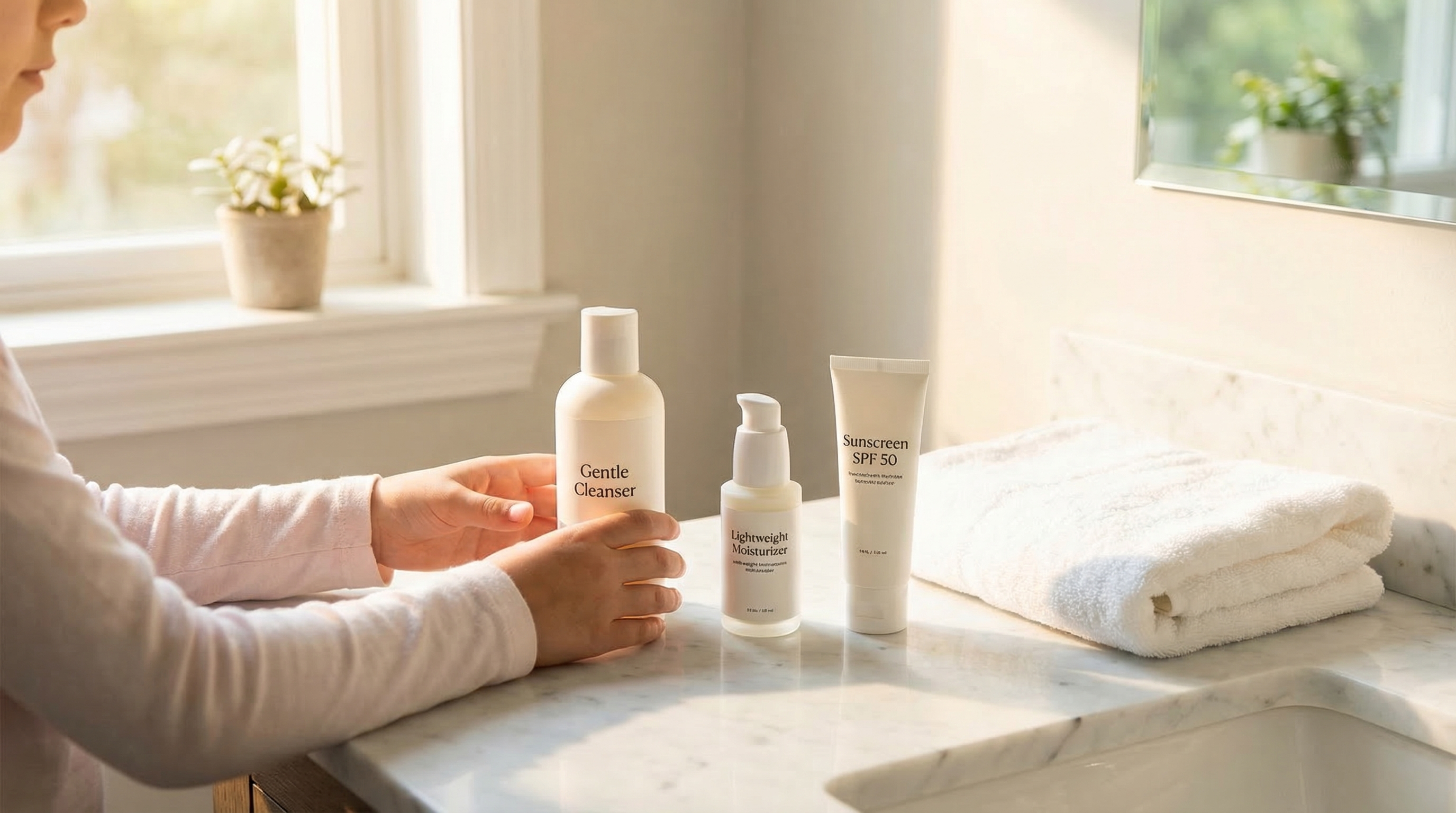
Your Complete Morning Routine
Your morning routine has one primary job: protect and prepare your skin for the day. Mornings are not the time for heavy-duty treatments. Keep it short, light, and consistent.
Step 1: Gentle Cleanser
Wash your face with a gentle, non-comedogenic cleanser. Look for formulas labeled "for sensitive skin" or "soap-free." The goal is to remove the oil and sweat that built up overnight without stripping your skin.
What to look for on the label:
- Ceramides (help repair and maintain the skin barrier)
- Glycerin (a gentle humectant that attracts moisture)
- A pH between 4.5 and 6.5 (close to your skin's natural pH)
What to avoid:
- Sodium lauryl sulfate (SLS) -- an aggressive surfactant that can irritate acne-prone skin
- Fragrances and dyes
- "Squeaky clean" formulas that leave your face feeling tight
Use lukewarm water. Hot water can increase inflammation and dry out your skin, which triggers even more oil production. Pat dry with a clean towel -- don't rub.
Step 2: Lightweight Moisturizer
This is where most teens go wrong. If your skin is oily, your instinct is probably to skip moisturizer. But here's what actually happens when you skip it: your skin detects the dryness and compensates by producing even more oil. It's counterintuitive, but moisturizing oily skin helps regulate oil production over time.
Choose a lightweight, oil-free, non-comedogenic moisturizer. Gel-cream textures work beautifully for oily and combination skin -- they hydrate without that heavy, greasy feeling.
Ingredients that work well for acne-prone skin:
- Hyaluronic acid (holds moisture without adding oil)
- Niacinamide (vitamin B3 -- reduces redness, controls oil, strengthens the skin barrier)
- Ceramides (barrier support)
A moisturizer containing 2-5% niacinamide is an especially smart choice for teens. Research published in the International Journal of Dermatology has shown that topical niacinamide can reduce sebum production and improve overall skin texture, making it a gentle but effective addition to an acne-focused routine.
Step 3: Sunscreen (Non-Negotiable)
Sunscreen is not optional -- especially if you're using any acne treatment. Ingredients like benzoyl peroxide, retinoids, and chemical exfoliants all increase your skin's sensitivity to UV light. Without SPF, you're setting yourself up for dark spots (post-inflammatory hyperpigmentation), which can linger for months after a pimple heals.
What to use:
- SPF 30 or higher, broad-spectrum
- Look for "oil-free" and "non-comedogenic" on the label
- Chemical sunscreens (with ingredients like avobenzone or octinoxate) tend to feel lighter on the skin
- Mineral sunscreens (zinc oxide, titanium dioxide) are great for sensitive or very reactive skin, though they can leave a slight white cast
If you hate the feel of sunscreen, try a moisturizer with built-in SPF for your morning step -- it combines two steps into one and makes it much easier to stay consistent.
Pro tip: Reapply every two hours if you're outside for extended periods. A single morning application won't protect you through a full school day plus after-school activities.
Your Complete Evening Routine
Your evening routine is where the real work happens. This is when you treat active breakouts, exfoliate, and give your skin the ingredients it needs to repair overnight.
Step 1: Cleanser (Again, But Maybe Upgraded)
If you wear sunscreen (which you should), makeup, or have been sweating, consider double cleansing in the evening. This means using a gentle micellar water or oil-based cleanser first to dissolve sunscreen and grime, followed by your regular water-based cleanser.
If you don't wear much on your face, a single cleanse with your gentle cleanser is perfectly fine.
For teens who are very oily, your evening cleanser can contain a low concentration (0.5-2%) of salicylic acid. This beta-hydroxy acid (BHA) is oil-soluble, which means it can actually penetrate into pores to dissolve the gunk that causes blackheads and whiteheads. It's one of the most well-studied over-the-counter acne ingredients, and the American Academy of Dermatology includes it in their first-line recommendations for mild acne.
Step 2: Acne Treatment (Your Active)
This is the most important step. After cleansing, apply your active acne treatment to clean, dry skin. Wait a minute or two after washing so your skin isn't damp -- actives penetrate more aggressively on wet skin, which can cause unnecessary irritation.
You have two primary over-the-counter options, and your choice depends on your skin type and acne type:
Option A: Benzoyl Peroxide (2.5-5%)
Benzoyl peroxide is an antimicrobial agent that kills C. acnes bacteria on contact. It also has mild comedolytic (pore-clearing) properties. It's especially effective for inflammatory acne -- those red, swollen, painful pimples.
Here's a fact that surprises a lot of people: studies show that 2.5% benzoyl peroxide is just as effective as 10% concentrations, but causes significantly less dryness and irritation. More is not better with this ingredient. Start low.
Apply a thin layer to your entire acne-prone area (not just individual pimples). Acne treatment works best as prevention, not spot treatment.
Warning: benzoyl peroxide will bleach towels, pillowcases, and clothing. Use white towels and pillowcases when you're using it.
Option B: Salicylic Acid (0.5-2%)
If your acne is mostly non-inflammatory -- think blackheads, whiteheads, and rough texture rather than big red pimples -- salicylic acid is your best friend. As a BHA, it exfoliates inside the pore to prevent clogs from forming. It's also anti-inflammatory, which helps calm redness.
Salicylic acid tends to be better tolerated than benzoyl peroxide, making it a good starting point for teens with sensitive skin.
Can you use both? Yes, but not at the same time. A common approach is to use salicylic acid cleanser in the evening and apply benzoyl peroxide as a leave-on treatment, or to alternate nights. If you try to layer them directly on top of each other, you'll likely end up with dry, flaking, irritated skin.
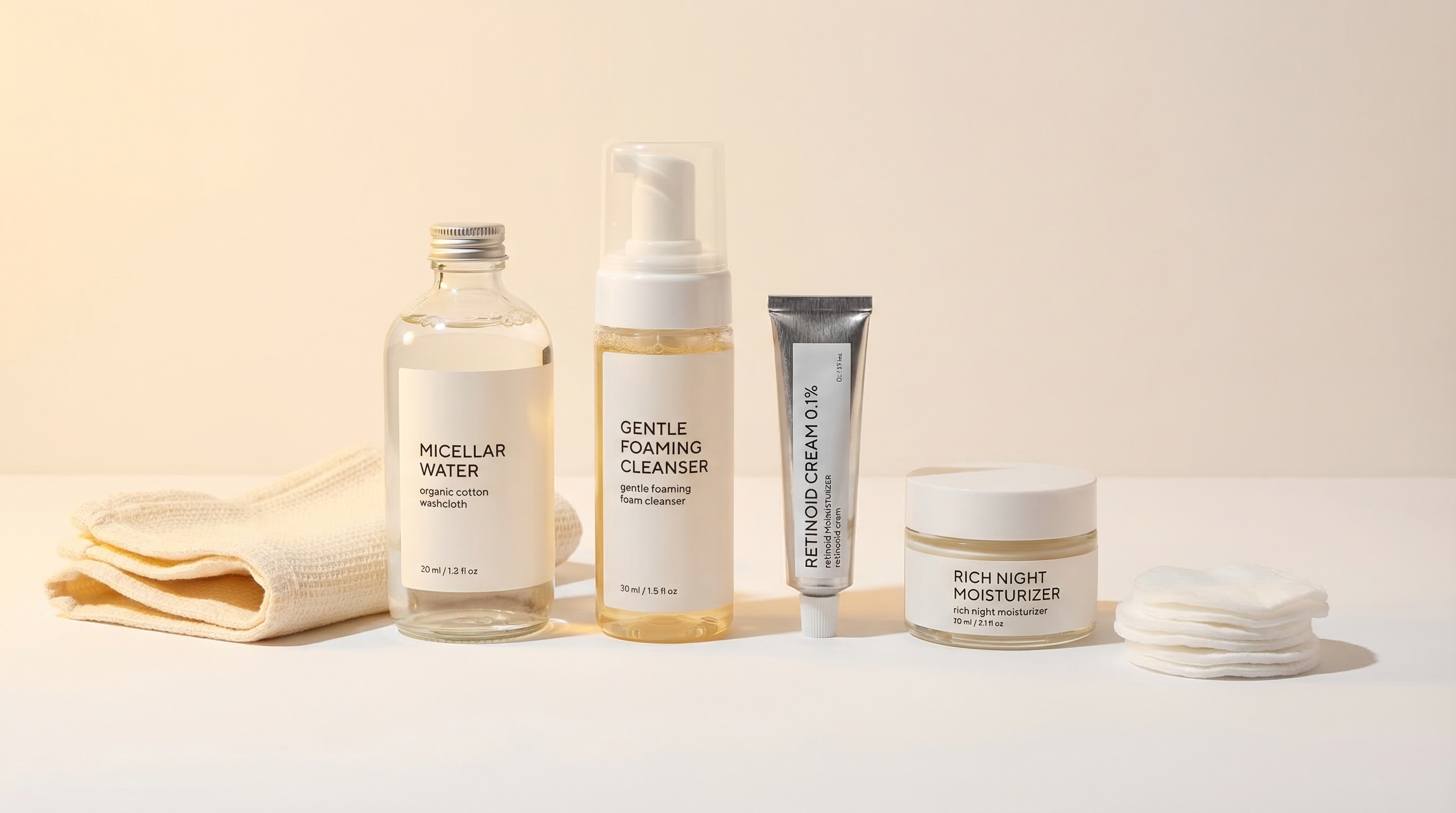
Step 3: Moisturizer
Yes, you moisturize again at night. Even after applying acne treatments -- especially after applying acne treatments. Benzoyl peroxide and salicylic acid can be drying, and a good moisturizer acts as a buffer that protects your skin barrier.
Your evening moisturizer can be slightly richer than your morning one since you don't need to worry about it feeling heavy under sunscreen or makeup. Look for the same ingredients: ceramides, hyaluronic acid, and niacinamide.
Apply it about a minute after your acne treatment has absorbed. There's no need to wait longer than that.
Optional Step: Spot Treatment
For those stubborn individual pimples that pop up despite your routine, a targeted spot treatment can help. Options include:
- Benzoyl peroxide 5% dabbed directly on the spot (if you're not already using it as a leave-on)
- Sulfur-based spot treatments (anti-inflammatory and antimicrobial)
- Hydrocolloid pimple patches -- these are genuinely useful. They absorb fluid from whiteheads, protect the spot from picking, and create an optimal healing environment. Keep a pack in your school bag.
What does NOT work as a spot treatment: toothpaste, lemon juice, baking soda, crushed aspirin, or rubbing alcohol. These home remedies can cause chemical burns, destroy your skin barrier, and leave you with worse scarring than the original pimple.
Weekly Treatments to Boost Your Results
Your daily routine is the foundation, but adding a weekly treatment can accelerate your progress. Think of these as bonus steps -- not mandatory, but helpful.
Exfoliation (1-2 Times Per Week)
Chemical exfoliation helps remove the buildup of dead skin cells that can clog pores. For acne-prone teen skin, look for:
- AHAs (alpha-hydroxy acids) like glycolic acid or lactic acid at 5-10% concentration. These work on the skin's surface to smooth texture and fade post-acne marks. Lactic acid is gentler and a great choice for beginners.
- BHA (salicylic acid) at 2% in a leave-on exfoliant, if you're not already using it daily.
Use your chemical exfoliant in the evening, in place of (not in addition to) your regular acne treatment. Don't exfoliate on the same night you use benzoyl peroxide.
Skip physical scrubs. The ones with beads, walnut shells, or gritty particles can create micro-tears in the skin that worsen inflammation and spread bacteria. Research consistently shows that chemical exfoliants are safer and more effective for acne-prone skin.
Clay or Charcoal Mask (Once a Week)
A kaolin or bentonite clay mask can absorb excess oil and give your pores a deeper clean. Apply a thin layer to your T-zone (forehead, nose, chin) or wherever you're oiliest, leave it on for 10 to 15 minutes, and rinse with lukewarm water. Follow with moisturizer immediately -- clay masks can be drying.
Don't leave masks on until they crack and feel tight. That means you've over-dried your skin. Remove them while they're still slightly damp.
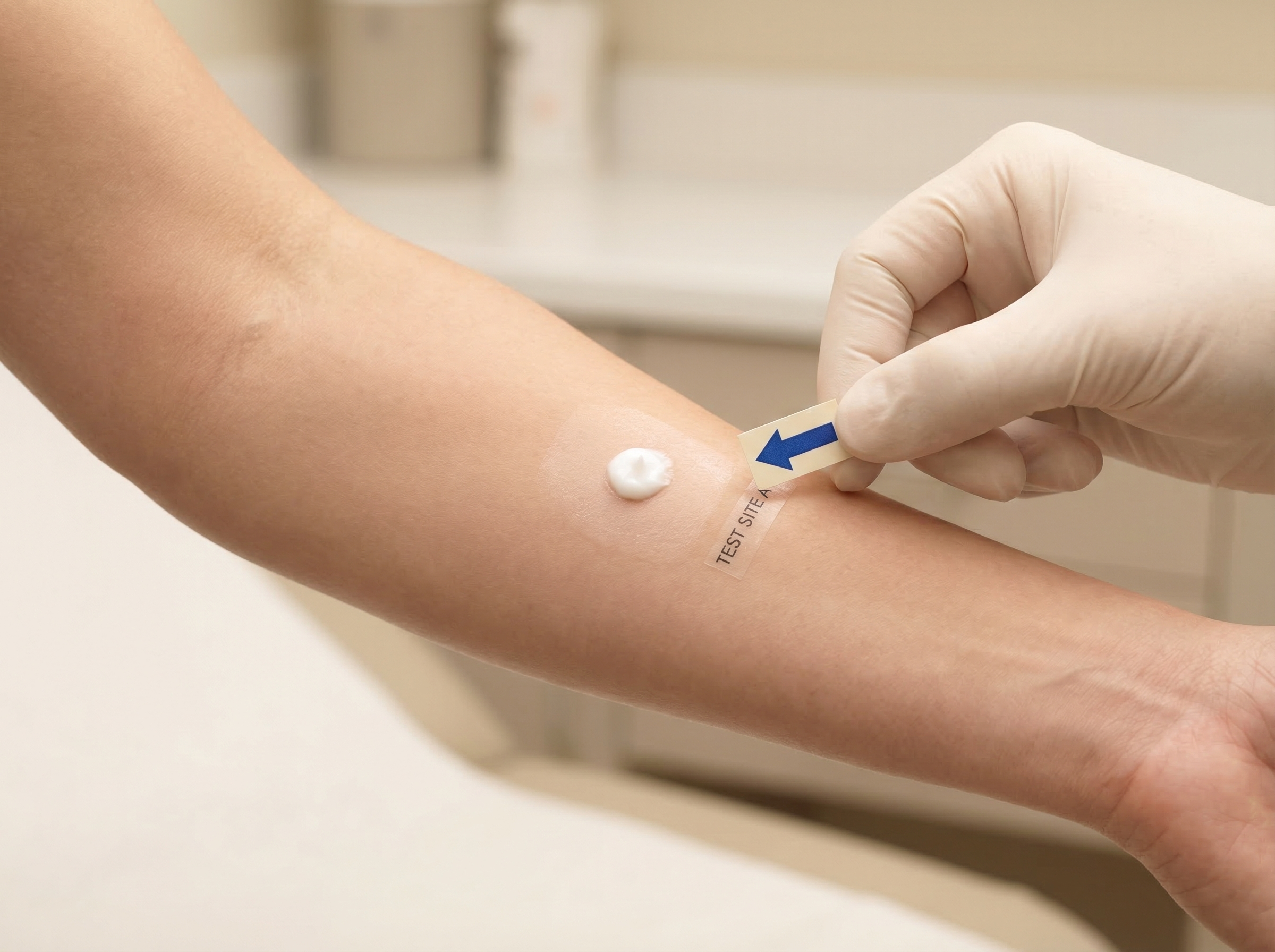
Building Your Routine: The First 4 Weeks
One of the biggest reasons teens give up on their skincare routine is that they expect overnight results. Skin cells take roughly 28 days to turn over completely, so you need to give any new routine at least a full cycle before judging it. Here's a realistic timeline:
Week 1-2: Introduction Phase Start with just three products: cleanser, moisturizer, and sunscreen. Use them consistently morning and evening (skip SPF at night, obviously). This establishes the habit and lets your skin adjust.
Week 3: Add Your Active Introduce your acne treatment (benzoyl peroxide or salicylic acid) every other evening. This gradual introduction reduces the risk of irritation. If your skin handles it well after a week, move to nightly use.
Week 4 and Beyond: Assess and Add By now, you may notice your skin "purging" -- a temporary increase in breakouts as clogged pores are pushed to the surface faster. This is normal and different from a bad reaction. A bad reaction involves persistent redness, burning, peeling, or itching. Purging involves pimples appearing in places you normally break out and then resolving faster than usual.
If you're tolerating your routine well, you can add a weekly exfoliant or mask.
The 6-8 week rule: Dermatologists generally recommend waiting a minimum of 6 to 8 weeks before deciding whether a product is working. Acne treatment is a slow game. Patience is genuinely one of your most important tools.
The Biggest Mistakes Teens Make With Acne
After reviewing thousands of skincare routines, these are the errors that come up over and over again. If you're doing any of these, your routine might be working against you.
Mistake 1: Over-Cleansing
Washing your face more than twice a day -- or using harsh, stripping cleansers -- damages your skin barrier. A compromised barrier leads to increased inflammation, more sensitivity, and paradoxically, more oil and more breakouts. Twice a day is the sweet spot. If your face feels oily midday, blotting papers are a much better solution than another wash.
Mistake 2: Using Too Many Actives at Once
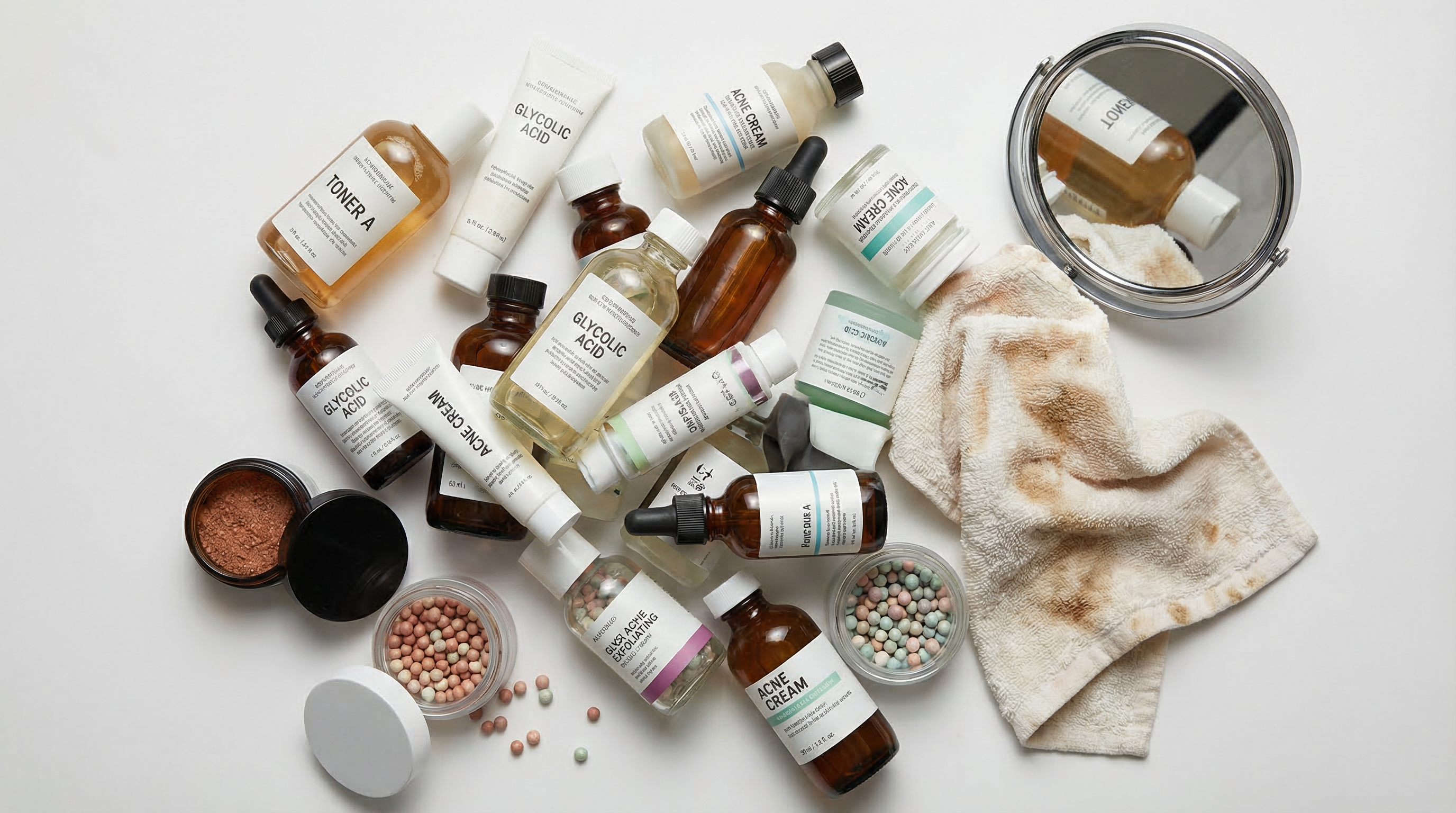
The internet makes it tempting to layer salicylic acid, benzoyl peroxide, glycolic acid, retinol, vitamin C, and niacinamide all in one routine. This is a recipe for a destroyed skin barrier. Pick one or two actives and use them consistently. A simple routine done well beats a complicated routine done inconsistently every single time.
Mistake 3: Skipping Moisturizer
We've covered this already, but it bears repeating because it's so common. Oily skin still needs moisture. Every single skin type does. Skipping moisturizer increases transepidermal water loss, weakens the skin barrier, and signals your sebaceous glands to produce more oil. Use a lightweight, non-comedogenic moisturizer every morning and every evening, no exceptions.
Mistake 4: Picking and Popping
This one is hard to resist, but picking at your skin introduces bacteria from your fingers, drives inflammation deeper into the skin, and dramatically increases your risk of scarring and post-inflammatory hyperpigmentation. If you're a habitual picker, hydrocolloid patches can help -- they give you something to "do" about the pimple without damaging your skin.
Mistake 5: Changing Products Too Frequently
Trying a new product every week gives nothing time to work and makes it impossible to identify what's helping and what's hurting. When you find a routine, commit to it for at least two months. If you must change something, change one product at a time so you can track what made a difference.
Mistake 6: Forgetting to Clean What Touches Your Face
Your pillowcase, phone screen, hands, and anything else that contacts your face regularly can transfer oil, bacteria, and dirt to your skin. Swap your pillowcase every two to three days (or flip it over -- that buys you an extra night). Wipe down your phone daily. And keep your hands away from your face during the day.
Lifestyle Factors That Support Clear Skin
Your skincare routine is the most direct tool you have, but these daily habits create the environment for it to work.
Sleep
During sleep, your body increases blood flow to the skin and ramps up collagen production and cell repair. Chronic sleep deprivation has been associated with increased stress hormones (like cortisol), which can worsen acne. Aim for 8 to 10 hours per night -- the range recommended for teenagers by the American Academy of Sleep Medicine.
Diet
The relationship between diet and acne is nuanced, but the current research suggests two dietary factors worth paying attention to:
- High-glycemic foods (white bread, sugary drinks, candy, processed snacks) cause rapid blood sugar spikes, which increase insulin and insulin-like growth factor 1 (IGF-1). These hormones can stimulate sebum production and worsen acne. Choosing lower-glycemic alternatives -- whole grains, vegetables, proteins -- may help.
- Dairy -- particularly skim milk -- has been linked to acne in several observational studies, possibly due to hormones and bioactive molecules present in milk. This doesn't mean you need to eliminate dairy entirely, but it's worth noting if your acne is persistent despite a good routine.
Stress Management
Stress doesn't directly cause acne, but it makes existing acne worse. Stress hormones increase inflammation and sebum production. Finding effective stress outlets -- exercise, journaling, spending time outdoors, talking to someone you trust -- isn't just good for your mental health. It genuinely helps your skin.
Hydration
Drinking enough water supports every function in your body, including skin cell turnover and barrier function. It won't cure acne on its own, but chronic dehydration can make your skin look dull and function less efficiently. Keep a water bottle with you and sip throughout the day.
When to Adjust Your Routine or See a Dermatologist
A good over-the-counter routine will handle mild to moderate acne for most teens. But there are situations where you need more help, and recognizing them early can prevent scarring and long-term skin damage.
Consider seeing a dermatologist if:
- Your acne hasn't improved after 8 to 12 weeks of consistent OTC treatment
- You have deep, painful cystic or nodular acne (hard lumps under the skin that don't come to a head)
- Your acne is leaving scars or significant dark marks
- Your acne is affecting your mental health, self-esteem, or daily life
- You're experiencing acne along your jawline and chin as a female, which may suggest hormonal acne requiring a different approach
What a dermatologist can offer that OTC products can't:
- Prescription-strength retinoids (like tretinoin or adapalene 0.3%) that dramatically accelerate cell turnover and prevent clogged pores
- Topical antibiotics (like clindamycin) combined with benzoyl peroxide for inflammatory acne
- Oral medications when topical treatments aren't enough -- including antibiotics, hormonal treatments for females, or isotretinoin for severe, treatment-resistant acne
- In-office treatments like chemical peels, extractions, or cortisone injections for painful cysts
A note on adapalene (0.1%): this retinoid is now available over the counter in many countries and is an excellent next step if basic salicylic acid and benzoyl peroxide aren't cutting it. It's the only retinoid currently available without a prescription and has strong evidence behind it for treating acne. Start by applying it every third night and gradually increase to nightly use, as it can cause initial dryness and peeling.
Putting It All Together: Your Cheat Sheet
Morning (3 steps, 2 minutes):
- Gentle cleanser (lukewarm water)
- Lightweight moisturizer (with niacinamide if possible)
- SPF 30+ sunscreen
Evening (3-4 steps, 3 minutes):
- Gentle cleanser (or double cleanse if wearing sunscreen/makeup)
- Acne treatment (benzoyl peroxide 2.5% OR salicylic acid 2%)
- Moisturizer
- Spot treatment on active pimples (optional)
Weekly (pick one, 1 night per week):
- Chemical exfoliant (glycolic or lactic acid, 5-10%)
- Clay mask on oily areas
Remember: Start slow, be consistent, and give it time. Your skin didn't break out overnight, and it won't clear up overnight either. But with the right routine and a little patience, clearer skin is absolutely within reach.
The most effective skincare routine is the one you actually do every day. Keep it simple, keep it consistent, and trust the process. You've got this.
How we reviewed this article:
Our experts continually monitor the health and wellness space, and we update our articles when new information becomes available.
- Zaenglein AL, Pathy AL, Schlosser BJ, et al. Guidelines of care for the management of acne vulgaris. J Am Acad Dermatol. 2016;74(5):945-973.e33.https://pubmed.ncbi.nlm.nih.gov/26897386/
- Tan AU, Schlosser BJ, Paller AS. A review of diagnosis and treatment of acne in adult female patients. Int J Womens Dermatol. 2018;4(2):56-71.https://pubmed.ncbi.nlm.nih.gov/29872679/
- Zeichner JA, Baldwin HE, Cook-Bolden FE, et al. Emerging Issues in Adult Female Acne. J Clin Aesthet Dermatol. 2017;10(1):37-46.https://pubmed.ncbi.nlm.nih.gov/28210380/
- American Academy of Dermatology. Acne: Tips for Managing.https://www.aad.org/public/diseases/acne/skin-care/tips
- Decker A, Graber EM. Over-the-counter Acne Treatments: A Review. J Clin Aesthet Dermatol. 2012;5(5):32-40.https://pubmed.ncbi.nlm.nih.gov/22808307/
- Sagransky M, Yentzer BA, Feldman SR. Benzoyl peroxide: a review of its current use in the treatment of acne vulgaris. Expert Opin Pharmacother. 2009;10(15):2555-2562.https://pubmed.ncbi.nlm.nih.gov/19761357/
- Araviiskaia E, Dreno B. The role of topical dermocosmetics in acne vulgaris. J Eur Acad Dermatol Venereol. 2016;30(6):926-935.https://pubmed.ncbi.nlm.nih.gov/26916053/
- Chularojanamontri L, Tuchinda P, Kulthanan K, Pongparit K. Moisturizers for Acne: What are their Constituents? J Clin Aesthet Dermatol. 2014;7(5):36-44.https://pubmed.ncbi.nlm.nih.gov/24847408/
- Lyons AB, Trullas C, Kohli I, Hamzavi IH, Lim HW. Photoprotection beyond ultraviolet radiation: A review of tinted sunscreens. J Am Acad Dermatol. 2021;84(5):1393-1397.https://pubmed.ncbi.nlm.nih.gov/33038459/
- Tang SC, Yang JH. Dual Effects of Alpha-Hydroxy Acids on the Skin. Molecules. 2018;23(4):863.https://pubmed.ncbi.nlm.nih.gov/29642579/
- Kraft J, Freiman A. Management of acne. CMAJ. 2011;183(7):E430-E435.https://pubmed.ncbi.nlm.nih.gov/21398228/
- Dreno B, Shourick J, Kerob D, Bouloc A, Tabart M. The role of exposome in acne: an overview with focus on the skin microbiome. J Eur Acad Dermatol Venereol. 2023;37 Suppl 2:3-12.https://pubmed.ncbi.nlm.nih.gov/36574262/
Read This Next

The Acne Glossary: Every Term You'll Encounter, Explained Simply
From adapalene to zinc, every acne and skincare term you'll run into, defined in plain language without the medical jargon.
Read More →
Micellar Water for Acne-Prone Skin: Gentle Cleanser or Lazy Shortcut?
Micellar water is fine for light cleansing days but won't remove sunscreen properly. Here's when to use it, when to skip it, and whether you need to rinse.
Read More →
How Seasonal Changes Affect Your Acne (And When to Switch Products)
Going to College with Acne: Preparing Your Skincare for Dorm Life