How to Get Rid of Forehead Acne: Causes and Fixes
Medically reviewed by Dr. Rachel Torres, MD, Pediatric Dermatologist
Written by Teen Acne Solutions Editorial Team — Updated April 19, 2026
How to Get Rid of Forehead Acne: Causes and Fixes
Forehead acne is annoyingly common in teenagers, and it tends to show up right when you're most self-conscious about it. The forehead is the first place many teens break out, often before acne appears anywhere else on the face.
The good news is that forehead acne is usually one of the easier types to figure out and treat. The forehead responds well to over-the-counter ingredients, and there are specific causes that you can identify and eliminate without even needing a prescription.
I'm going to walk through the reasons your forehead breaks out more than other areas, some causes you might not have considered (hair products are a big one), and what actually works to fix it.
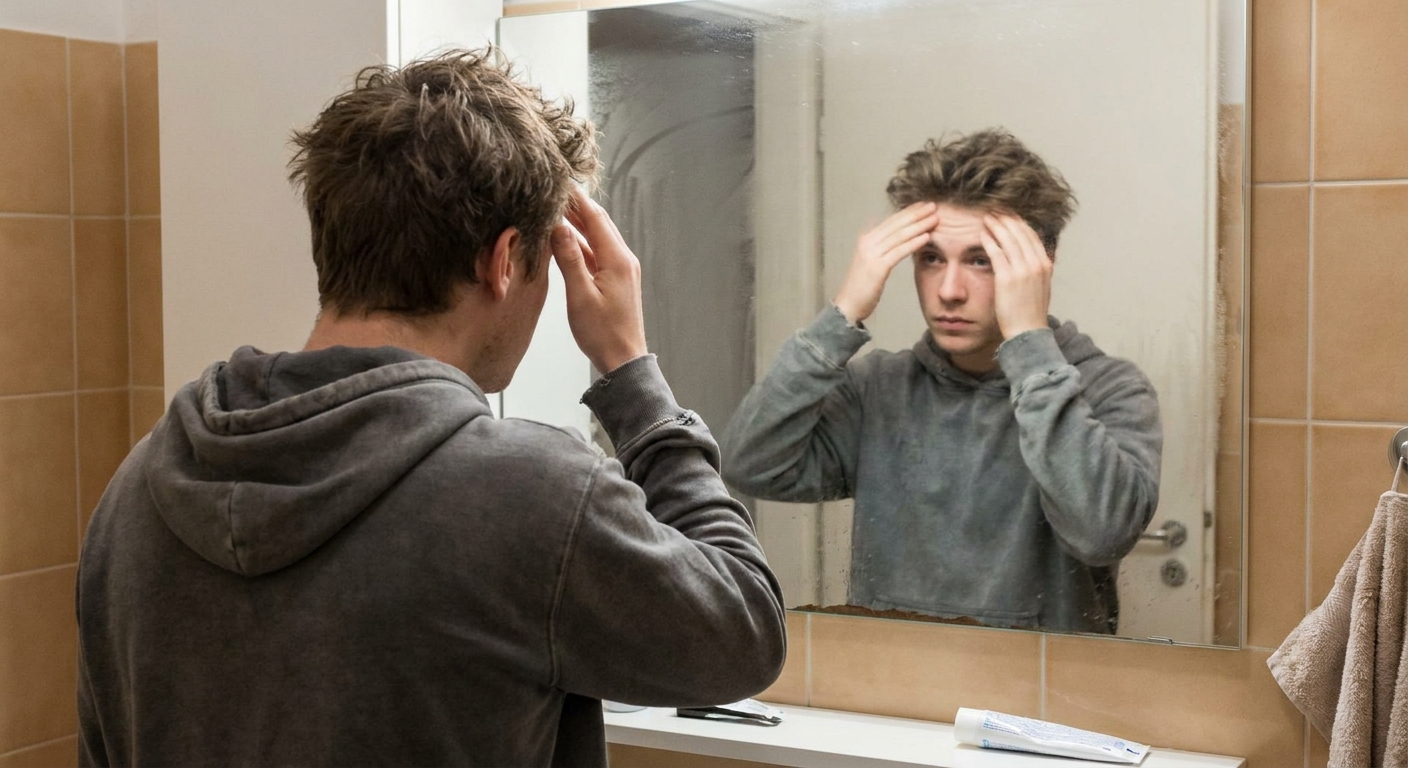
Why the Forehead Breaks Out First
Your forehead is part of the T-zone, the T-shaped area running across your forehead and down your nose. This area has a much higher concentration of sebaceous (oil) glands than the rest of your face. Some estimates put it at 2-3 times more oil glands per square centimeter compared to the cheeks (Zouboulis et al., 2014).
During puberty, androgen hormones ramp up and stimulate these oil glands to produce more sebum. Because the T-zone already has more glands, it feels the effect first and hardest. That's why so many teens notice their forehead getting oily months before the rest of their face catches up.
More oil means more opportunity for pores to get clogged. And when bacteria colonize those clogged pores, you get the red, inflamed bumps that ruin your morning.
But hormones and oil aren't the only factors at play. The forehead has some unique exposures that other parts of the face don't.
The Hair Product Problem (Pomade Acne)
This is the one cause of forehead acne that I think is genuinely underappreciated. Dermatologists actually have a name for it: pomade acne.
Pomade acne was first described in the medical literature in the 1970s, when researchers noticed a pattern of forehead breakouts in patients who used heavy hair oils and pomades (Plewig et al., 1970). But it's not limited to pomade. Any hair product that contains oils, waxes, or silicones can migrate from your hair to your forehead skin and clog pores.
Common offenders include:
- Hair gel and styling wax that sits right at the hairline
- Dry shampoo that drifts onto the forehead (this one catches a lot of people off guard)
- Leave-in conditioners and hair oils that transfer to your pillowcase and then to your face
- Hairspray that mists onto forehead skin
- Heavy conditioners that run down your face in the shower
The breakouts from hair products have a characteristic pattern. They cluster right along the hairline and across the upper forehead, often appearing as small, clogged bumps (comedones) rather than large, red pimples. If your acne follows this pattern, there's a good chance your hair products are involved.
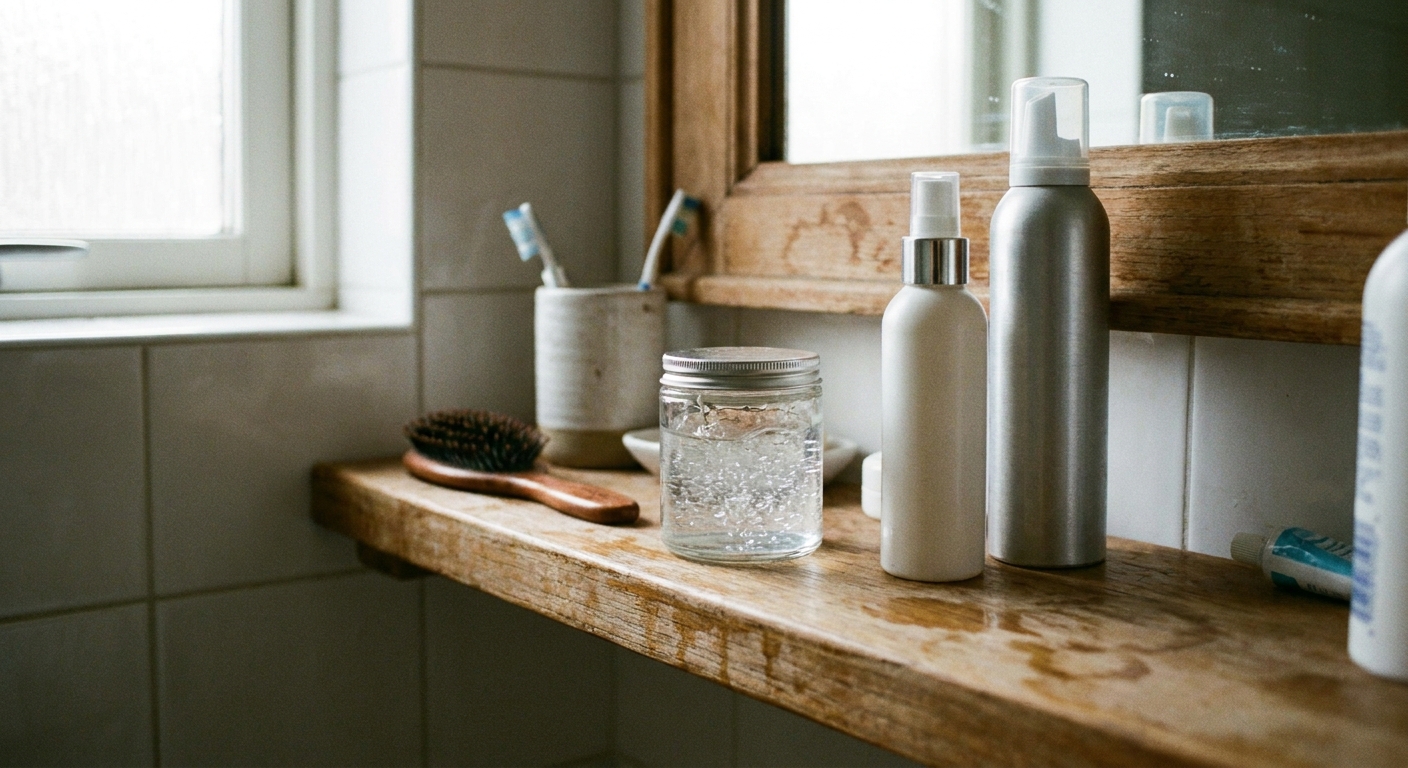
The Hair Product Test
I recommend what I call the hair product test, and it's exactly as simple as it sounds.
For two weeks:
- Stop using all styling products (gel, wax, mousse, spray, dry shampoo)
- If you have bangs, pin them back or clip them away from your forehead
- Switch to a gentle, fragrance-free shampoo and a lightweight conditioner
- When you condition your hair in the shower, tilt your head back so the conditioner rinses away from your face, not across it
- Change your pillowcase every 2-3 days (old product residue builds up)
After two weeks: Look at your forehead. If the breakouts have noticeably improved, you've found your culprit. You can then reintroduce products one at a time to figure out which specific one is the problem.
I've seen this test work for a surprising number of teens who thought they had a "skin problem" when they actually had a hair product problem. It costs nothing, takes no effort beyond changing habits for two weeks, and can save you from buying a bunch of acne treatments you don't need.
Bangs and Forehead Acne
Speaking of hair on your forehead: bangs are a double problem.
First, bangs create a warm, slightly humid environment against your forehead skin. Bacteria prefer this to open air. Second, bangs constantly transfer oil, product residue, and their own natural oils to your forehead skin through physical contact.
A lot of teens grow bangs specifically to cover forehead acne, which I completely understand. But it tends to make the acne worse, which leads to thicker bangs, which leads to worse acne. It's a frustrating cycle.
If you're not willing to grow out your bangs entirely (and I get that's a big ask), try pulling them back when you're at home, sleeping with them pinned up, and making sure they're clean. Washing bangs daily, even if you don't wash the rest of your hair, can make a difference because the hair sitting against your skin is the part that matters most.
Hats, Helmets, and Headbands
Anything that sits on your forehead for extended periods can cause breakouts through a combination of friction, pressure, and trapped sweat. Dermatologists call this acne mechanica, and the forehead is one of the most common locations for it (Mills & Kligman, 1975).
Baseball caps are a frequent trigger. The brim presses against the forehead, trapping sweat and oil underneath. If you wear a hat daily, the band inside accumulates bacteria and sebum, which then gets pressed against your skin every time you put it on.
Some practical fixes:
- Wash hats regularly. Hand wash baseball caps with gentle detergent and let them air dry.
- Line helmets with a moisture-wicking liner that you can wash after each use.
- Choose headbands made from smooth, moisture-wicking fabric rather than cotton, which absorbs and holds sweat against the skin.
- Take breaks. If you're wearing a hat all day, give your forehead some air when you can.
What Actually Works: Treatment Options
Once you've addressed the external causes (hair products, bangs, hats), it's time to talk about what to put on your forehead to clear existing breakouts and prevent new ones.
Salicylic Acid: The Forehead MVP
Salicylic acid is a beta-hydroxy acid (BHA) that works by dissolving the "glue" holding dead skin cells together inside the pore. It's oil-soluble, which means it can actually penetrate into the oily pore lining rather than just sitting on the skin surface (Arif, 2015).
For forehead acne specifically, salicylic acid is my top recommendation for a few reasons:
- The forehead's problem is usually excess oil and clogged pores. Salicylic acid targets exactly that.
- It works well on comedonal acne (blackheads and whiteheads), which is the most common type on the forehead.
- It's available over the counter in concentrations from 0.5% to 2%.
- It's gentle enough for daily use on most skin types.
How to use it: Apply a salicylic acid product (cleanser or leave-on treatment) once daily. If your skin tolerates it after a week, you can move to twice daily. Start with a 2% leave-on serum or a 2% cleanser. Leave-on products work better than cleansers because the active ingredient stays in contact with your skin longer.
Give it 4-6 weeks before judging results. Salicylic acid works by preventing new clogs, so existing breakouts need time to clear on their own timeline.
Benzoyl Peroxide for Inflamed Forehead Bumps
If your forehead acne is more red and inflamed (actual pimples, not just small bumps), benzoyl peroxide is worth adding. It works by killing C. acnes bacteria and has been a first-line acne treatment for decades (Zaenglein et al., 2016).
A 2.5% or 5% benzoyl peroxide wash is a good starting point. Higher concentrations (10%) don't work much better but cause more dryness and irritation (Mills et al., 1986). Use it once daily in the shower, let it sit on your forehead for 30-60 seconds, then rinse.
One warning: benzoyl peroxide bleaches fabric. It will ruin your towels and pillowcases if you're not careful. Use white towels to dry your face, or make sure the product is fully rinsed off.
Retinoids for Persistent Forehead Acne
If salicylic acid and benzoyl peroxide aren't getting the job done after 8 weeks, a retinoid is the next step. Adapalene 0.1% (brand name Differin) is available over the counter and is the gold standard for preventing clogged pores.
Retinoids speed up skin cell turnover, which prevents the buildup of dead cells that block pore openings. They're particularly effective for the type of persistent, small-bump acne that's common on the forehead (Leyden et al., 2017).
Apply a pea-sized amount to your entire forehead (not just on individual pimples) at night. Expect some dryness and peeling for the first 2-4 weeks as your skin adjusts. This is normal and temporary. Use a moisturizer afterward if needed.
Don't combine retinoids with salicylic acid at the same time of day. Too much exfoliation will irritate your skin and possibly make things worse. Use one in the morning and one at night, or alternate days.
When It Might Be Fungal
Here's something that most acne websites won't tell you: some forehead "acne" isn't acne at all. It's a condition called pityrosporum folliculitis (sometimes called fungal acne), and it's caused by an overgrowth of Malassezia yeast rather than C. acnes bacteria.
Fungal folliculitis looks different from regular acne. The bumps are:
- Very uniform in size (regular acne varies in size)
- Usually small, about 1-2mm
- Often itchy (regular acne typically isn't itchy)
- Clustered densely on the forehead and sometimes the chest and upper back
- Resistant to normal acne treatments
Malassezia yeast feeds on oils, which is why it thrives on the oily forehead. It's more common in hot, humid climates, after antibiotic use (which kills competing bacteria and lets yeast overgrow), and in people who sweat a lot (Rubenstein & Malerich, 2014).
If you suspect fungal folliculitis, here's what to try:
- Apply an over-the-counter antifungal cream (ketoconazole 2% or clotrimazole) to your forehead twice daily for two weeks.
- Use a dandruff shampoo containing ketoconazole or zinc pyrithione as a face wash. Apply it to your forehead, let it sit for 3-5 minutes, then rinse. Do this daily.
- Avoid applying oils to your forehead. Many "natural" acne remedies (coconut oil, argan oil) feed Malassezia yeast.
If the bumps respond to antifungal treatment, you've confirmed the diagnosis. See a dermatologist to discuss longer-term management, as fungal folliculitis tends to recur.

A Simple Forehead Acne Routine
If you want a straightforward routine that covers the most common causes, here's what I'd suggest:
Morning:
- Wash with a gentle cleanser (or salicylic acid cleanser)
- Apply a lightweight, oil-free moisturizer
- Apply sunscreen if going outdoors (oil-free, non-comedogenic)
Evening:
- Wash with a gentle cleanser to remove sunscreen, sweat, and grime
- Apply salicylic acid serum (2%) or adapalene (0.1%) to forehead
- Moisturize if your skin feels dry
Ongoing habits:
- Change pillowcase every 2-3 days
- Keep hair products away from the hairline
- Don't touch your forehead throughout the day
- Wash hats and headbands weekly
When to See a Dermatologist
Most forehead acne responds to the approaches above within 6-8 weeks. See a dermatologist if:
- You've tried over-the-counter treatments consistently for 8+ weeks with no improvement
- Your acne is leaving scars or dark marks
- You suspect fungal folliculitis and OTC antifungals aren't helping
- Your acne is severe (painful cysts or widespread inflammation)
- You're experiencing acne alongside other symptoms like irregular periods or excessive hair growth (which could indicate a hormonal issue)
Key Takeaways
- The forehead breaks out first in many teens because it has 2-3 times more oil glands than the cheeks. Puberty hormones hit this area hardest.
- Hair products are an underrecognized cause of forehead acne. Gel, wax, dry shampoo, and heavy conditioners can migrate to the hairline and clog pores. Try the two-week hair product elimination test.
- Salicylic acid (2%) is the best first-line treatment for forehead acne because it's oil-soluble and targets the clogged pores that are most common in this area.
- Not all forehead bumps are acne. Uniform, itchy bumps that don't respond to acne treatments may be fungal folliculitis, which requires antifungal treatment instead.
- External factors like bangs, hats, and touching your forehead contribute more than most people realize. Address these alongside any topical treatment.
The Bottom Line
Forehead acne feels obvious and hard to hide, but it's usually one of the more fixable types. Start by ruling out hair products and external friction sources before spending money on treatments. If you do need products, salicylic acid is the workhorse ingredient for this area.
Give any approach at least 6 weeks before switching. Skin turnover takes time, and bouncing between products every few days is a reliable way to irritate your skin without solving anything.
Sources
- Zouboulis, C.C., et al. (2014). Sebaceous gland density and distribution in human facial skin. Dermato-Endocrinology, 6(1), e970027. PubMed
- Plewig, G., et al. (1970). Pomade acne. Archives of Dermatology, 101(5), 580-584. PubMed
- Mills, O.H., & Kligman, A.M. (1975). Acne mechanica. Archives of Dermatology, 111(4), 481-483. PubMed
- Arif, T. (2015). Salicylic acid as a peeling agent: A comprehensive review. Clinical, Cosmetic and Investigational Dermatology, 8, 455-461. PubMed
- Zaenglein, A.L., et al. (2016). Guidelines of care for the management of acne vulgaris. Journal of the American Academy of Dermatology, 74(5), 945-973. PubMed
- Mills, O.H., et al. (1986). Comparing 2.5%, 5%, and 10% benzoyl peroxide on inflammatory acne vulgaris. International Journal of Dermatology, 25(10), 664-667. PubMed
- Leyden, J., et al. (2017). Why topical retinoids are the mainstay of therapy for acne. Dermatology and Therapy, 7(3), 293-304. PubMed
- Rubenstein, R.M., & Malerich, S.A. (2014). Malassezia (Pityrosporum) folliculitis. Journal of Clinical and Aesthetic Dermatology, 7(3), 37-41. PubMed
- American Academy of Dermatology. (2023). Acne: Tips for managing. AAD
How we reviewed this article:
Our experts continually monitor the health and wellness space, and we update our articles when new information becomes available.
Read This Next

The Acne Glossary: Every Term You'll Encounter, Explained Simply
From adapalene to zinc, every acne and skincare term you'll run into, defined in plain language without the medical jargon.
Read More →
Micellar Water for Acne-Prone Skin: Gentle Cleanser or Lazy Shortcut?
Micellar water is fine for light cleansing days but won't remove sunscreen properly. Here's when to use it, when to skip it, and whether you need to rinse.
Read More →
How Seasonal Changes Affect Your Acne (And When to Switch Products)

Going to College with Acne: Preparing Your Skincare for Dorm Life