How to Get Rid of Chest Acne: What Works and What Doesn't

Nobody talks about chest acne. Not really. There are thousands of articles about face acne, but body acne gets treated as an afterthought, even though it affects roughly 45% of people who have facial acne too (Del Rosso et al., 2007). I think that silence makes it worse. When you're the only person you know who won't take their shirt off at the pool, it's easy to feel like something is uniquely wrong with you. It's not. Chest acne is extremely common, it's treatable, and it's not your fault.
But treating it does require a different approach than treating your face. Your chest is not your face. The skin is different, the causes overlap but aren't identical, and the products that work on one don't always work on the other.
Why Chest Acne Is Different
The skin on your chest is significantly thicker than facial skin. The stratum corneum (the outermost layer) is denser, and the pores are larger. This means products need to penetrate more aggressively to reach the follicles where breakouts start. A gentle facial cleanser that works well on your cheeks might do absolutely nothing on your chest.
Your chest also deals with problems your face doesn't:
Friction. Clothing rubs against your chest all day. Backpack straps, sports bras, tight undershirts. This mechanical irritation is called acne mechanica, and it's a well-recognized trigger for body acne (Kazandjieva & Tsankov, 2017). The constant rubbing irritates follicles that are already partially clogged, pushing them into full inflammatory breakouts.
Sweat trapping. Your chest sweats, and that sweat sits against fabric for hours. The moisture and heat create a warm, damp environment that bacteria love. Your face at least gets air exposure. Your chest is sealed under layers of clothing most of the day.
Fungal involvement. Here's something most teens don't know: not all bumps on your chest are actually acne. A condition called pityrosporum folliculitis (sometimes called fungal acne) looks almost identical to regular acne but is caused by yeast overgrowth in hair follicles. It's more common on the chest and back than on the face. The giveaway is that it tends to appear as uniform small bumps that are intensely itchy, unlike regular acne which varies in size and is more painful than itchy (Rubenstein & Malerich, 2014). This matters because fungal folliculitis won't respond to standard acne treatments and actually gets worse with some of them.
Benzoyl Peroxide Body Wash: The Single Best Treatment
If I had to recommend one product for chest acne, it would be a benzoyl peroxide (BP) body wash in a 5% or 10% concentration. This isn't opinion. It's the most evidence-backed topical treatment for body acne, and dermatologists have been recommending it as first-line therapy for years (Leyden et al., 2017).
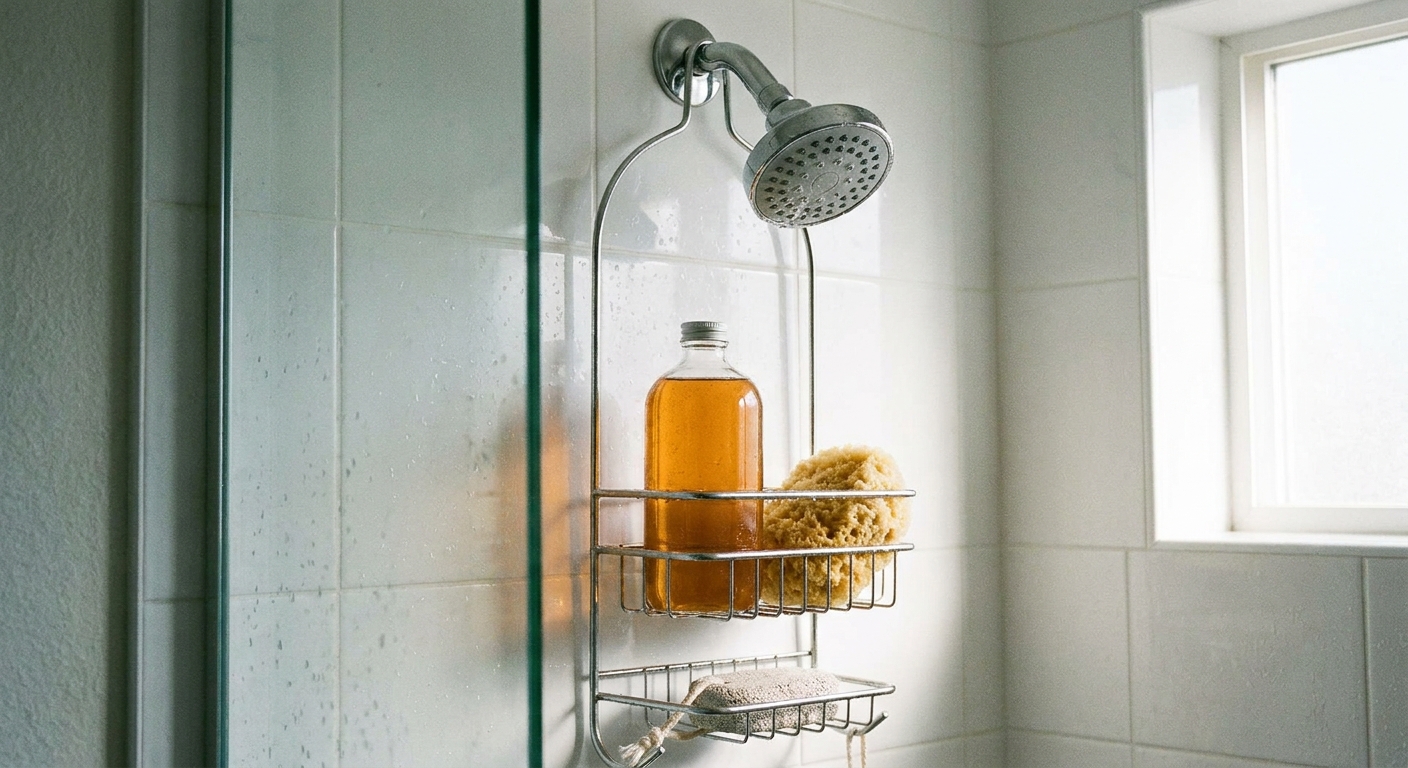
Here's why BP body wash works so well for the chest specifically:
It kills C. acnes bacteria on contact. Unlike antibiotics, bacteria don't develop resistance to benzoyl peroxide. You can use it indefinitely without it losing effectiveness (Worret & Fluhr, 2006).
It penetrates thick skin. BP is lipophilic, meaning it dissolves into the oily environment inside pores. The thicker skin on your chest isn't as much of a barrier for BP as it is for other treatments.
The wash format is practical. Leave-on BP products (creams, gels) will bleach your clothes and bedsheets. A wash-off product lets you get the antibacterial benefit without ruining your wardrobe. Apply it to your chest in the shower, let it sit for 2 to 3 minutes while you wash your hair or do whatever else, then rinse. That contact time is enough.
Specific products that work: PanOxyl 10% Foaming Wash, CeraVe Acne Foaming Cream Cleanser (4% BP), or any generic benzoyl peroxide wash from a pharmacy. The branded options aren't meaningfully better than store-brand versions with the same active ingredient and concentration.
One warning: start with every other day and work up to daily use. BP can be drying and irritating, especially on skin that isn't used to it. If your chest gets red and flaky, scale back to three times a week.
Why Face Products Often Fail on the Body
I see this mistake constantly. Someone with chest acne grabs their salicylic acid face wash and starts using it on their chest, expecting the same results. It usually doesn't work well, for a few reasons.
Concentration issues. Most facial salicylic acid products are formulated at 0.5% to 2%. That's appropriate for thin facial skin. For the thicker skin on your chest, you often need higher concentrations or more aggressive ingredients. Salicylic acid can work on body acne, but typically needs to be in a body spray or lotion that stays on the skin rather than a wash-off product.
Coverage area. Your chest is a large surface area. The amount of product you'd need to adequately cover it with a facial serum or spot treatment would be expensive and impractical. Body washes and sprays are designed for coverage.
Vehicle matters. In dermatology, the "vehicle" is the base that carries the active ingredient. Facial products use vehicles designed for facial skin. They're often too light, too emollient, or too comedogenic for the different environment of chest skin.
That said, some facial ingredients do work on the body when formulated correctly. Adapalene (Differin) gel can be applied to the chest and has evidence for truncal acne. But you need to use a lot of it to cover the area, it makes your skin sun-sensitive, and it takes 8 to 12 weeks to show results. BP body wash is faster and cheaper.
Fabric Choices Actually Matter
This sounds minor but it isn't. What you wear against your chest has a measurable impact on body acne.
Synthetic fabrics (polyester, nylon, spandex) trap heat and moisture against your skin. They're the worst offenders. That compression shirt you wear to the gym? It's keeping sweat pressed against your chest in a warm, occluded environment for your entire workout. That's basically an incubator for acne bacteria.
Cotton breathes better but absorbs sweat and holds it. A sweat-soaked cotton t-shirt sitting against your skin for hours after a workout is still problematic.
Moisture-wicking athletic fabrics are actually better than regular cotton for workouts because they pull sweat away from the skin surface. The issue is wearing them for extended periods after exercise.
Practical advice that makes a real difference:
- Change out of sweaty clothes as soon as possible after exercise. Within 30 minutes is ideal.
- Wear loose-fitting shirts when you can. Tight clothing increases friction.
- Wash workout clothes after every single use. Bacteria build up in fabric between washes.
- If you wear a backpack regularly, the straps create a friction zone across your upper chest. Loosening them or using a waist strap to distribute weight can help.
Shower Timing After Workouts
This is probably the single easiest habit change with the biggest payoff. Shower as soon as you can after sweating. The longer sweat, bacteria, and dead skin cells sit on your chest, the more likely they are to clog pores.
If you can't shower right after a workout (which is the reality for most teens who have to go to class after gym), at least change into a clean, dry shirt and use a body wipe on your chest. Micellar water on a cotton pad works in a pinch. It won't replace a proper shower with BP wash, but it removes the worst of the sweat and bacteria.
The ideal post-workout routine for chest acne:
- Shower within an hour of exercise
- Use BP body wash on your chest (let it sit 2-3 minutes)
- Rinse thoroughly
- Pat dry, don't rub (rubbing creates friction)
- Put on a clean, loose shirt
Other Treatments Worth Trying
If BP body wash alone isn't cutting it after 6 to 8 weeks, here are some additions:
Salicylic acid body spray (2%). Use this as a leave-on treatment after showering. The spray format makes it easy to cover your whole chest. Paula's Choice makes one; so does Neutrogena.
Glycolic acid body lotion. Alpha hydroxy acids help exfoliate the thick skin on your chest, keeping pores from getting clogged. Look for 10% to 12% glycolic acid lotions. AmLactin is a commonly available option, though it uses lactic acid rather than glycolic.
Zinc pyrithione soap. If you suspect your chest bumps might be fungal folliculitis (uniform, itchy, not responding to BP), try a zinc pyrithione bar soap like Vanicream Z-Bar or Noble Formula. These are antifungal and can clear up fungal folliculitis within 2 to 3 weeks.
Retinoids. Adapalene 0.1% gel (Differin) is available over the counter and can help with both acne and post-acne dark marks on the chest. Apply a thin layer at night. It will make your skin sun-sensitive, so wear sunscreen on any exposed chest area.
When to See a Dermatologist
Go see a dermatologist for chest acne if:
- You've been using BP body wash consistently for 8 weeks with no improvement
- You're developing scars (raised or indented marks, not just flat discoloration)
- The acne is severe, with deep painful cysts or nodules
- You're not sure if it's acne or something else (folliculitis, keratosis pilaris, contact dermatitis)
A dermatologist can prescribe oral medications like doxycycline, spironolactone, or isotretinoin for body acne that doesn't respond to topical treatments. They can also properly diagnose whether what you're dealing with is actually acne or something else entirely.
The Emotional Side Nobody Talks About

I want to spend a moment on this because I think it gets dismissed too easily. Chest acne affects what you wear, whether you'll go swimming, whether you feel comfortable being physically close to someone. A 2015 study in the British Journal of Dermatology found that body acne had a negative impact on quality of life comparable to facial acne, with particularly strong effects on social functioning and self-consciousness (Tan et al., 2015).
If you're the teenager who keeps their shirt on at the beach, who avoids the locker room, who wears high-necked shirts in the summer, I want you to know that what you're feeling is normal and valid. Body acne is genuinely distressing. It's not vanity. And the people who say "just don't worry about it" have probably never dealt with it.
Treating chest acne is worth the effort not just for your skin but for your quality of life. Most cases respond well to the strategies above within a few months. You shouldn't have to plan your wardrobe around your breakouts.
Key Takeaways
- Benzoyl peroxide body wash (5-10%) is the best first-line treatment for chest acne. Let it sit on your skin for 2-3 minutes in the shower before rinsing.
- Chest skin is thicker than facial skin, which is why many face acne products don't work well on the body. Use body-specific formulations.
- Change out of sweaty clothes quickly and shower as soon as possible after exercise. This single habit change can make a big difference.
- Not all chest bumps are acne. Fungal folliculitis looks similar but requires antifungal treatment instead. If it's itchy and uniform, consider trying zinc pyrithione soap.
- The emotional impact is real. Don't let anyone dismiss how chest acne makes you feel. It's treatable, and getting treatment is worth it.
The Bottom Line
Chest acne responds well to treatment when you use the right approach. Start with a benzoyl peroxide body wash, fix your post-workout shower habits, pay attention to what fabrics you're wearing, and give it 6 to 8 weeks. If that combination doesn't get you where you want to be, see a dermatologist rather than spending more money experimenting with over-the-counter products. Most teens can get their chest acne under control, but it requires consistency and a bit of patience with the process.
Sources
- Del Rosso, J.Q., et al. (2007). Status report from the American Acne & Rosacea Society on medical management of acne in adult women. Journal of Clinical and Aesthetic Dermatology, 2(12), 22-30.
- Kazandjieva, J. & Tsankov, N. (2017). Drug-induced acne and acneiform eruptions. Clinics in Dermatology, 35(2), 156-162.
- Rubenstein, R.M. & Malerich, S.A. (2014). Malassezia (Pityrosporum) folliculitis. Journal of Clinical and Aesthetic Dermatology, 7(3), 37-41.
- Leyden, J.J., et al. (2017). Why topical retinoids are the mainstay of therapy for acne. Dermatology and Therapy, 7(3), 293-304.
- Worret, W.I. & Fluhr, J.W. (2006). Acne therapy with topical benzoyl peroxide, antibiotics and azelaic acid. Journal of the German Society of Dermatology, 4(4), 293-300.
- Tan, J.K., et al. (2015). Prevalence and severity of truncal acne and its relationship with facial acne. British Journal of Dermatology, 172(1), 263-265.
- American Academy of Dermatology. (2024). Acne: Tips for managing. Retrieved from https://www.aad.org/public/diseases/acne/skin-care/tips
How we reviewed this article:
Our experts continually monitor the health and wellness space, and we update our articles when new information becomes available.
Read This Next

The Acne Glossary: Every Term You'll Encounter, Explained Simply
From adapalene to zinc, every acne and skincare term you'll run into, defined in plain language without the medical jargon.
Read More →
Micellar Water for Acne-Prone Skin: Gentle Cleanser or Lazy Shortcut?
Micellar water is fine for light cleansing days but won't remove sunscreen properly. Here's when to use it, when to skip it, and whether you need to rinse.
Read More →
How Seasonal Changes Affect Your Acne (And When to Switch Products)
Going to College with Acne: Preparing Your Skincare for Dorm Life